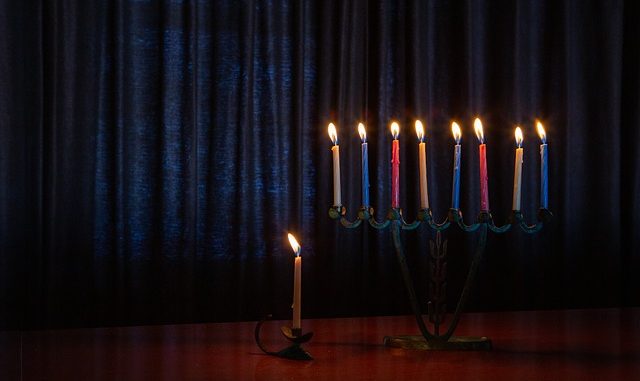
Hanukkah, also known as the Festival of Lights, is a post-biblical Jewish holiday that commemorates a struggle for religious freedom, national survival, and spiritual continuity. Its history is rooted in the turbulent political and cultural environment of the eastern Mediterranean during the second century BCE, when Judea was caught between imperial ambitions and internal divisions. The foods traditionally eaten during Hanukkah are inseparable from this history, as they symbolically express the central themes of the holiday: divine intervention, perseverance, and the sanctification of everyday life. Over centuries, these foods evolved in response to geography, economics, and local culinary traditions, while retaining a shared symbolic core centered on oil, light, and gratitude.
The historical background of Hanukkah begins after the conquests of Alexander the Great in the fourth century BCE, which spread Hellenistic culture across much of the known world. Following Alexander’s death, his empire was divided among his generals, and Judea eventually came under the control of the Seleucid Empire, based in Syria. Hellenistic influence permeated urban centers, promoting Greek language, philosophy, athletics, and religious practices. While some Jews embraced aspects of Hellenistic culture, others resisted what they viewed as a threat to Jewish law and identity. This internal tension became more severe during the reign of Antiochus IV Epiphanes, who ruled from 175 to 164 BCE and sought to consolidate his authority through religious and cultural uniformity.
Antiochus IV took the unprecedented step of outlawing key Jewish religious practices, including circumcision, Sabbath observance, and Torah study. He desecrated the Second Temple in Jerusalem by erecting an altar to Zeus and sacrificing pigs, an act that profoundly violated Jewish law. These measures provoked a rebellion led by a priestly family from the town of Modi’in, known as the Hasmoneans or Maccabees. Judah Maccabee emerged as the military leader of the revolt, which relied on guerrilla tactics against a far more powerful imperial army. After several years of fighting, the rebels succeeded in reclaiming Jerusalem and rededicating the Temple in 164 BCE.
The rededication of the Temple is the historical core of Hanukkah. According to later rabbinic tradition, recorded in the Talmud, when the Maccabees sought to rekindle the Temple’s menorah, they found only a single cruse of ritually pure olive oil, sufficient for one day. Miraculously, the oil burned for eight days, the time required to prepare a new supply. This miracle of oil became the theological centerpiece of Hanukkah, shifting the focus from military victory to divine providence. As a result, the holiday lasts eight days, during which a special candelabrum, the hanukkiah, is lit progressively each night.
The emphasis on oil directly shaped the culinary traditions of Hanukkah. Foods fried in oil became central to the celebration, serving as edible reminders of the miracle. However, the specific dishes associated with Hanukkah were not fixed in antiquity. In the ancient Near East, olive oil was a staple cooking fat, and fried foods were not uncommon, but the ritualization of oil-based foods developed gradually as Jewish communities spread across Europe, North Africa, and the Middle East. Each community adapted the symbolic requirement of oil to local ingredients and tastes, producing a diverse but thematically unified Hanukkah cuisine.
In the Land of Israel and the broader Middle Eastern Jewish world, early Hanukkah foods likely included simple fried doughs and pancakes made from grains such as wheat or barley, cooked in olive oil. These dishes were economical and accessible, aligning with the modest, home-centered nature of the holiday, which lacks the labor restrictions and elaborate rituals of major biblical festivals. Dairy foods also acquired symbolic significance, connected to the apocryphal story of Judith, a Jewish heroine who saved her community by feeding an enemy general salty cheese, causing him to thirst and drink wine until he fell asleep, at which point she killed him. Although Judith’s story is not historically linked to Hanukkah, medieval Jewish tradition associated her bravery with the broader theme of Jewish resistance, encouraging the consumption of dairy foods during the festival.
As Jewish communities settled in medieval Europe, particularly in Ashkenazi regions such as Germany, Poland, and Lithuania, Hanukkah foods evolved to reflect local agricultural conditions. Olive oil was scarce and expensive, so Jews commonly used rendered goose fat or later vegetable oils for frying. One of the most enduring Ashkenazi Hanukkah foods is the latke (see recipe below), a fried pancake. Early latkes were not made of potatoes, which were unknown in Europe until the sixteenth century, but of grains, legumes, or cheese. Potato latkes emerged in Eastern Europe in the nineteenth century, when potatoes became a cheap and reliable staple. The potato latke combined affordability, caloric density, and symbolic frying in oil, making it ideally suited to Hanukkah celebrations among poor Jewish populations.
Another iconic Ashkenazi Hanukkah food is the sufganiyah, a deep-fried jelly doughnut. Although now strongly associated with Hanukkah in Israel, its origins lie in European pastry traditions. Fried dough filled with jam or custard was common in Germany and Central Europe, and Jewish communities adapted these sweets to Hanukkah as a festive, oil-based treat. In the twentieth century, Zionist institutions in Palestine promoted the sufganiyah as a national Hanukkah food, in part because it required large quantities of oil and labor, supporting local industry. Over time, it became a dominant symbol of the holiday in Israeli culture, with modern variations featuring elaborate fillings and toppings.
Sephardi and Mizrahi Jewish communities developed their own Hanukkah culinary traditions, often centered on lighter fried pastries and sweets soaked in honey or syrup. In North Africa, Jews prepared dishes such as sfenj, a spongy fried dough similar to a doughnut, and bimuelos, fritters sometimes flavored with anise or orange blossom water. In the Ottoman world, including Turkey and the Balkans, fried pastries like lokma and tulumba were adapted for Hanukkah, emphasizing sweetness as an expression of joy and divine favor. These foods reflected the availability of sugar, honey, and spices, as well as the influence of surrounding Muslim and Christian cuisines.
Dairy foods also remained prominent in many Sephardi traditions. Cheese-filled pastries, milk-based desserts, and fried cheese fritters reinforced the Judith narrative and complemented the oil-based symbolism of the holiday. In some communities, dairy and fried foods were deliberately combined, creating dishes that embodied multiple layers of meaning. The act of eating itself became a form of ritual remembrance, translating abstract theological ideas into sensory experience.
Across all Jewish cultures, Hanukkah foods were typically prepared in the home and shared with family and neighbors. Unlike Passover or Sukkot, Hanukkah does not involve pilgrimage or elaborate communal sacrifices, and this domestic focus strengthened the role of food as a primary vehicle for celebration. Recipes were passed down through generations, often orally, and adapted to changing circumstances, including migration, economic hardship, and new culinary influences. Despite these changes, the core requirement that Hanukkah foods be fried in oil persisted, maintaining continuity with the holiday’s central narrative.
In the modern era, Hanukkah cuisine has become both a marker of Jewish identity and a site of cultural innovation. In Israel, the holiday combines ancient symbolism with contemporary national meaning, emphasizing themes of sovereignty and renewal alongside the miracle of oil. In the diaspora, Hanukkah foods often serve as a bridge between Jewish tradition and surrounding cultures, particularly in societies where Hanukkah has gained increased visibility alongside winter holidays. While commercialized and sometimes simplified, the traditional foods of Hanukkah continue to encode historical memory in everyday acts of cooking and eating.
Ultimately, the history of Hanukkah and its associated foods illustrates how a relatively minor historical event gave rise to a powerful and enduring tradition. The rededication of the Temple and the miracle of the oil provided a narrative framework that allowed Jewish communities to ritualize resilience through light and sustenance. By frying foods in oil and sharing them in communal settings, Jews across time and place have transformed historical memory into lived experience. Hanukkah foods are therefore not merely festive dishes but embodiments of continuity, linking the struggles of the past with the rhythms of present-day Jewish life.
Latkes
Latkes are shallow-fried pancakes which are prepared from grated potato, flour and egg. They are fried to a golden and crunchy consistency. There is a either a savoury or sweet stance to them as sour cream or apple sauce (or both) are added.
Click on any link to purchase items.
Equipment
- Frying pan or skillet
- Mixing Bowls
- Sieves
- Large spoons.
Ingredients
- 4 large russet (baking) potatoes
- 1 medium onion
- 1 egg, lightly beaten
- 1/2 teaspoon baking powder
- 2 tablespoons flour
- 1 teaspoon kosher salt or sea salt, plus extra for seasoning
- Vegetable oil
- Freshly ground black pepper
- Sour cream or applesauce
- Garnish: fresh chives
Preparation
- Peel and grate potatoes and onion.
- Transfer to a sieve or kitchen towel and squeeze out excess water.
- In a large bowl, combine grated mixture, egg, baking powder, flour, and salt.
- Warm a thin layer of oil (about 2 tablespoons) in a large, heavy skillet over moderate heat.
- Drop batter into skillet one heaping spoonful at a time (but don’t crowd the pan).
- Flatten gently; don’t push potatoes too hard into oil. (Each latke should be about 2 inches wide.)
- Fry in batches, turning once, 4 minutes per side or until golden brown.
- Drain on paper towels and season well with salt and pepper.
- Add some sour cream or apple sauce, garnish with fresh chives, and serve immediately.
Article updated from 17th November 2019.

Leave a Reply