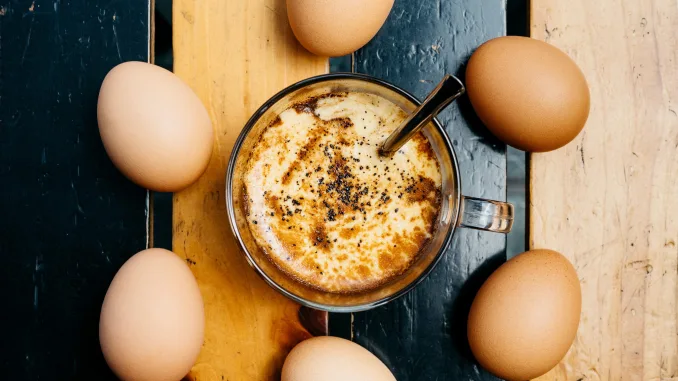
Vietnamese egg coffee—called cà phê trứng—is one of those inventions that sounds unusual but makes perfect sense once you understand its origin and chemistry.
Origins: scarcity turned into innovation
Egg coffee was created in the 1940s in Hanoi during a period when fresh milk was scarce due to wartime supply disruptions, especially around the time of the First Indochina War.
A bartender named Nguyễn Văn Giảng, working at the Sofitel Legend Metropole Hanoi, improvised a substitute for milk by whisking egg yolks with sugar. The result was a rich, creamy topping that mimicked the texture of milk-based coffee drinks.
He later opened his own café, now known as Giảng Café, which is still famous for serving the original egg coffee.
How it’s made
Egg coffee has two main components: strong coffee and a whipped egg cream.
1. The coffee base
- Typically brewed using a phin filter (a small Vietnamese drip brewer)
- Made with robusta beans, which are stronger and more bitter than arabica
- Often served hot, though iced versions exist
2. The egg cream
- Egg yolks
- Sugar (or sometimes sweetened condensed milk)
- Whipped until thick, airy, and custard-like
3. Assembly
- Hot coffee is poured into a cup
- The whipped egg mixture is layered on top
- The cup is often placed in a bowl of hot water to keep it warm
The final drink resembles a small dessert more than a typical coffee.
Why it tastes so good (the science behind it)
1. Fat + bitterness balance
Egg yolks are rich in fats and emulsifiers (like lecithin). These coat your tongue and soften the sharp bitterness of strong coffee, creating a smoother taste.
2. Natural sweetness and aroma
Whipping egg yolks with sugar produces a custard-like foam with notes similar to:
- meringue
- tiramisu cream
- vanilla custard
This adds sweetness without diluting the coffee.
3. Texture contrast
You get:
- thick, velvety foam on top
- bold, intense coffee underneath
That layered experience is a big part of its appeal.
4. Temperature and aroma release
Serving it warm (not boiling) helps release aromatic compounds gradually, enhancing perceived flavor.
What it tastes like
People often describe egg coffee as:
- “liquid tiramisu”
- a cross between espresso and dessert custard
- rich, creamy, slightly sweet, with a strong coffee backbone
Why it endures
Egg coffee isn’t just a novelty—it reflects a broader theme in Vietnamese cuisine: resourcefulness under constraint. What began as a substitute for milk became a signature cultural drink that’s now internationally recognized.
Ingredients (1 serving)
- 1 egg yolk (fresh, high-quality)
- 2–3 tsp sugar or 1–2 tbsp sweetened condensed milk
- 60–90 ml strong coffee (about a small cup)
- Optional: a drop of vanilla extract or pinch of salt
Method 1 — Traditional (with phin filter)
Step 1: Brew the coffee
- Use a Vietnamese phin filter
- Add 2–3 tbsp medium-fine coffee (preferably robusta)
- Bloom with a splash of hot water (30 sec), then fill
- Let it drip slowly (3–5 minutes)
You want a strong, concentrated brew—stronger than standard drip coffee.
Step 2: Make the egg cream
- In a bowl, combine:
- 1 egg yolk
- sugar or condensed milk
- Whisk vigorously for 3–5 minutes
You’re aiming for:
- pale yellow color
- thick, ribbon-like texture
- creamy foam (like soft whipped custard)
Electric whisk/milk frother makes this much easier.
Step 3: Assemble
- Pour hot coffee into a small cup
- Gently spoon egg cream on top
- Do not stir yet
Step 4: Serve properly
- Place the cup in a bowl of hot water (traditional Hanoi style)
- Sip through the foam or mix slightly before drinking
Method 2 — No special equipment (easy home version)
Coffee
Use any of these:
- French press (strong ratio: ~1:10 coffee to water)
- Moka pot (closest to authentic strength)
- Espresso machine (ideal if available)
- Strong instant coffee (last resort, but works)
Egg cream (simplified)
Same as above, but:
- Use a hand mixer, whisk, or even a jar shake method
- If worried about raw egg taste, add:
- ½ tsp vanilla
- or a tiny pinch of salt
Critical technique details (this is what makes it “authentic”)
1. Use yolk only
Egg whites make it foamy but not rich. Yolk = creamy, custard-like texture.
2. Whip long enough
Under-whipped = eggy and thin
Properly whipped = thick, sweet, mousse-like
If you lift the whisk and it leaves ribbons, it’s ready.
3. Coffee must be strong
Weak coffee → dessert becomes cloying
Strong coffee → balanced, like tiramisu
4. Temperature control
- Coffee: hot but not boiling
- Egg cream: room temperature
This prevents curdling and preserves texture.
Flavour tuning (based on preference)
- Sweeter / dessert-like → use condensed milk
- More coffee-forward → use less sugar
- Richer → add a tiny bit of heavy cream to egg mix
- More aromatic → add vanilla or even a hint of cocoa
What can go wrong (and fixes)
- Tastes eggy → whip longer + add vanilla
- Too sweet → reduce sugar or increase coffee strength
- Too thin → under-whipped; whisk more
- Curdled texture → coffee too hot or added too aggressively
Optional variation: iced egg coffee
- Brew strong coffee and chill it
- Add ice to glass
- Top with egg cream
This version is lighter and more refreshing but less custard-like.
Leave a Reply