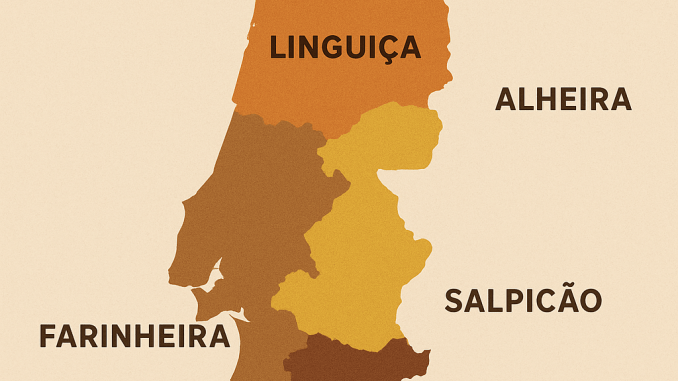
Portugal has an impressively rich sausage tradition — not just one or two famous types, but an entire family of enchidos (stuffed meats) with deep regional roots. These sausages range from smoky and rustic to delicate and subtly spiced, often linked to the preservation techniques developed before refrigeration.
Here’s a tour through the main categories:
1. Chouriço
-
Appearance: Usually reddish, slightly curved, firm to the touch.
-
Flavor profile: Smoky, garlicky, paprika-rich.
-
Typical use: Grilled over open flame (chouriço assado), sliced in stews, or flamed at the table in a small clay burner.
-
Varieties:
-
Chouriço de carne – made with pork, paprika, garlic, and wine.
-
Chouriço mouro – includes pork blood, giving a darker color and richer flavor.
-
2. Linguiça
-
Appearance: Long, thin, reddish-brown sausage.
-
Flavor profile: Similar to chouriço but finer ground and slightly more aromatic; wine and spices are often more pronounced.
-
Typical use: Grilled, fried with eggs, or sliced into caldo verde (kale soup).
3. Alheira
-
Origin story: Created by Portuguese Jews during the Inquisition to appear Christian — they avoided pork, using poultry, bread, and garlic instead, but shaped and smoked it like a pork sausage.
-
Flavor profile: Savory, garlicky, bready, sometimes slightly smoky.
-
Typical use: Fried or grilled and served with greens and potatoes.
4. Farinheira
-
Main ingredients: Wheat flour, pork fat, paprika.
-
Texture & flavor: Soft, almost pâté-like inside, tangy and sweet-savoury.
-
Use: Often boiled or stewed — not great grilled because it can burst.
5. Morcela
-
Type: Blood sausage.
-
Flavor profile: Rich, earthy, slightly sweet from onions.
-
Regional twist:
-
Morcela da Beira Baixa – spiced with cinnamon.
-
Morcela de arroz – with rice, giving a softer bite.
-
6. Salpicão
-
Appearance: Thick, cured pork loin sausage.
-
Flavor profile: Less fatty than chouriço, more meaty and mildly seasoned.
-
Use: Eaten thinly sliced, like a cured meat, or in stews.
Cultural Notes:
-
Many Portuguese sausages are smoked over oak or eucalyptus for days, giving a deep flavor.
-
They often appear in feijoadas (bean stews), cozido à portuguesa (meat-and-vegetable boil), or as snacks with bread and wine.
-
Markets and village fairs often showcase dozens of regional varieties — sometimes fiercely protected by Denominação de Origem Protegida (DOP) status.
[Please note we are an affiliate marketing partner and will make a sales commission if you purchase any items through our affiliate links. Please read our affiliate disclosure]

Leave a Reply