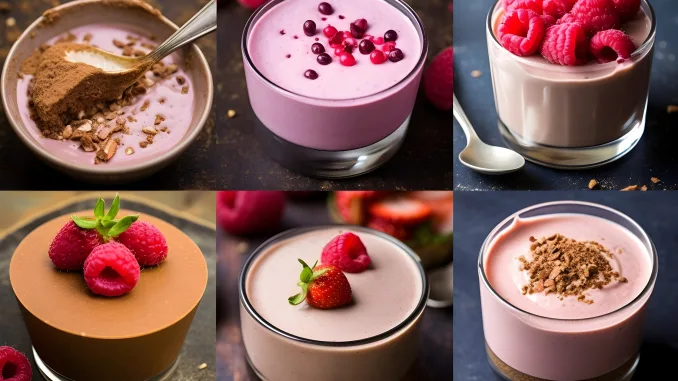
Mellorine is a frozen dessert that occupies an interesting, often overlooked position in the history of industrial food production and consumer taste, particularly in the United States during the mid-twentieth century. It was developed as a substitute for ice cream, designed to mimic ice cream’s sensory qualities—its sweetness, creaminess, and frozen structure—while replacing milk fat with vegetable fat. Although mellorine is largely absent from contemporary supermarket shelves and restaurant menus, it has not entirely disappeared. Its story reveals much about food technology, regulation, economics, and shifting public attitudes toward imitation foods.
What Physical Structure Is Mellorine Trying To Replace?
Ice-cream is the target product. This is a semi-solid foam produced by aerating a fat emulsion. This foam is a many phased dispersion of bubbles suspended in a solid/liquid phase. Whilst foams are commonly found in food stuffs ice-cream is special because it is mainly partially coalesced droplets of fat, ice crystals, air bubbles and a freeze-concentrated aqueous phase. The ice cream and the fat content define the nature of the ice-cream at the simplest level. A typical ice ream contains between 10 and 16% fat and the network that is formed is what mellorine is trying to replace.
Composition Of Mellorine
The defining characteristic of mellorine is its fat source. Traditional ice cream, as defined by U.S. federal standards of identity, must contain a minimum percentage of milk fat, usually derived from cream. Mellorine, by contrast, uses vegetable fats such as coconut oil, cottonseed oil, soybean oil, or palm kernel oil. These fats are blended with milk solids such as skim milk or nonfat dry milk, sugar or corn syrup, stabilizers, emulsifiers, flavorings, and water, then frozen in much the same way as ice cream. The result is a product that looks and tastes similar to ice cream but differs chemically and nutritionally, particularly in its fatty acid composition and cholesterol content.
Mellorine emerged in the United States in the late 1940s and early 1950s, a period marked by rapid advances in food science and large-scale industrial processing. During and after World War II, shortages of dairy fat and rising costs encouraged food manufacturers to explore alternatives. Vegetable oils were cheaper, more shelf-stable, and increasingly available due to advances in hydrogenation and refining. At the same time, consumers were becoming accustomed to processed foods that promised convenience and affordability. Mellorine fit neatly into this environment as a cost-effective frozen dessert that could be produced at scale and sold at lower prices than ice cream.
Historically, promoters of the cotton industry in the USA could see a clear route to market using cottonseed oil which was not being fully exploited in the 1950s. In the 60s, coconut oil strated to come to the fore because of its valuable contribution in cosmetics especially but also the ready supply of the oil for food use. Refined coconut oil has largely succeeded where cotton seed oil has not (Shafiepour et al., 2026).
From a sensory standpoint, mellorine could be engineered to closely resemble ice cream. Food technologists carefully selected fat blends to achieve melting behavior similar to milk fat, ensuring that the product softened smoothly on the tongue rather than feeling waxy or greasy. Emulsifiers and stabilizers helped create a fine air cell structure and prevent ice crystal growth, while artificial or natural flavourings provided familiar vanilla, chocolate, or fruit profiles. For many consumers, especially when served cold and flavored strongly, mellorine was difficult to distinguish from conventional ice cream. However, a great deal of product development study was needed to achieve sensory parity with ice-cream because mimicking the role of the fat globule was tricky to achieve. In the early years, consumers felt that mellorine desserts were too harsh in texture until the correct blend of emulsifiers in particular became available.
Emulsifiers are highly useful. These are selected from a range of hydrocolloids including alginates, agars, carrageenan, gelatin and guar gum and have been examined in mellorine desserts (Santi et al., 2022).
Despite these similarities, mellorine quickly became entangled in regulatory and cultural controversy. In the United States, food labeling and standards of identity are governed by federal and state law, primarily through the Food and Drug Administration (FDA). Ice cream had long been protected by a legal definition specifying minimum milk fat content. Because mellorine did not meet this standard, it could not legally be labeled or sold as ice cream. Manufacturers were required to market it under the name “mellorine” or another clearly distinct term, which immediately marked it as an imitation product.
Consumer Tastes Change Over Time
Public reaction to mellorine was mixed. Some consumers welcomed it as a cheaper alternative, while others viewed it with suspicion or disdain, associating vegetable fats with inferior quality or deception. Dairy industry groups strongly opposed mellorine, arguing that it undermined traditional dairy farming and misled consumers. This opposition translated into political pressure, and by the 1950s and 1960s many U.S. states enacted laws banning the sale of mellorine altogether or severely restricting its distribution. These bans were often justified on consumer protection grounds but were also widely understood as protectionist measures favoring the dairy industry.
The legal status of mellorine varied by jurisdiction. In some states it could be sold freely if properly labeled; in others it was prohibited outright. At the federal level, the FDA did not ban mellorine but maintained strict labeling requirements to prevent confusion with ice cream. As a result of this patchwork of regulations, mellorine never achieved the nationwide market penetration that its manufacturers had hoped for. Production continued in certain regions, often under local or private-label brands, but it remained a marginal product compared to ice cream.
Over time, mellorine’s fortunes declined further as consumer preferences shifted. By the late twentieth century, rising affluence made the price difference between mellorine and ice cream less compelling for many buyers. At the same time, growing interest in “natural” foods and skepticism toward highly processed products made imitation foods less attractive. Vegetable fats, once marketed as modern and efficient, began to be criticized for their association with trans fats and industrial processing, even though not all mellorine formulations relied on partially hydrogenated oils.
That said, mellorine never entirely vanished. It continued to be produced in limited quantities, particularly for institutional settings such as prisons, schools, and hospitals, where cost control and storage stability are critical. In these contexts, mellorine’s lower cost and longer shelf life made it economically attractive, and consumer choice was limited. Some small manufacturers also maintained mellorine production for niche markets or regions where it had an established presence.
In contemporary terms, mellorine has largely been eclipsed by other categories of frozen desserts. Products labeled as “frozen dairy dessert,” “non-dairy frozen dessert,” or “vegan ice cream” now occupy similar conceptual space, though they are marketed very differently. Modern plant-based frozen desserts often emphasize premium ingredients, ethical considerations, and dietary compatibility rather than cost savings. Ironically, many of these products share a structural resemblance to mellorine, relying on vegetable fats and milk substitutes to replicate the texture of ice cream, yet they benefit from branding that frames them as innovative rather than inferior.
Whether mellorine is “still used today” therefore depends on how one defines use. As a widely recognized, consumer-facing product category, mellorine is effectively obsolete. Few consumers encounter the term, and it rarely appears on retail packaging. As a formulation concept—using vegetable fat in a frozen dessert designed to imitate ice cream—it persists in various forms, albeit under different names and with different cultural connotations. The techniques developed for mellorine production contributed to the broader field of frozen dessert technology and laid groundwork for many contemporary products.
Mellorine is a vegetable-fat-based frozen dessert created as a substitute for ice cream, born out of mid-twentieth-century economic pressures and technological optimism. While it achieved limited success, it faced strong regulatory, cultural, and industry resistance that curtailed its growth. Today, mellorine survives only at the margins, largely invisible to the general public, yet its legacy endures in the science and practice of frozen dessert manufacturing. It stands as a case study in how food innovation is shaped not only by chemistry and engineering, but also by law, politics, and consumer perception.
References
Santi, A., Syukroni, I., & Arsyad, M. A. (2022). Comparative Study of Emulsifier in Mellorine. Asian J. Fish. Aqu. Res, 20(4), pp. 12-20.
Shafiepour, M., Aminifar, M., Nayebzadeh, K., Khanniri, E., Farhoodi, M., Piravi-vanak, Z., & Mortazavian, A. M. (2026). Functional Replacement of Shortening with Coconut Oil in Mellorine: Impacts on Texture, Melting Resistance, Foam Structure, and Sensory Quality. Applied Food Research, 101740.



Leave a Reply