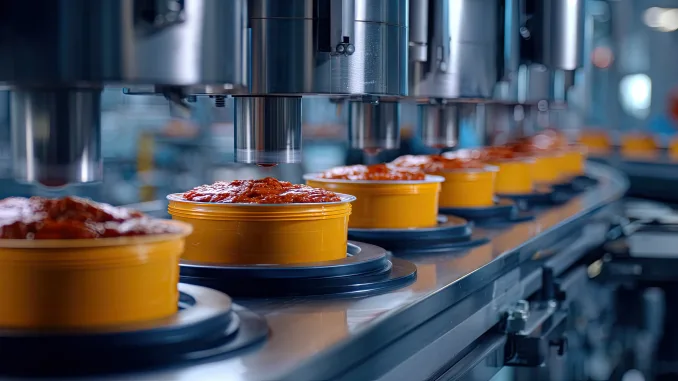
Manufacturing Execution Systems (MES) have become integral to modern industrial operations, serving as the crucial link between high-level enterprise resource planning (ERP) systems and the shop floor where production activities occur. Within the food industry, MES technologies play a particularly significant role due to the stringent requirements associated with food safety, quality control, regulatory compliance, and traceability. Unlike discrete manufacturing sectors where products are uniform and process variability is minimal, food production involves complex variables such as ingredient quality, environmental conditions, batch-to-batch variability, and strict hygiene standards. These complexities demand a high degree of operational visibility and control, which MES solutions are designed to provide. By integrating real-time data acquisition, process monitoring, and production analytics, MES platforms enhance production efficiency, optimize process performance, and support more informed operational decision-making.
At its core, an MES functions as a real-time information system that manages, monitors, and synchronizes the execution of manufacturing processes. It operates as a digital backbone that connects the physical production environment—comprising machines, sensors, operators, and materials—with the informational and planning systems that govern enterprise-wide strategy. In the context of the food industry, the MES performs several critical functions including scheduling and dispatching of work orders, tracking materials and batches through production, monitoring process parameters, recording quality data, and ensuring compliance with regulatory standards such as those set by the FDA, EFSA, or local food safety authorities. The primary goal is to ensure that production activities are executed as planned, that deviations are detected and corrected promptly, and that accurate data is available for analysis and continuous improvement.
The implementation of an MES in food manufacturing environments directly influences production efficiency. Efficiency in this sector is not simply a function of machine uptime or throughput but encompasses a broad spectrum of performance factors, including yield optimization, waste reduction, and energy consumption. An MES enhances efficiency by providing real-time visibility into all aspects of production. For example, data collected from sensors and programmable logic controllers (PLCs) can be aggregated and analyzed to monitor the performance of individual production lines, identify bottlenecks, and predict equipment failures before they cause downtime. Automated data collection eliminates the need for manual recording, thereby reducing human error and increasing the speed and accuracy of data capture. This, in turn, enables production managers to make timely interventions when performance deviates from target levels.
In food processing environments, downtime and waste are major cost drivers. An MES helps mitigate these by providing tools for predictive maintenance and root cause analysis. Predictive maintenance modules, integrated with machine learning algorithms, can analyze vibration data, temperature readings, or motor currents to forecast equipment degradation and schedule maintenance during planned production breaks. By reducing unplanned downtime, manufacturers can maintain higher utilization rates and reduce maintenance costs. Additionally, MES-driven analysis of production data can reveal patterns that lead to waste generation—such as overfilling, improper mixing, or inefficient changeovers—and guide corrective measures. This continuous improvement cycle contributes significantly to overall equipment effectiveness (OEE), a key performance indicator in manufacturing efficiency.
Another vital aspect of MES in food manufacturing is its ability to enhance process optimization. Process optimization in this sector is multifaceted, involving the precise control of recipes, batch consistency, temperature profiles, mixing times, and other process variables. MES systems are equipped with recipe management modules that ensure the correct ingredients and proportions are used for each batch, thus maintaining product consistency and minimizing errors. By integrating directly with weighing systems, dosing equipment, and process controllers, the MES can automatically adjust parameters to compensate for raw material variability or process drift. This automation reduces dependency on operator intervention, enhances repeatability, and ensures compliance with product specifications.
Moreover, MES systems enable dynamic scheduling and sequencing optimization, which are particularly important in multi-product food plants. Such facilities often operate with frequent product changeovers, where cleaning, allergen control, and setup procedures can consume significant time and resources. MES algorithms can optimize production sequencing to minimize changeover time and reduce the risk of cross-contamination. For example, it may schedule allergen-free products before allergen-containing ones or sequence similar recipes consecutively to minimize cleaning requirements. By optimizing production order and resource allocation, the MES helps improve throughput and resource utilization while maintaining food safety standards.
Data integration across the production chain is another area where MES systems add considerable value. Food manufacturing operations typically involve diverse data sources, including raw material supply systems, environmental monitoring sensors, packaging lines, and quality laboratories. An MES consolidates these data streams into a unified platform, providing operators and managers with a comprehensive, real-time view of the production process. This integration supports process optimization in several ways. First, it facilitates statistical process control (SPC) by monitoring key quality attributes and alerting operators when process variables exceed control limits. Second, it enables adaptive control strategies where process parameters are automatically adjusted based on feedback from in-line measurements, such as moisture content, viscosity, or temperature. Third, it supports traceability by linking each batch to specific raw materials, process conditions, and quality results, which is critical for product recalls and regulatory audits.
Traceability and compliance are particularly crucial in the food industry, where consumer safety and regulatory scrutiny are paramount. MES systems ensure complete batch and lot traceability by recording every step of production—from raw material receipt through processing, packaging, and distribution. Each lot can be associated with detailed production data, including operator actions, equipment used, cleaning and sanitization records, and environmental conditions. This level of traceability allows rapid response in the event of a food safety incident, reducing the scope and cost of product recalls. It also simplifies compliance with standards such as ISO 22000, BRCGS, or HACCP, by providing automated documentation and audit trails. The ability to demonstrate full control and traceability not only ensures compliance but also enhances brand reputation and consumer trust.
Operational decision-making is another domain profoundly transformed by MES implementation. Traditional production environments often rely on historical reports and manual logs, leading to reactive decision-making. MES systems enable a shift toward proactive and data-driven decision-making by providing real-time information and advanced analytics. Supervisors can monitor production key performance indicators (KPIs) in real time, including yield, OEE, energy use, and labor efficiency, and take immediate corrective actions when deviations occur. Decision support dashboards, powered by MES data, allow managers to evaluate production performance across multiple lines or sites, identify best practices, and benchmark operations.
At a more strategic level, MES contributes to long-term decision-making by providing data that feeds into continuous improvement and operational excellence programs. Advanced MES platforms incorporate analytical tools capable of performing root cause analysis, trend detection, and performance forecasting. For example, by analyzing correlations between raw material properties, process conditions, and final product quality, the MES can help engineers identify optimization opportunities or adjust process settings to improve yield. The integration of MES data with ERP and supply chain systems also enables more accurate demand forecasting and production planning. By aligning production schedules with real-time inventory and order information, companies can reduce finished goods inventory, minimize waste, and improve customer responsiveness.
An important trend in MES evolution is its increasing convergence with Industry 4.0 and Industrial Internet of Things (IIoT) technologies. Modern MES platforms are no longer isolated systems but form part of a connected manufacturing ecosystem where machines, sensors, and software communicate seamlessly. This connectivity allows for the collection of granular process data at unprecedented scale and frequency, which enhances the analytical capabilities of the MES. In food production, where process variability can significantly impact quality and efficiency, such data-rich environments enable advanced analytics and artificial intelligence (AI)-driven optimization. For example, machine learning algorithms can analyze historical production data to predict quality outcomes based on process parameters, enabling real-time optimization of cooking, mixing, or drying processes. Similarly, energy management modules within the MES can use predictive models to optimize equipment operation schedules, thereby reducing energy consumption without compromising productivity.
The digital transformation of food manufacturing through MES also supports sustainability objectives, which have become increasingly important across the industry. By providing precise control and monitoring of resource usage, MES systems help manufacturers reduce energy consumption, water usage, and material waste. The system’s data collection capabilities allow for detailed tracking of sustainability metrics such as carbon footprint, waste generation, and recycling rates. These insights not only support internal sustainability goals but also enable transparent reporting to regulators and consumers. For instance, real-time monitoring of energy-intensive processes like sterilization, refrigeration, or drying allows optimization of cycle times and load management to minimize resource usage. Additionally, improved process stability and yield translate to lower raw material waste, which contributes directly to cost savings and environmental performance.
Another area where MES significantly influences operational performance is workforce management. In food manufacturing, human operators play essential roles in manual inspections, sanitation, material handling, and quality testing. MES systems enhance workforce efficiency by providing electronic work instructions, role-based interfaces, and digital checklists that guide operators through standard operating procedures (SOPs). These features reduce variability in task execution and ensure that operations are performed consistently and according to specifications. Moreover, by recording operator activities, MES enables labor performance tracking and training needs assessment. Integration with human–machine interfaces and mobile devices further enhances responsiveness, allowing supervisors and operators to receive alerts, input data, or confirm actions in real time.
Quality management is inherently intertwined with MES functionality in the food industry. MES platforms provide the infrastructure for in-process quality assurance (QA), integrating laboratory information with production data to ensure that quality control (QC) results are immediately available and actionable. For instance, if an in-process sample fails to meet predefined limits, the MES can automatically quarantine the affected batch, notify quality personnel, and prevent further processing until corrective action is taken. Such integration minimizes the risk of non-conforming products reaching the market and enhances compliance with quality management systems. Additionally, MES data supports continuous quality improvement initiatives by enabling statistical analysis of process performance and identifying systematic sources of variation.
The role of MES in batch and continuous processing environments also merits discussion. In batch operations, such as those common in bakery, dairy, and beverage production, MES provides detailed batch records that capture all relevant parameters, materials, and operator inputs. Automated batch tracking ensures that each product is produced under controlled and documented conditions, which is essential for reproducibility and regulatory compliance. In continuous processes, such as oil refining or sugar processing, MES systems provide real-time monitoring and control integration that allow for adaptive process optimization. By analyzing real-time data streams, the MES can detect process drift or inefficiencies and initiate corrective actions to maintain stable operation. In both modes, the MES serves as the central hub for coordination between process control systems, quality management, and business planning.
The integration of MES with other enterprise systems, such as ERP, supply chain management (SCM), and laboratory information management systems (LIMS), further enhances its impact on decision-making and process optimization. The bidirectional flow of data between MES and ERP ensures alignment between production execution and business objectives. For example, when demand forecasts or order priorities change, the ERP system can communicate new production schedules to the MES, which then adjusts shop floor activities accordingly. Conversely, the MES provides the ERP with accurate, real-time production data that informs cost accounting, inventory management, and order fulfillment. Integration with SCM systems enhances visibility across the supply chain, enabling just-in-time delivery of raw materials and synchronization with downstream logistics. Meanwhile, LIMS integration ensures that quality testing data are seamlessly incorporated into production records, eliminating delays and manual data entry errors.
Despite its many advantages, implementing an MES in the food industry is not without challenges. One major challenge is the integration of the MES with legacy systems and heterogeneous equipment commonly found in older facilities. Food plants often operate a mix of modern and outdated machinery, each with different communication protocols and automation levels. Developing interfaces that enable seamless data exchange can be complex and costly. Another challenge is the need for system customization to accommodate the specific processes, recipes, and regulatory requirements of each food producer. Unlike more standardized industries, food manufacturing often involves unique formulations and process steps that must be accurately modeled within the MES. Additionally, successful MES adoption requires cultural and organizational change. Operators and managers must be trained to use digital systems effectively, and data-driven decision-making must become part of the operational culture.
The return on investment (ROI) for MES implementation in food manufacturing is influenced by several factors, including the degree of automation, production scale, and baseline performance. However, empirical evidence from industry practice suggests that the benefits are substantial. Companies report improvements in OEE, reduction in waste and rework, faster response to quality issues, and enhanced traceability. Moreover, the availability of accurate real-time data enables lean manufacturing practices such as just-in-time production and continuous improvement programs. The flexibility afforded by MES also allows manufacturers to respond more quickly to market changes, such as new product introductions or shifts in consumer demand, without compromising efficiency or compliance.
As food manufacturing continues to evolve toward greater digitalization, the role of MES is expanding. The emergence of cloud-based MES solutions offers new possibilities for scalability, remote monitoring, and data sharing across multiple sites. Cloud deployment reduces infrastructure costs and simplifies system maintenance, while allowing centralized data analytics and benchmarking. Furthermore, integration with advanced analytics platforms enables predictive and prescriptive decision support, where the system not only reports deviations but also recommends or autonomously implements corrective actions. The combination of MES with digital twins—virtual models of production processes—represents another frontier. By simulating different process scenarios, digital twins allow engineers to test optimization strategies in a risk-free environment before applying them to the physical plant.
In conclusion, Manufacturing Execution Systems (MES) are transforming the food industry by bridging the gap between enterprise-level planning and shop floor execution. They provide the digital infrastructure necessary to achieve real-time visibility, control, and optimization of complex manufacturing processes. Through their capabilities in data integration, process control, traceability, and analytics, MES systems significantly enhance production efficiency by reducing downtime, waste, and variability. They drive process optimization through precise recipe management, adaptive control, and dynamic scheduling, ensuring consistent product quality and compliance. Perhaps most importantly, MES systems empower informed, data-driven decision-making at all organizational levels—from operators to executives—enabling proactive management and continuous improvement. As the food industry continues its digital transformation, MES will remain a cornerstone technology, underpinning smarter, safer, and more sustainable food production.

Leave a Reply