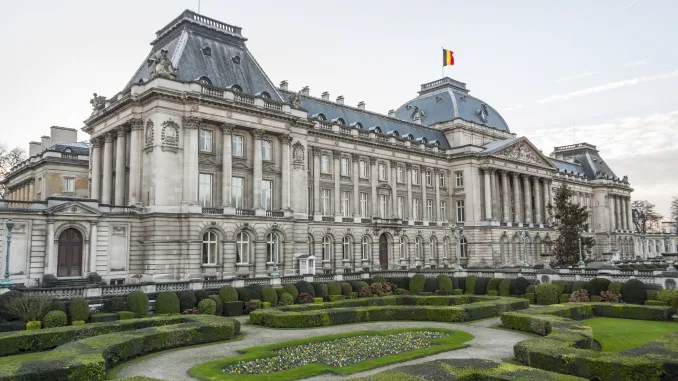
Brussels wakes early, but never hurriedly. The city’s mornings begin not with rush or noise, but with aroma — a waft of butter from unseen bakeries, a faint hum of coffee from cafés whose doors are still half-shuttered, a murmur of voices speaking in a half-dozen languages at once. It is a city that eats as it lives: quietly, curiously, and with more complexity than one might first assume. For Brussels, the capital not only of Belgium but of Europe’s institutions, is a place where flavours mingle like diplomats in a corridor — each distinct, yet seeking harmony.
Standing in the Place du Luxembourg, where glass and steel rise above 19th-century façades, I can smell the croissants before I see them. A café at the corner opens its doors to the morning, and suddenly the air is sweet with yeast and almond. Civil servants hurry by clutching paper cups, their badges swinging like pendulums. They speak German, English, French, Italian — sometimes all within the same conversation. Brussels, I think, is perhaps the only city where breakfast might be negotiated like a treaty: one person ordering an espresso and a pain au chocolat, another preferring oatmeal and fruit, yet all agreeing that time is too short and coffee too weak.
But to understand the cuisine of Brussels, one must begin where it began — not in the sleek corridors of the European Quarter, but in its brasseries and bistros, those amber-lit rooms that have fed the city for centuries. They are places of patience, not speed; of sauce, not austerity. The dishes are generous, often slow-cooked, and they carry the geography of Belgium in every bite: the North Sea’s salt, the Ardennes’ game, the meadows’ butter, and the farmers’ earthy vegetables.
A Table of Contrasts
Brussels sits at a crossroads, both literally and gastronomically. The Flemish north brings sturdiness — beer stews, braised meats, potatoes cooked in butter. The French-speaking south brings delicacy — creamy sauces, pastries, and the love of presentation. It is a city where you might begin lunch with moules marinières and end with a plate of stoofvlees, a slow-simmered beef stew darkened by brown beer. Each dish speaks both languages.
At Aux Armes de Bruxelles, an institution in the narrow Rue des Bouchers, I watch a waiter carry a tureen of mussels to a family visiting from Lyon. The lid lifts, steam rises, and the air fills with the perfume of white wine, parsley, and garlic. Nearby, a man in a suit eats alone, his tie loosened, a copy of Le Soir folded beside his plate of sole meunière. Brussels, for all its grandeur, is a city that eats modestly — but with seriousness. Every meal seems to come with a sense of ritual: the correct bread, the right beer, the conversation unhurried.
Yet step beyond the old centre and into the European Quarter, and the flavours begin to shift. Here, among the mirrored towers and manicured plazas, food becomes a reflection of modern Europe itself — a fusion of twenty-seven national sensibilities, filtered through the Belgian gift for hospitality.
Lunch at the Nerve Centre
Inside the Justus Lipsius building, headquarters of the European Council, the day begins early. By eight o’clock, the coffee machines are already humming. The cafeterias here serve hundreds — diplomats, translators, journalists, aides — all bound by the invisible choreography of meetings and deadlines. Yet even within this bureaucratic ballet, food retains its quiet dignity.
I am told that breakfast in the Council building is a miniature version of Europe itself. The buffet line might offer Danish rye bread beside French brioche, Greek yogurt next to Finnish porridge, and a small selection of Belgian pastries: buttery croissants, crisp pain au chocolat, and the occasional couque suisse, a spiral filled with custard and raisins. The coffee, strong and slightly bitter, is Italian in spirit, though served with Belgian efficiency — small, fast, never extravagant.
By noon, the pace quickens. Lunch at the Council is both a necessity and a performance — part sustenance, part diplomacy. The official canteens, known for their quiet competence, serve an evolving menu designed to accommodate the diverse palates of Europe’s delegates. On any given day, one might find carbonnade flamande, the traditional Flemish beef stew, sitting alongside paella, risotto, or Swedish meatballs. Vegetarian options — once an afterthought — have become essential: roasted vegetables with goat cheese, lentil salads brightened with lemon, falafel wraps, soups of pumpkin or leek.
The food must be balanced, the service brisk, the atmosphere neutral — a culinary reflection of compromise. “We feed Europe,” one staff member jokes, “and try not to start a war over mayonnaise.”
Indeed, even the sauces can be a matter of quiet politics. The French delegation, it is said, prefers the creaminess of béarnaise; the Germans lean toward mustard; the Belgians, of course, insist on proper mayo for their fries. And the fries themselves — oh, they are everywhere, perfectly golden, crisped twice in oil, eaten by presidents and interns alike. In Brussels, the fry is the great equalizer.
Beyond the canteen lies the more formal restaurant for high-level meetings, where menus are curated to impress without ostentation. Here, a visiting prime minister might be served lobster bisque followed by veal medallions in truffle jus, or perhaps a North Sea turbot with seasonal vegetables. The desserts, often crafted by patissiers trained in the grand Brussels tradition, are restrained but exquisite — chocolate mousse made from 70% Belgian cocoa, tartelette aux fruits rouges, or a trio of mini pastries accompanied by espresso.
It is said that the kitchen at the Council sources its ingredients from Belgian producers whenever possible — vegetables from Flemish farms, beef from Wallonia, fish from Zeebrugge. “Europe meets Belgium on the plate,” one chef told me. “It’s our way of reminding people where they are.”
The Diplomacy of Dining
Outside the formal walls of government, however, diplomacy continues in cafés and restaurants. The most influential decisions in Brussels, locals joke, are made not in conference rooms but over lunch.
At Le Coin des Artistes, a discreet bistro near the Parc Léopold, I find myself seated beside two men in dark suits discussing fisheries policy in low tones. Their plates are identical: filet de bar with fennel and saffron sauce, paired with a crisp white wine from the Loire. A woman at the next table eats a salad of roasted beetroot and goat cheese while scrolling through a document marked “CONFIDENTIAL.” Yet the atmosphere is relaxed, almost conspiratorial. The waiters know when to hover and when to vanish. The food is elegant, Belgian in soul but cosmopolitan in execution — much like the city itself.
In Brussels, lunch can stretch into late afternoon, not from leisure but necessity. Deals take time; consensus, longer still. At La Table du Luxembourg, a restaurant favoured by civil servants from the nearby Parliament, the menu changes daily: veal blanquette, duck breast with honey glaze, or tagliatelle with wild mushrooms. The bread is always warm, the butter rich, the service brisk but kind. Outside, the square fills with bicycles and briefcases. The city moves, but slowly.
Evenings in the European Quarter tell a different story. When the meetings end, and the interpreters close their notebooks, the same officials drift toward Place Jourdan or Place du Chatelain, where the mood softens and conversation becomes laughter. Here, the air is scented with frites, beer, and grilled meat. Delegations mix with locals; accents blur.
At Maison Antoine, a legendary friterie on Place Jourdan, queues form regardless of weather. I join the line behind a group of young aides from the Commission, their ID cards still around their necks. When my turn comes, I order fries with Andalouse sauce, a tangy blend of tomato, mayonnaise, and peppers. I eat them standing by the fountain, watching the sky fade from grey to lilac. Nearby, a diplomat in a navy coat does the same, balancing his cone of fries with the same reverence one might give a fine meal. In Brussels, even power tastes better with potatoes.
Chocolate and Compromise
If there is one constant in this city of negotiation, it is chocolate. Nowhere else does sweetness carry such diplomacy. Every meeting room in the European Council, I am told, has a bowl of pralines — a small gesture of Belgian hospitality, a peace offering in miniature.
The praline, invented in Brussels more than a century ago, remains its proudest ambassador. At Pierre Marcolini’s boutique near the Sablon, the chocolates gleam like jewels behind glass. Inside, delegates and tourists alike select boxes for gifts: dark chocolate infused with Earl Grey, milk chocolate with caramel, white chocolate kissed with yuzu. The flavors are precise, the presentation immaculate. “We are not selling sweets,” Marcolini once said, “we are selling emotion.”
Across the square, Neuhaus offers the classics — soft ganache, hazelnut cream, pralines with a whisper of coffee. Each shop is a cathedral of cocoa, and Brussels itself feels perfumed with chocolate. Even in the Council offices, it is common to see a diplomat unwrap a small square during a late-night negotiation. “It helps,” one interpreter told me with a grin. “When tempers rise, chocolate reminds everyone why they like Belgium.”
Between Power and Pleasure
Yet Brussels is not only about indulgence; it is also about subtlety. The city has absorbed the tastes of its visitors for centuries — from Spanish traders to African diplomats, from Nordic bureaucrats to Middle Eastern students. Its restaurants reflect this global rhythm without losing their local heart.
In the Matonge district, near the European institutions, Congolese and Cameroonian eateries hum with music and spice. The aroma of grilled plantains and peanut stew drifts past embassies and designer shops. A block away, Lebanese bakeries sell manakish beside Belgian tarts. The coexistence feels natural, inevitable. Brussels eats like it governs — through coexistence and quiet adaptation.
And yet, beneath all the fusion, there remains an unmistakable Belgian thread: the reverence for ingredients, the patience of preparation, the small joy of a shared table. Even the most international restaurants, when you look closely, retain a hint of local soul — a drizzle of witbier in the sauce, a garnish of endive, a spoon of grey shrimp from the North Sea.
Inside the Kitchen of Europe
Curious about the Council kitchens themselves, I manage to speak with a chef who has worked there for fifteen years. He describes his job as a form of diplomacy. “Every day we cook for people from twenty-seven countries,” he says. “Some don’t eat pork, some avoid alcohol, some want everything organic. You have to be creative — and respectful.”
He shows me a sample menu: cream of leek soup, roast chicken with tarragon, grilled vegetables, and a dessert trio of chocolate mousse, fruit salad, and crème brûlée. “Simple,” he says, “but done perfectly.” The key, he explains, is not extravagance but neutrality. “Food must comfort, not distract. A bad lunch can ruin a meeting faster than bad politics.”
During summits, the tempo changes. The kitchen operates like a military unit, feeding hundreds under tight schedules. “We serve prime ministers, presidents, translators — everyone eats the same,” he adds with pride. “Equality on the plate.” But on special occasions, the chefs allow themselves small flourishes: a sauce made with Belgian beer, a dessert shaped like the EU flag, a subtle nod to the host country of the rotating presidency. “We speak to them through food,” he says. “It’s the only language everyone understands.”
Evening in the City of Glass
As dusk falls over the European Quarter, the Council buildings shimmer like aquariums of light. Inside, cleaners move quietly between conference rooms; outside, the streets fill with the clink of glasses and the murmur of after-hours relief. The politicians retreat to hotels or receptions; the staff spill into nearby bars.
At Leopold Café, I find myself among a crowd of young aides and journalists. The menu is unpretentious: croquettes, salads, burgers with truffle mayonnaise. The beer list, however, is long enough to require diplomacy of its own — Chimay, Duvel, Orval, and the local Brussels Beer Project, whose labels quote rock lyrics and political jokes. I order a Delta IPA, brewed just a few blocks away, and it tastes bright and slightly citrusy, like optimism in a bottle.
Nearby, two women argue amicably over the merits of French versus Belgian cuisine. “The French talk about food,” one says. “The Belgians just eat it.” I think she’s right. Brussels doesn’t perform its culinary culture; it lives it, quietly and daily, in offices, homes, and cafés. Even within the steel heart of the European Union, food remains human — an anchor against bureaucracy’s tide.
A City That Eats Itself into Harmony
Walking home through the Quartier des Squares, I pass bakeries closing for the night. Their windows glow with the remnants of the day: eclairs, tartes au sucre, and the ever-present gaufres de Bruxelles, waffles stacked like golden bricks. Somewhere nearby, in a high office of the Council, a light still burns. I imagine a diplomat finishing a late sandwich — rye bread, ham, mustard — perhaps washed down with a small glass of mineral water, or even, if the day has gone particularly well, a sip of Belgian beer.
It occurs to me that Brussels, more than any city I’ve visited, uses food as both mirror and balm. The cuisine here is a map of Europe in edible form: the Spanish olive oil beside the Flemish butter, the Italian pasta twirling next to Walloon beef stew, the Scandinavian crispbread leaning against a slab of Belgian chocolate cake. Diversity isn’t just tolerated; it’s seasoned, plated, and shared.
When I leave the European Quarter and head toward the city centre, the smell of waffles returns — sweet, buttery, faintly caramelized. I stop at a kiosk near Galeries Royales Saint-Hubert, order a gaufre de Liège, and eat it slowly as I walk. The sugar crackles against my teeth. It is a simple pleasure, yet it feels profound — as if this, more than any summit or treaty, is the essence of Brussels: the ability to bring sweetness out of complexity.
The Last Bite
What, then, do they eat in the corridors of power? They eat, I think, what all of Brussels eats: a blend of the old and the new, the local and the global, the humble and the refined. They eat stews thickened with beer, salads bright with citrus, pastries as light as policy is heavy. They eat with purpose, sometimes in haste, often in thought.
But more importantly, they eat together — and that, in the end, may be the secret to this city’s strange, steady charm. For in Brussels, every meal, whether in a marble hall or a smoky café, becomes an act of unity.
As the train carries me away the next morning, I think of the Council kitchens again — the clatter of trays, the mingling aromas, the quiet competence of chefs who must feed a continent. Somewhere, a cook is stirring a pot of soup while leaders debate trade or climate. Somewhere, a tray of pralines is being refilled for a late-night meeting. And outside, the cafés are opening once more, the smell of butter rolling down the streets like an early promise.
Brussels may speak with many voices, but it tastes of one thing above all: civility, seasoned with a little sweetness.
Written by Angela Holder for FoodWrite Ltd.


Leave a Reply