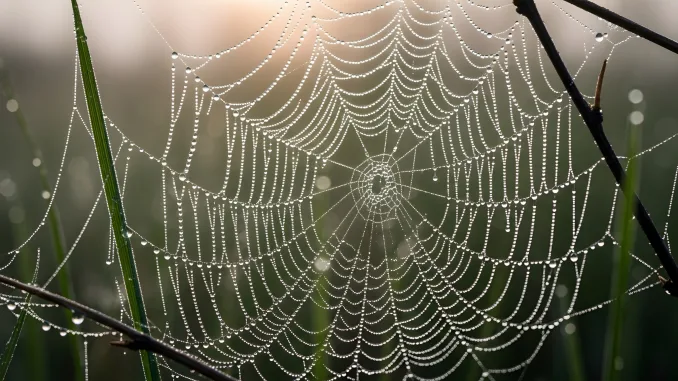
Spider silk proteins are truly fascinating, and they represent a cutting-edge development in biomaterials and sustainability. Here’s everything you need to know about them:
What Are Spider Silk Proteins?
Spider silk is a naturally occurring protein produced by spiders to create their webs, egg sacs, and even as a safety line (the famous “dragline silk”). This silk is known for its incredible strength, flexibility, and lightweight nature — some types are even stronger than steel and tougher than Kevlar, but much lighter!
The proteins that make up spider silk are long-chain molecules, and the primary protein in silk is called fibroin. When spiders spin silk, these proteins are assembled into fibers that can be incredibly strong yet stretchable.
Why Are Spider Silk Proteins So Special?
-
High Strength-to-Weight Ratio:
Spider silk is incredibly strong, but also light and flexible. This makes it ideal for applications requiring both strength and flexibility, like:-
Rope and fishing lines
-
Medical sutures (which need to be strong but gentle on the body)
-
Protective clothing (stronger than Kevlar, but lighter)
-
-
Biodegradability:
Unlike synthetic fibers, spider silk is biodegradable and environmentally friendly. This could have huge implications in reducing plastic waste. -
Elasticity and Flexibility:
Spider silk can stretch to up to five times its original length without breaking, which is part of why it’s so useful in a variety of natural applications, like forming webs that can absorb shock. -
Non-toxic and Biocompatible:
It’s completely natural, meaning it’s non-toxic and biocompatible, which is highly desirable for medical devices, surgical sutures, and implantable materials.
Applications of Spider Silk Proteins:
-
Biomaterials:
-
Sutures & Medical Devices: Spider silk’s biocompatibility makes it ideal for surgical sutures, where strength, flexibility, and the ability to dissolve safely in the body are needed.
-
Wound Healing: Spider silk is being explored for use in bandages or dressings that promote healing due to its anti-inflammatory properties.
-
Tissue Engineering: It’s being researched for artificial ligaments and tissue scaffolds.
-
-
Textiles & Fabrics:
-
Strong, Lightweight Clothing: Spider silk could be used in creating high-performance fabrics, like bulletproof vests, sports gear, or outerwear that’s both lightweight and incredibly durable.
-
Eco-friendly Fabrics: As a biodegradable alternative to synthetic fibers (like polyester), spider silk could be a game-changer for sustainable fashion.
-
-
Industry & Manufacturing:
-
Ropes & Fishing Nets: Spider silk’s strength makes it ideal for use in strong ropes, fishing nets, or parachutes. Imagine ropes that can handle enormous loads but weigh almost nothing.
-
Carbon Fiber Alternatives: In advanced materials, spider silk could potentially replace or improve carbon fiber composites in things like aerospace engineering.
-
-
Cosmetic & Pharmaceutical Uses:
-
Spider silk proteins are also being explored for skin care because of their strength, smooth texture, and ability to hold moisture.
-
How Do Companies Make Spider Silk?
The biggest challenge with spider silk is that spiders are territorial and don’t produce enough silk for large-scale commercial use. So, scientists and companies have found ways to replicate the silk production process.
-
Gene Editing & Fermentation:
Companies use precision fermentation to insert the genes responsible for spider silk production into yeast, bacteria, or even plants. These microorganisms then produce the silk protein when they’re fermented in large tanks.For example, the gene for producing spider silk proteins (like MaSp1 and MaSp2, which make up the dragline silk) is inserted into the DNA of yeast. The yeast then produces the proteins, which can be extracted and spun into fibers.
-
Transgenic Animals or Plants:
Some companies are even experimenting with genetically modified goats or plants that produce spider silk proteins in their milk or leaves, which can then be harvested for use in creating fibers.
Key Companies Working on Spider Silk Proteins:
-
Bolt Threads:
One of the biggest names in spider silk production, Bolt Threads has developed “Mussel Silk” (inspired by spider silk) and “Microsilk”, which is produced through fermentation. They’ve partnered with brands like Patagonia and Lululemon to make sustainable products, including clothing and fabrics. -
Spiber:
A Japanese company that uses fermentation to create spider silk proteins and has partnered with companies like The North Face to create sustainable, durable fabric for outdoor gear. -
Kraig Biocraft Laboratories:
This company focuses on genetically modified silkworms to produce spider silk-like fibers for commercial use. They are aiming for bioengineered spider silk to be used in products like body armor.
Challenges:
-
Scalability: While spider silk has immense potential, producing it at a large enough scale for industrial use is still challenging and expensive.
-
Cost: Producing spider silk synthetically is still expensive, and scaling up to make it economically viable for broad markets is a work in progress.
Spider silk is an incredibly strong, lightweight, and biodegradable material with endless potential in industries ranging from biomedicine to sustainable textiles. The future of spider silk is bright, thanks to advances in precision fermentation, genetic engineering, and biotechnology.

Leave a Reply