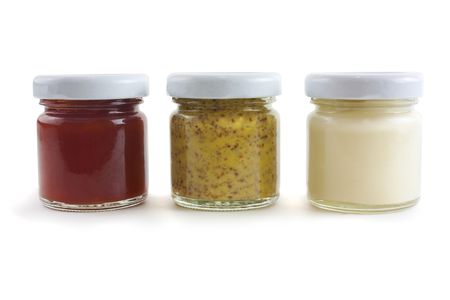
I often see requests for ways and methods of preserving sauces and pickles. Essentially it’s about creating hurdles to stop microbial contamination and then fermentation, especially of the well known pathogens such as Campylobacter, E. coli, Clostridium and Salmonella. Firstly, most sauces have a pH below 4.5 which means they are acidic – that prevents growth of many pathogenic bacteria but not moulds or yeasts. The main focus of effort is Listeria monocytogenes which is a mesophilic biofilm forming bacteria that causes issues for many producers.
Tomato sauce has been an issue in the past because this fruit has a pH close to 4.6 which takes it into a zone where pathogenic bacteria can begin to thrive. Adding vinegar is a good example of making the product acidic and has historically been used in some cases as the sole method of minimising microbial growth. There is also salt although a number of manufacturers want to reduce the salt content for health reasons. Encouraging the growth of benign bacteria also helps crowd out the pathogens as they just cannot compete except in a few exceptional cases. Using lactic acid bacteria for fermenting sauces has been a common cultural practice globally. Many produce bacteriocins which are preservatives in their own right (Cleveland et al., 2001).
Rancidity
The other issue which shortens shelf-life is rancidity which introduces unpleasant off notes and flavours. This is often due to fats becoming oxidised and so many formulators add antioxidants as a way of minimising this. Removing oxygen from the sauce formulation is also possible by deaeration although the viscosity of the sauce can be tricky to deal with. Chilling and freezing take the product into a temperature where it is too cold for growth, and there is cooking usually as part of the preparation process, pasteurisation and sterilization to destroy or reduce the bacteria content followed by packaging to keep out any further bugs. One of the most effective processing methods for killing organisms is radiation but who has facilities for irradiating foods with gamma rays at home! Microwave ovens are commonly used though as part of the processing regime.
Then there are preservatives to add – not just sodium benzoate and potassium sorbate but some of spices and herbs such as sage and rosemary have antimicrobial properties! Clearly there are lots of ways of preserving sauces and it pays to look at the formulation to see how hurdles can be introduced. If you want advice on formulation and processing, then I have worked with businesses and small family concerns who were making and marketing sauces.
Regulations On Preservatives
The legal limits of potassium sorbate, sodium benzoate, and their combinations in sauces vary by country and specific type of sauce. Below are general regulatory guidelines from major regions:
United States (FDA)
-
Potassium Sorbate & Sodium Benzoate:
-
Permitted in foods including sauces, provided their combined levels do not exceed 0.1% (1000 ppm).
-
Must be used in accordance with Good Manufacturing Practices (GMP) — i.e., only as much as needed for preservative effect.
-
European Union (EFSA)
-
Additive codes:
-
Potassium sorbate = E202
-
Sodium benzoate = E211
-
-
Typical Maximum Levels:
-
Sauces (excluding emulsified sauces like mayonnaise):
-
Up to 1000 mg/kg individually, or
-
Combined total must not exceed 1000 mg/kg when used together (i.e., 500 + 500, or 700 + 300, etc.)
-
-
-
Emulsified sauces (e.g., mayonnaise):
-
Usually allowed at up to 500 mg/kg individually or combined limit of 500 mg/kg.
-
Canada
-
Permitted in sauces with limits generally set at:
-
1000 ppm (mg/kg) for each additive, unless specified otherwise.
-
Some sauces (e.g., tomato sauces) may have stricter limits.
-
Codex Alimentarius (International FAO/WHO Guidelines)
-
Sauces, dressings, and emulsified condiments:
-
Up to 1000 mg/kg for each, or in combination.
-
Must follow GMP guidelines.
-
Summary Table (General Guidance)
| Region | Max Level (Each) | Max Combined Level | Notes |
|---|---|---|---|
| USA (FDA) | 1000 ppm (0.1%) | 1000 ppm | Must comply with GMP |
| EU (EFSA) | 1000 mg/kg | 1000 mg/kg | Lower for emulsified sauces (500 mg/kg) |
| Canada | 1000 ppm | 1000 ppm | Product-specific rules may apply |
| Codex | 1000 mg/kg | 1000 mg/kg | International reference standard |
Cleveland, J., Montville, T.J., Nes, I.F., Chikindas, M.L. (2001) Bacteriocins: safe, natural antimicrobials for food preservation. Int. J. Food Microbiol. 71 pp. 1-20
Show me more I’m writing an article for Timeout on this stuff.
Hi Kate,
Would be happy to. Are you writing a blog for Timeout – I presume this is the London magazine.