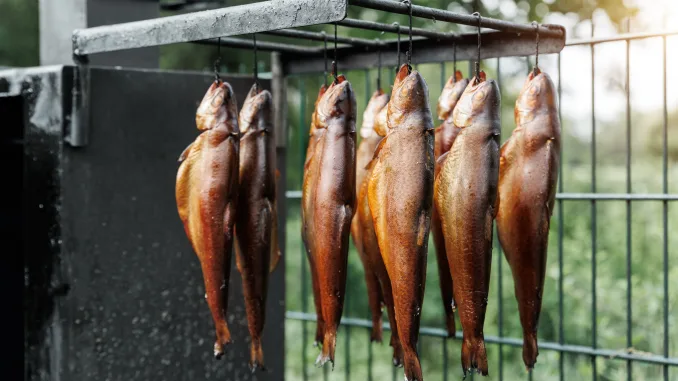
Smoking fish is a controlled dehydration and flavoring process that uses salt curing and low-temperature wood smoke to preserve and aromatize the flesh. Below is a precise, practical method for hot smoking, which is the safest and most accessible approach at home.
1. Choose the Right Fish
Best candidates (fatty fish work best):
-
Salmon
-
Trout
-
Mackerel
-
Bluefish
-
Arctic char
Lean fish (cod, haddock) can be smoked but require tighter moisture control.
Use very fresh fish. Remove pin bones. Leave skin on to help structural integrity.
2. Cure the Fish (Critical Step)
Curing firms the flesh, enhances flavor, and improves preservation.
Basic Wet Brine (Reliable for beginners)
Brine formula (by weight preferred):
-
1 liter water
-
60 g salt (6% solution)
-
60–100 g sugar (optional but recommended)
Optional aromatics:
-
Black peppercorns
-
Bay leaf
-
Garlic
-
Dill
-
Citrus zest
Brining Time
-
Thin fillets: 4–6 hours
-
Thick fillets: 8–12 hours
-
Whole small fish: 12 hours
Keep refrigerated (≤4°C / 40°F).
3. Dry and Form Pellicle (Do Not Skip)
After brining:
-
Rinse lightly under cold water.
-
Pat dry.
-
Place on a rack, uncovered, in refrigerator or cool ventilated area for 4–24 hours.
You want a tacky surface layer called a pellicle.
This is a protein film that helps smoke adhere evenly.
4. Prepare the Smoker
Target temperature for hot smoking:
65–80°C (150–175°F)
Wood choices:
-
Alder (traditional for salmon)
-
Apple
-
Cherry
-
Maple
Avoid:
-
Resinous woods (pine, spruce)
5. Smoke the Fish
Place fish skin-side down on rack.
Smoke until:
-
Internal temperature reaches 60–63°C (140–145°F)
-
Flesh flakes but is still moist
-
Color deepens to bronze
Typical time:
-
1.5–3 hours depending on thickness
Do not exceed 80°C chamber temperature or you’ll dry it out.
6. Rest and Cool
Let fish rest at room temp 30 minutes.
Refrigerate uncovered for several hours before storing.
This stabilizes texture and flavor.
Storage
-
Refrigerated: 5–7 days
-
Vacuum sealed: up to 2 weeks
-
Frozen: 2–3 months
Cold Smoking (Advanced – Requires Care)
Cold smoking is done at:
20–30°C (68–86°F)
Fish is cured longer and not cooked by heat.
This requires strict food safety control and is not recommended without experience.
Summary Workflow
-
Cure (brine)
-
Dry to form pellicle
-
Smoke at controlled low heat
-
Rest and chill
What Equipment To Use
1) Electric Smokers — Best All-Around for Beginners
Pros
-
Easy temperature control
-
Consistent heat/smoke
-
Works even in cold weather
Cons
-
Less “authentic” campfire flavor (unless you add wood chips/chunks)
Good for
-
Hot smoking salmon, trout, mackerel, etc.
Ideal if you want repeatable results with minimal fuss.
2) Charcoal / Kettle Grill with Smoker Box
What you need
-
Standard charcoal grill
-
Metal smoker box or foil pouch for wood chips
Pros
-
Great smoky flavor
-
Affordable if you already own a grill
Cons
-
Requires more monitoring of temps
-
Charcoal management takes practice
Best for
-
DIYers who like hands-on control
3) Pellet Smoker
Pros
-
Automatic fuel feed → stable temp and smoke
-
Excellent for frequent use
-
Plug-and-play ease
Cons
-
More costly than basic electric or charcoal
-
Slightly less smoke flavor than traditional wood fire
Best for
-
Anyone doing a lot of smoking
4) Offset Smokers (Traditional Barrel/Box Style)
Pros
-
Classic BBQ smoke system
-
Big capacity
Cons
-
Steep learning curve controlling smoke & heat
-
Requires more active management
Best for
-
Seasoned smokers who want rich wood flavor
5) Cold Smoking Attachment / Cold Smoke Generator
Purpose
-
To cold smoke fish (smoke flavor without cooking)
Typical Uses
-
Lox
-
Smoked trout dip
-
Cheese
Notes
-
Needs good airflow and temperature control
-
Often used with a regular smoker or grill as a separate cold smoke unit
Best for
-
People who want traditional cold-smoked fish
Essential Tools Across All Methods
Even a simple smoker setup still needs the following:
Thermometers
-
Ambient thermometer (smoker temp)
-
Probe thermometer for fish internal temp
Target hot smoking: 65–80°C (150–175°F)
Done when internal fish temp is ~60–63°C (140–145°F)
Racks, Grates & Trays
-
Cooling rack or perforated trays
-
Stainless steel or food-grade
Wood Chips/Chunks
Best choices for fish:
-
Alder
-
Apple
-
Cherry
-
Maple
Avoid pine or resinous softwoods (bad taste & soot).
Prep & Safety Supplies
-
Gloves (heat rated)
-
Spray bottle for moisture control
-
Aluminium foil or drip trays (cleaner smoker)
-
Brushes for cleaning
Wood Fuel Options
| Wood Type | Flavor Profile | Best For |
|---|---|---|
| Alder | Mild, delicate | Salmon, white fish |
| Apple | Sweet, fruity | Trout, whitefish |
| Cherry | Mild, fruity | All fish |
| Maple | Sweet/soft | Salmon, trout |
Quick Recommendation by Budget
Minimal investment
-
Kettle grill + charcoal + foil smoker pouch + thermometers
Moderate
-
Small electric smoker + wood chips
Frequent use / Rich flavor
-
Pellet smoker or offset smoker
Cold smoke specialist
-
Cold smoke generator + basic grill/smoker
Leave a Reply