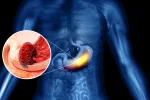
Pancreatic ductal adenocarcinoma (PDAC) is the most common and aggressive form of pancreatic cancer, accounting for ~90% of pancreatic malignancies. It arises from the ductal epithelial cells of the pancreas, which are responsible for transporting digestive enzymes.
Overview
-
Location: Most often in the head of the pancreas
-
Behavior: Highly aggressive, with early local invasion and distant metastasis
-
Prognosis: Generally poor due to late diagnosis and resistance to therapy
Epidemiology
-
Typically diagnosed between ages 60–80
-
Slightly more common in men
-
Among the leading causes of cancer-related death worldwide
-
Incidence is increasing globally
Risk Factors
Non-modifiable
-
Increasing age
-
Genetic predisposition (e.g., BRCA1/2, PALB2, CDKN2A, STK11)
-
Family history of pancreatic cancer
Modifiable
-
Smoking (strongest environmental risk factor)
-
Chronic pancreatitis
-
Obesity
-
Long-standing type 2 diabetes
-
Heavy alcohol use (indirectly, via pancreatitis)
Pathogenesis
PDAC develops through a stepwise progression from precursor lesions:
-
PanIN (Pancreatic Intraepithelial Neoplasia) → invasive carcinoma
-
Common genetic alterations:
-
KRAS (>90% of cases)
-
CDKN2A (p16)
-
TP53
-
SMAD4
-
The tumor microenvironment is characterized by a dense desmoplastic stroma, which limits drug penetration and contributes to treatment resistance.
The Molecular Biology of pancreatic ductal adenocarcinoma (PDAC).
1. Cells of Origin & Precursor Lesions
PDAC arises from pancreatic ductal epithelium or acinar cells that undergo acinar-to-ductal metaplasia (ADM) under inflammatory stress.
Key precursor lesions
-
PanIN (pancreatic intraepithelial neoplasia) – most common
-
IPMN and MCN (less commonly progress to PDAC)
Progression follows a stepwise accumulation of genetic alterations.
2. Core Driver Mutations (“The Big Four”)
Over 95% of PDACs harbor mutations in at least one of these genes:
KRAS (≈90–95%)
-
Early, initiating event
-
Constitutive activation of RAS signaling
-
Common mutations: G12D, G12V, G12R
-
Activates:
-
MAPK pathway (RAF → MEK → ERK)
-
PI3K–AKT–mTOR pathway
-
Ral-GDS signaling
-
-
Promotes proliferation, survival, metabolic rewiring
KRAS addiction is a hallmark of PDAC
CDKN2A (p16^INK4A^) (≈90%)
-
Tumor suppressor gene
-
Loss via mutation, deletion, or promoter methylation
-
Results in unchecked CDK4/6 activity
-
Leads to G1–S cell cycle progression
TP53 (≈70%)
-
Late event in progression
-
Loss of DNA damage checkpoint
-
Gain-of-function mutant p53 promotes:
-
Genomic instability
-
Invasion and metastasis
-
Chemoresistance
-
SMAD4 (DPC4) (≈50%)
-
Mediates TGF-β signaling
-
Loss shifts TGF-β from tumor-suppressive to pro-metastatic
-
Strongly associated with widespread metastatic disease
3. Additional Genetic & Epigenetic Alterations
DNA Damage Repair Defects
-
BRCA1/2, PALB2, ATM
-
Present in ~10–15% (germline + somatic)
-
Confer:
-
Sensitivity to platinum chemotherapy
-
Responsiveness to PARP inhibitors
-
Chromatin Remodeling Genes
-
ARID1A, KDM6A, SMARCA4
-
Affect transcriptional regulation and lineage plasticity
Epigenetic Changes
-
DNA methylation of tumor suppressors
-
Histone modifications driving oncogene expression
-
Super-enhancer activation of KRAS-driven programs
4. Signaling Pathways Dysregulated in PDAC
| Pathway | Effect |
|---|---|
| KRAS/MAPK | Proliferation |
| PI3K–AKT–mTOR | Survival, metabolism |
| TGF-β | EMT, invasion |
| Wnt/β-catenin | Stemness |
| Notch | Cell fate, ADM |
| Hedgehog | Stromal activation |
| Hippo/YAP–TAZ | Mechanotransduction, metastasis |
5. Tumor Microenvironment (TME): A Defining Feature
Desmoplastic Stroma
-
Makes up up to 90% of tumor mass
-
Composed of:
-
Cancer-associated fibroblasts (CAFs)
-
Stellate cells
-
Extracellular matrix (collagen, hyaluronan)
-
Functions
-
Physical barrier to drug delivery
-
Promotes hypoxia
-
Secretes growth factors (TGF-β, IL-6)
Immune Landscape
-
Immunosuppressive
-
Dominated by:
-
MDSCs
-
Tumor-associated macrophages (M2)
-
Regulatory T cells
-
-
Sparse cytotoxic T cells → explains poor response to checkpoint inhibitors
6. Metabolic Reprogramming
PDAC cells survive in hypoxic, nutrient-poor conditions by:
-
Enhanced aerobic glycolysis
-
Macropinocytosis of extracellular proteins
-
Autophagy dependence
-
Altered glutamine metabolism (KRAS-driven)
7. Molecular Subtypes
Transcriptomic profiling identifies subtypes with prognostic relevance:
Classical
-
High epithelial gene expression
-
Better prognosis
-
More chemo-sensitive
Basal-like / Squamous
-
EMT markers
-
TP53 mutations
-
Worse prognosis
-
Chemoresistant
8. Metastasis Biology
-
Early dissemination (even before overt tumor formation)
-
EMT driven by TGF-β, ZEB1, SNAIL
-
Circulating tumor cells with stem-like features
9. Therapeutic Implications
| Alteration | Target |
|---|---|
| BRCA/PALB2 | PARP inhibitors |
| KRAS G12C (rare) | KRAS inhibitors |
| CDK4/6 activation | CDK inhibitors (investigational) |
| Stromal pathways | CAF-targeting agents |
| DNA repair defects | Platinum agents |
10. Why PDAC Is So Lethal (Molecularly)
-
Early KRAS-driven oncogenesis
-
Profound stromal protection
-
Immune evasion
-
Genomic instability without actionable drivers
-
Rapid metastatic competence
Clinical Presentation
Early disease is often asymptomatic. When symptoms occur, they may include:
-
Painless jaundice (especially tumors in the pancreatic head)
-
Weight loss and anorexia
-
Epigastric or back pain
-
New-onset or worsening diabetes
-
Fatigue
-
Pale stools and dark urine
Diagnosis
-
Imaging: Contrast-enhanced CT (pancreatic protocol) is first-line
-
MRI/MRCP: Helpful for ductal anatomy
-
Endoscopic ultrasound (EUS) with biopsy for histologic confirmation
-
CA 19-9: Tumor marker (useful for monitoring, not screening)
Staging
Uses the TNM system and is often categorized clinically as:
-
Resectable
-
Borderline resectable
-
Locally advanced (unresectable)
-
Metastatic
Treatment
Surgical
-
Surgical resection (e.g., Whipple procedure) is the only potentially curative option
-
Only ~15–20% of patients are resectable at diagnosis
Systemic Therapy
-
Adjuvant or neoadjuvant chemotherapy
-
Common regimens: FOLFIRINOX, gemcitabine + nab-paclitaxel
-
-
Targeted therapy in select patients (e.g., PARP inhibitors for BRCA-mutated tumors)
Radiation
-
Used selectively, often for local control
Prognosis
-
5-year survival: ~10–12% overall
-
After successful resection and adjuvant therapy: ~25–30%
-
Prognosis depends on stage, performance status, and tumor biology
Research & Emerging Areas
-
Early detection strategies (liquid biopsy, biomarkers)
-
Immunotherapy combinations (PDAC is largely immunotherapy-resistant)
-
Targeting the tumor stroma and metabolic pathways
-
Personalized medicine based on molecular profiling
How Does PDAC Compare With Other Adenocarcinomas
1. Shared Adenocarcinoma Features
Across organs, adenocarcinomas typically share:
-
Origin from glandular epithelium
-
Stepwise carcinogenesis with driver mutations
-
Hallmarks of cancer (genomic instability, evasion of apoptosis, metastasis)
-
Ability to form gland-like structures histologically (early disease)
PDAC diverges in how early and aggressively these features appear.
2. Driver Mutation Landscape (Key Difference)
| Cancer Type | Dominant Drivers | Actionability |
|---|---|---|
| PDAC | KRAS (~95%), TP53, CDKN2A, SMAD4 | Very low |
| Colorectal | APC, KRAS (~40%), TP53 | Moderate |
| Lung (adenoca) | EGFR, KRAS (~30%), ALK | High |
| Gastric | TP53, CDH1 | Low–moderate |
| Breast | PIK3CA, HER2, BRCA | High |
| Prostate | AR, PTEN, TMPRSS2-ERG | High |
Why PDAC is different
-
Near-universal KRAS dependence
-
Loss of SMAD4, rare in other adenocarcinomas
-
Few druggable oncogenes
3. Timing of Metastasis
| Feature | PDAC | Other Adenocarcinomas |
|---|---|---|
| Metastatic spread | Very early | Typically later |
| Micrometastases | Present at diagnosis | Often absent |
| Dormancy | Minimal | Common |
PDAC cells acquire metastatic competence early, even at PanIN stages.
4. Tumor Microenvironment (Most Distinctive Feature)
Stromal Content
| Cancer | % Stroma |
|---|---|
| PDAC | Up to 90% |
| Breast | 20–40% |
| Colorectal | 10–30% |
| Lung | Variable, less dense |
PDAC stroma:
-
Dense collagen and hyaluronan
-
High interstitial pressure
-
Collapsed blood vessels
➡️ Chemotherapy penetration is uniquely impaired
Immune Environment
| Feature | PDAC | Melanoma / Lung |
|---|---|---|
| CD8⁺ T cells | Sparse | Abundant |
| Tregs / MDSCs | High | Lower |
| Checkpoint inhibitor response | Poor | Strong |
PDAC is a “cold tumor”, unlike many other adenocarcinomas.
5. Metabolic Adaptation
PDAC cells:
-
Thrive in hypoxia and nutrient deprivation
-
Depend on autophagy and macropinocytosis
-
Exhibit unique KRAS-driven glutamine rewiring
Most other adenocarcinomas rely more on:
-
Aerobic glycolysis (Warburg effect)
-
Better vascularization
6. Precursor Lesions
| Cancer | Well-defined precursors |
|---|---|
| PDAC | PanIN, IPMN |
| Colon | Adenoma |
| Cervix | CIN |
| Lung | Less clear |
| Prostate | PIN |
PDAC precursors are:
-
Microscopic
-
Hard to detect
-
Rarely screened
7. Molecular Subtypes (Comparative)
| Cancer | Subtypes Used Clinically |
|---|---|
| Breast | Luminal A/B, HER2, TNBC |
| Lung | EGFR, ALK, KRAS |
| Colorectal | CMS1–4 |
| PDAC | Classical vs Basal-like (research stage) |
PDAC subtypes lack strong therapeutic stratification so far.
8. Therapeutic Responsiveness
| Modality | PDAC | Other Adenocarcinomas |
|---|---|---|
| Surgery | Rarely feasible | Often curative |
| Chemotherapy | Modest benefit | Variable, often better |
| Targeted therapy | Limited | Common |
| Immunotherapy | Ineffective | Often effective |
9. Survival Outcomes
| Cancer | 5-Year Survival |
|---|---|
| PDAC | ~10–12% |
| Lung adenoca | ~25% |
| Colorectal | ~65% |
| Breast | ~90% |
| Prostate | >95% |
PDAC is an outlier in lethality, not just another adenocarcinoma.
10. Conceptual Summary: Why PDAC Is Unique
PDAC combines:
-
Early KRAS-driven oncogenesis
-
Early metastatic ability
-
Extreme stromal protection
-
Profound immune evasion
-
Metabolic resilience
-
Lack of druggable targets
Other adenocarcinomas may share some of these features—PDAC has all of them simultaneously.


Leave a Reply