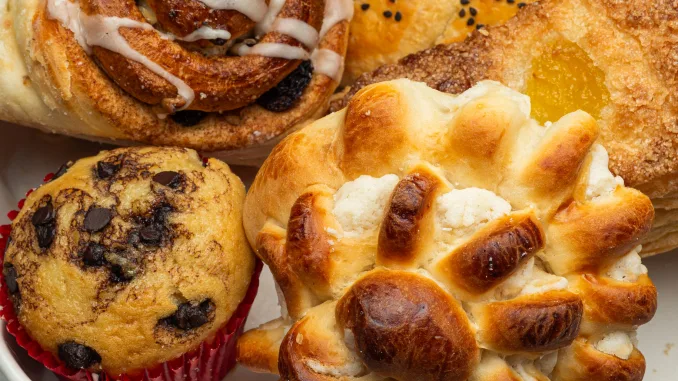
Fats (lipids) are among the critical constituents in many baked goods (cakes, biscuits, cookies, laminated pastries etc.). Their roles are manifold:
-
Aeration / Leavening / Gas cell stabilization: In many batters and doughs, fats help trap air during mixing (creaming) and stabilize gas bubbles during baking. Solid fats (or partially solid) crystallize and help in forming films around air cells.
-
Texture and mouthfeel: Fats contribute to tenderness by interfering with gluten (in wheat-based products) development, reducing toughness, and giving richness, lubricity, smoothness. They also contribute to the melting and perceived moistness.
-
flavour delivery and sensory aspects: Fats carry fat‐soluble flavour compounds, give richness and can impact perceived aroma. Also the melting behaviour of fat (on biting or in mouth) gives certain sensations.
-
Structure and crumb properties during cooling: After baking, as products cool, fats crystallize or solidify, helping define crumb structure (e.g. softness, springiness, cohesiveness) and contribute to shelf life (by retarding staling). They also affect moisture migration and water activity.
-
Colour, appearance and heat transfer: Fats in dough affect oven browning (Maillard and caramelization reactions, heat conduction), gloss of crust, spread of biscuits, etc.
However, there are challenges with high fat content:
-
Nutritional concerns: saturated fats, trans fats (especially from hardened shortenings) are linked to cardiovascular disease. There is pressure to reduce total fat, saturated fat, or calories.
-
Consumer demand: healthier food, lower fat products, but with similar sensory qualities.
-
Technological constraints: replacing fat often disrupts functional performance: texture, spread, volume, crispness etc.
Hence, the area of fat replacers or fat reduction strategies is a significant field of research and industrial interest. Some of the most successful reduced-fat products available in the marketplace today include baked goods, dairy products, salad dressings, and sauces. In this article I’m only covering baked goods.
Types of Fat Replacers: Classification
Fat replacers are usually classified based on their chemical composition or functional mimicry. Broadly:
-
Carbohydrate‐based fat replacers (also called fat mimetics): include starches, fibres, gums, modified carbohydrates, hydrolyzed polysaccharides.
-
Protein‐based fat replacers: microparticulated proteins, protein isolates, egg whites etc.
-
Lipid‐based fat replacers or substitutes / structured lipids: could be oils that are restructured (oleogels, organogels), modified triglycerides, or blends that mimic the functionality of fats.
Also, whole food matrices (purees, pulps, flours) are increasingly used as fat replacers.
Another distinction is between fat mimetics (which may not replicate all roles of fat but try to recreate some texture/mouthfeel etc.) versus fat substitutes (which more closely mimic the functional, physical and sensory properties, often chemically or structurally).
Mechanisms: How Fat Replacers Work
To understand how replacers function (or fail), we need to focus on what fat does in dough/batter and the physical/chemical interaction of replacers.
-
Interruption of gluten network: Fat coats flour proteins, limiting hydration and gluten formation. This “shortening” effect contributes to tenderness. Replacers must compensate (to some degree) for loss of this effect.
-
Water binding and moisture retention: Many carbohydrate or protein replacers bind water, which helps maintain moisture that fat would have contributed, though water behaves differently (e.g. in evaporation, vaporization, starch gelatinization).
-
Bubble nucleation and stabilization: Fats (especially solid or semi‐solid) help stabilize air bubbles during mixing and early baking by forming films. Without them, rise, volume, crumb structure suffer. Replacers may mimic this via gel networks or microparticulate systems.
-
Thermal behaviour / melting point / crystallization: The melting profile of fat influences how structure sets during baking and cooling. Solid fats also give structure once set. Replacers, or structured oils, oleogels, organogels try to mimic melting/crystallization behaviour.
-
Sensory lubrication / mouthfeel: Replacers must deliver lubrication, creaminess, richness, or at least something acceptable. Carbohydrate gels, protein microparticles, or emulsions may deliver some of this; but often there is a trade‐off.
Specific Types: Examples, Performance, Trade-offs
Below are specific major categories of fat replacers, with technical details, performance in different baked goods, and typical substitution levels and trade‐offs.
1. Carbohydrate‐Based Replacers
-
Inulin / long‐chain fructans: These are soluble fibres that can form gel networks, can crystallize, can hold water. In crackers, inulin has replaced up to ≈ 75% of fat while retaining acceptable sensory quality; in cakes and muffins lower levels (maybe 25-50%) are more realistic before negative effects (e.g. dryness, crumb density) appear.
-
Maltodextrin / modified starches / dextrins / amylopectin / amylose derivatives: These contribute bulk, viscosity; can help with browning and moisture retention. But at high replacement levels can increase firmness, reduce spread, alter colour.
-
Gums and hydrocolloids (e.g. guar gum, xanthan, pectins, HPMC): These are used to improve moisture retention, viscosity, stabilize batters and doughs. But overuse or high substitution levels often lead to undesirable textures (gumminess, off‐mouthfeel, slower rise). For example, HPMC has caused significant negative impacts to sensory qualities when used heavily in biscuits/crackers.
-
Polydextrose: a low‐calorie bulking carbohydrate; used often up to moderate fat replacement (e.g. 25-30%) providing body, mouthfeel. But at high levels, mouthfeel may degrade, certain “off” tastes or textural defects may be noticed.
-
Whole grain / fibre materials: such as oat bran / β-glucans, chia seed mucilage, fruit purees, legume purees, kernel flours. These bring not only mimicry of fat roles but also nutritional benefits (fibre, micronutrients). But due to their own structure, flavour, water content, particle size etc., they can alter dough handling, volume, crust colour, moisture distribution. For instance, green pea or bean purees have been used in biscuits up to 75% fat replacement with sometimes improved or maintained sensory qualities; but at very high levels or in sensitive products results deteriorate.
2. Protein‐Based Replacers
-
Microparticulated proteins: very small protein particles (e.g. whey protein, egg white) that mimic lubrication and creaminess. They can replace a portion of fat, improving texture. But their thermal behaviour is different: proteins denature and coagulate, may contribute firmness, set differently.
-
Proteins combined with carbohydrates or fats/emulsifiers: e.g. combinations of whey protein isolate (WPI) + maltodextrin + medium chain triglycerides (MCT) in madeleines (a high fat product) resulted in formulations where physicochemical properties (softness, crispness) and consumer acceptance approximated full‐fat controls, especially when substitution was partial rather than full.
3. Lipid/Structured Lipid Replacers
-
Oleogels / organogels: structuring of liquid oils (often more unsaturated, hence healthier) with gelling agents (waxes, fibres, or polymers) to produce solid or semi‐solid fat analogues. These imitate certain thermal / melting / crystal properties of fats. Studies show reductions in total fat (e.g. 19-46%) and saturated fatty acids (e.g. 33-87%) can be achieved, in many cases reaching nutrition claim thresholds in the EU.
-
Structured lipids / modified triglycerides: these might include speciality fats with reduced saturated/trans fatty acids or modified melting behaviour. These are less commonly used than carbohydrate or whole food replacers, due to regulatory, cost, or flavour‐issues.
-
Fat blends / partial substitutions: using oils (olive oil, canola, sunflower etc.) with more favourable fatty acid profiles in place of saturated or trans fats, either alone or via structure modification. These generally improve nutritional profile but may alter texture or thermal setting, or risk oxidation (if highly unsaturated oils) or affect flavour.
Effects of Fat Replacement on Rheology, Dough / Batter Properties
When fat is replaced (fully or partially) by one of the above types, a chain of changes occur in the dough or batter, which then translate into differences in baked product quality. Understanding these is key to optimizing formulations.
-
Viscosity, yield stress, flow properties: Replacers often increase batter or dough viscosity (especially carbohydrate and protein based), changing mixing energy, aeration, handling. Gels or hydrocolloids may result in shear thinning behaviour, altered viscoelastic moduli.
-
Gas cell distribution, bubble stability: Less solid fat means less stabilization of air during mixing; replacers must compensate, else reduced volume, coarser crumb, collapse are risks. For example oleogels or gelled fats may help; also protein microparticles or gel networks.
-
Gluten network interactions: Without fat interference, gluten may develop more; this sometimes yields toughness. Also increased water from replacers may hydrate gluten more. So there is a delicate balance: too much gluten, too rigid texture. Some replacers also interact chemically (e.g. proteins may form crosslinks).
-
Thermal transitions: Melting of fat, gelatinization of starch, protein denaturation: these events may shift in temperature or extent. Replacers may change water distribution, delaying starch gelatinization or altering crumb setting. Cooling‐stage crystallization (or re‐solidification) of fat contributes to final texture; replacers might lack that or have different crystal form.
-
Moisture content, water activity, drying: Increased water from replacers can lead to more water evaporation, possibly higher moisture loss or staling. Also, water activity may support microbial growth if not managed. Moisture retention via gels or hydrocolloids is often needed.
Effects on Baked Product Quality: Texture, Sensory, Shelf Life etc.
Given the above changes in dough/batter, what are the observed effects on the finished product?
Texture and Crumb
-
Firmer crumb / greater hardness: Especially at high substitution levels of carbohydrate or protein replacers, products tend to be firmer, less tender. For example, use of inulin or modified starch up to high levels can increase breaking strength, firmness.
-
Reduced volume / collapse: Without adequate gas retention, breads, cakes may have lower height, denser crumb. Replacement must ensure aeration and stabilization.
-
Altered mouthfeel / crumbliness: Loss of fat lubrication can lead to dryness, crumbliness, perception of being “off” compared to full fat. Replacers that provide lubrication (e.g. oleogels or fat‐based substitutes) help.
flavour, Aroma, Color
-
flavour carry reductions: Since fats carry flavour molecules, reduced fat often leads to weaker flavour intensity. Also, off flavours from replacers (beany taste, fibre taste) or from oxidation (unsaturated oils) can become more noticeable.
-
Color and appearance: Crust browning (due to fat’s effect on heat transfer, moisture removal) may be reduced; spread in cookies/biscuits altered; surface gloss, crumb colour (lightness, yellowing etc.) can change depending on replacer.
Sensory Acceptability
-
Generally partial replacement (something like 25-50%, depending on product and replacer type) is more likely to yield acceptable products. Full replacement often leads to noticeable deficits. For instance, in madeleines, combinations of replacers approximated full‐fat when partial substitution used, but full replacement impaired texture and consumer liking.
-
Type of product matters: products with dense structure (e.g. biscuits) might tolerate higher substitution than those relying on aeration (cakes, sponge). Also, salted vs sweet, flavourful vs mild flavoured products (stronger flavour can mask off‐notes).
Shelf Life and Staling
-
Fats help delay staling by interfering with starch retrogradation. Removing or reducing fat can lead to faster staling (hardening, dryness). Replacers that hold water or form gels can mitigate.
-
Oxidative stability: replacing saturated/trans fats with more unsaturated ones can lead to oxidation unless antioxidants are used, or oil structuring (oleogel) etc.
-
Moisture migration and microbial spoilage: higher water content, or higher water activity, may increase risk; formulations/removal of fat need to consider packaging and preservatives or barrier properties.
Production / Formulation Considerations & Limits
-
Level of substitution: There is a ceiling beyond which quality degrades notably. For many carbohydrate or whole food fat replacers, ~ 50-75% replacement is sometimes feasible in less demanding products (e.g. biscuits). In cakes, sponges, full fat replacement tends to cause problems. Oleogels may allow higher replacement levels but tuning is needed.
-
Particle size, hydration, rheology tuning: For carbohydrate or protein replacers, their particle size, degree of modification, hydration kinetics, gel strength etc. must be optimized. For example, finely microparticulated proteins provide smoother mouthfeel, less “graininess”.
-
Thermal behaviour: Melting point, crystal polymorphism (for solid fats), consistency at room and baking temperatures. Oleogels or structured lipids need to replicate these.
-
Interactions with other ingredients: Sugar, water, flour, raising agents, emulsifiers, etc. For instance, more water may drive more gelatinization or activation of gluten; emulsifiers can help stabilize air bubbles or interfaces.
-
Processing conditions: Mixing, time, speed; baking temperature profiles; cooling rates; handling etc. Changes in fat content or fat type may require adjusting processing.
-
Cost, supply, regulatory status, labelling & consumer perception: Some replacers are expensive or novel; regulatory approval (e.g. for fat substitutes or modified lipids) may be required; labelling (e.g., “reduced fat”, “fat free”, claims about saturated fat) must meet legal thresholds. Consumer attitudes toward “purity”, “naturalness”, “clean label” also matter.
Examples from Recent Research
To make concrete some of the above, here are a few representative recent findings:
-
In a review titled “Fat replacers in baked products: their impact on rheological properties and final product quality”, carbohydrate‐, protein‐, and lipid-based replacers were evaluated. Key findings include that using carbohydrate‐based replacers often increases batter/dough viscosity and crumb firmness, but can be acceptable up to moderate levels; lipid-based structured systems like oleogels can reduce saturated fats significantly while maintaining acceptable sensory quality when appropriately formulated.
-
In studies on oleogelation: glycerated waxes/fibres used to structure oils have allowed reductions of total fat between ~ 19% and 46%, with saturated fatty acids reduced by 33-87%, while maintaining physical quality and meeting nutrition claim requirements in many cases.
-
Use of whole food replacers: for example bean or green pea purees, apricot kernel flour, chia mucilage. Such whole food matrices tend to impart more complex interactions (flavour, particle, water content), but often have fewer negative sensory penalties, especially at moderate substitution (e.g. 25-50%).
-
In madeleines (high fat cakes), combinations of WPI (whey protein isolate), maltodextrin (MD), and medium chain triglycerides (MCT) produced formulations that approximated texture, crust colour, softness and crispness close to full-fat control, achieving good consumer acceptance, but only when substitution was partial; beyond certain levels quality declines.
Limitations, Trade-offs, and Unresolved Challenges
While fat replacers have made considerable progress, many challenges remain:
-
Sensory compromise: Even when the physical properties (texture, volume) are near acceptable, subtle flavour, aftertaste, mouthfeel “richness” or “succulence” may be lost. Fat‐based flavour delivery is hard to mimic completely.
-
Full substitution is hard: As noted, replacing 100% of fat often leads to unacceptable quality. Dual or blended systems (e.g., partial fat + replacer) are more realistic.
-
Cost and complexity: Some replacers (oleogels, structured lipids) require more complex formulations, processing steps, or ingredient costs. Also, supply of some specialty ingredients may be limited.
-
Stability (oxidative, storage): More unsaturated lipid replacements or oils may oxidize unless protected. Moisture from replacers can shift water activity, possibly affecting microbiological stability or leading to earlier staling if moisture migrates.
-
Regulatory & Labelling: Some fat substitutes have regulatory hurdles (e.g. Olestra in some jurisdictions), or require labelling that may negatively affect consumer perceptions. Health claims about saturated or total fat must meet regulatory thresholds.
-
Consumer perception and clean label demands: Many consumers prefer natural, minimal ingredients. Replacers such as gums, hydrocolloids, or “E-numbers” may be viewed negatively. Also, off flavour or texture deficits are often tolerated only up to a point.
-
Process adaptation: Industrial lines (mixing, proofing, baking, cooling) often optimized for specific fat types; changing fat content or type may require re‐engineering parameters (e.g. mixing times, bake times) to avoid defects.
Strategies and Best Practices for Fat Replacement Formulation
From the literature, some strategies emerge as more successful:
-
Blended replacements: Using combinations of fat mimetic (carbohydrate or protein) + structured lipid + emulsifier + whole food component tends to yield better overall quality than single replacers alone.
-
Gradual substitution: Stepwise replacement (e.g. 25%, then 50%, etc.) allows observation and optimization.
-
Matching melting / crystallization properties: For applications where fat solidifies or needs thermal setting (e.g., in shortening, lamination, creaming), replacers or structured lipids need to mimic melting/freeze transitions. Oleogelation or fat blends help.
-
Optimizing water content & rheology: Because many replacers bring extra water, formulation must account for hydration, moisture loss during baking, sugar content, etc., to maintain moisture, avoid sogginess or dryness.
-
Using effective emulsifiers / stabilizers: To help with air incorporation, stabilizing air bubbles, modifying surface tension etc.
-
Sensory testing: Both instrumental and consumer panels are needed. Taste, texture, appearance all matter. Sometimes consumers are forgiving of small changes; sometimes even small off flavours matter.
-
Considering nutrition claim thresholds: If the goal is to qualify for “reduced fat”, “low saturated fat”, or “healthy” claims, the formulation must meet those legal levels; this often dictates how much fat can be removed or replaced.
Case Study: Oleogels and Gel Systems
Given that oleogels and more generally gel systems are among the more promising newer approaches, some more detailed technical insight is useful.
-
Oleogels are systems where liquid oils (preferably unsaturated or with better lipid profiles) are structured into a semi‐solid form by adding gelators (waxes, oily crystals, fibres, or polymers). They mimic solid fat behaviour (melting behaviour, plasticity, spreadability) while enabling lower saturated fat content.
-
In baked goods, oleogels have been used in cake and biscuit formulations. Examples show reductions in total fat by roughly one‐fifth to almost half, and saturated fatty acids by substantial amounts, while retaining acceptable structural, textural, and sensory properties (though sometimes with trade‐offs in volume, colour, etc.).
-
Challenges with oleogels include ensuring thermal stability (gel stays solid or semi‐solid at room temperature but melts appropriately), avoiding oil leakage during baking, ensuring that mechanical strength is sufficient to stabilize air bubbles during baking, ensuring good mouthfeel (no waxy or greasy aftertaste) and managing oxidation.
-
Other gel systems: hydrogels, emulgels—these may include water or water + oil phases structured by gels/emulsifiers. These are useful particularly in applications where water content is higher; but they may introduce issues of moisture evaporative loss, risk of sogginess, or microbial stability.
Future Directions
Some promising areas that need further research or are beginning to be exploited:
-
Novel gelators / structuring agents: Development of more natural, food‐grade, clean label gelators for oleogels or organogels, perhaps plant‐based waxes, fibre polymers, etc.
-
Better understanding of microstructure: Using microscopy, rheology (small & large strain), thermal analysis (DSC), to correlate replacements with crumb structure, air cell size/distribution, fat droplet/gel network distribution. This may allow engineered formulations with predictable quality.
-
“Whole ingredient” fat replacers: Use of by‐product flours, pulps, purées—particularly if they have multiple functions (nutrition, flavour, fibre). Work to optimize these so off flavour / texture defects are minimal.
-
Consumer‐driven perception studies: Since acceptable trade‐offs often depend on what consumers expect. For example, in some products (e.g. biscuits) consumers may accept some loss of richness if crispness and flavour are preserved; in cakes, they may be more sensitive.
-
Sustainable and health‐oriented lipids: Exploring oils with higher MUFA/PUFA content, or structured lipids, and ensuring supply chain, oxidation control, and cost viability.
-
Processing innovations: Technologies like ultrasonication, high pressure, microfluidization, etc., might improve dispersion, emulsification, or structure of replacers.
-
Combined strategies: Not only replacing fat, but optimizing sugar content, flour type (whole grain, alternative starches), emulsifier systems, baking methods to compensate and enhance performance.
Fat replacers offer a powerful tool for reducing calorie, saturated fat and trans fat content in baked goods while maintaining product quality. The technical challenges are non‐trivial: fat plays multiple, interlinked roles (structure, mouthfeel, aeration, flavour, thermal behaviour). Carbohydrate‐, protein‐, and lipid‐based replacers, as well as whole food matrices, each have strengths and limitations. Structured lipid systems (oleogels etc.) and blended replacer systems appear especially promising.
Optimal results tend to come when:
-
replacement is partial rather than total,
-
replacers are carefully selected to match functional roles of fat,
-
formulations are tuned (water content, emulsifiers, processing) to the specific product,
-
sensory and consumer acceptability are evaluated,
-
and shelf life, oxidative stability and regulatory / labelling considerations are handled.
There remains considerable scope for innovation: new structuring agents, sustainability, natural / clean label ingredients, more advanced understanding of microstructure, and matched industrial processing.

Leave a Reply