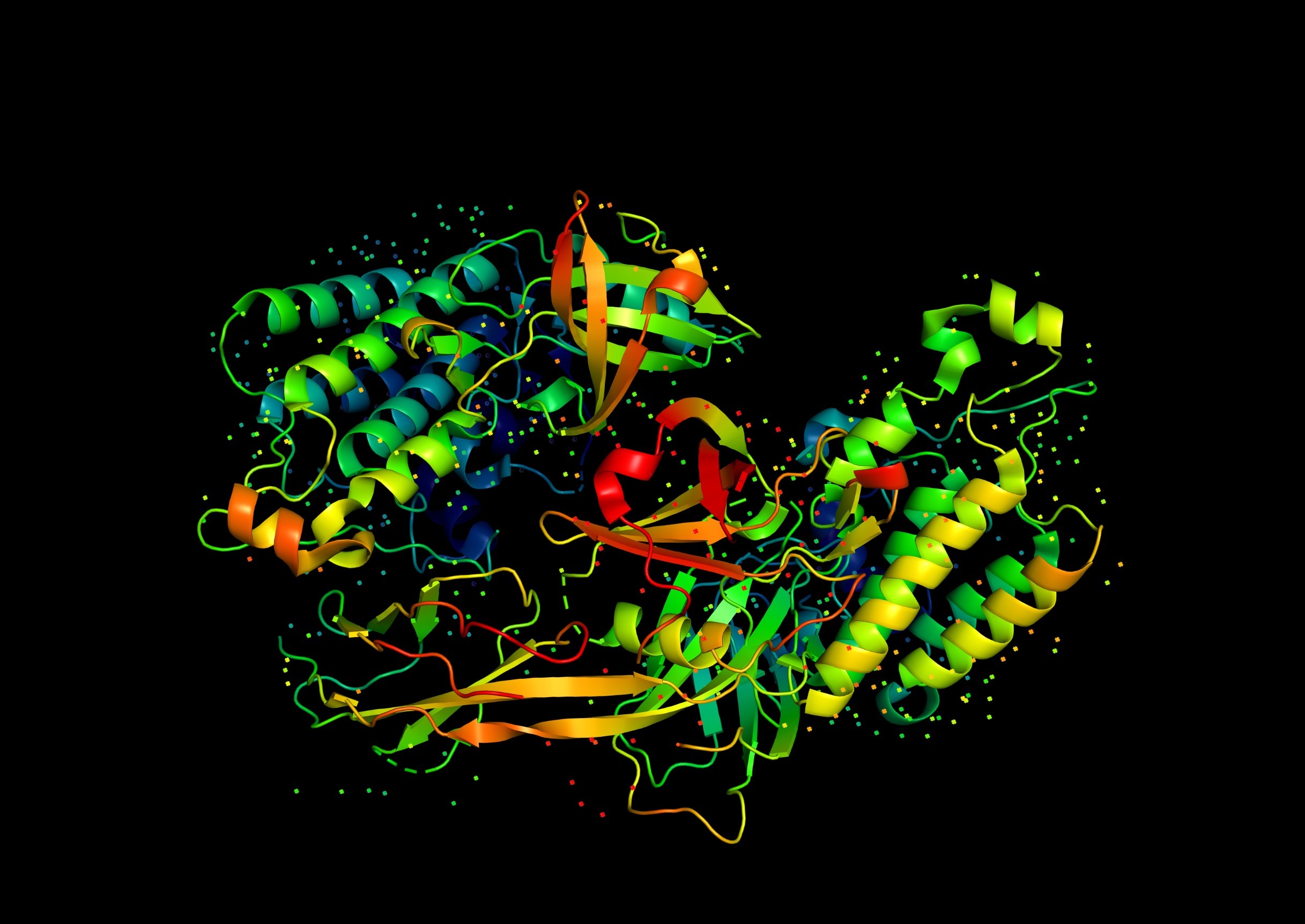
A zinc finger is a small, independently folded protein structural motif that stabilizes its shape by coordinating one or more zinc ions (Zn²⁺). Zinc fingers are among the most common DNA-binding motifs in eukaryotic proteins and play central roles in gene regulation, DNA recognition, RNA binding, and protein–protein interactions.
Proteins that contain zinc fingers belong to one of the largest families of transcriptional regulators mostly in eukaryotes but also in some prokaryotes too.
Core concept
-
The zinc ion is not catalytic; it serves a structural role, holding the protein fold together.
-
Coordination typically involves the amino acids, cysteine (Cys) and/or histidine (His) residues.
-
The stabilized structure allows a short peptide segment to make precise molecular contacts, most often with DNA.
Classical C2H2 zinc finger (the archetype)
The best-known zinc finger is the C2H2 type, first characterized in the transcription factor TFIIIA.
Features
-
Coordination: 2 cysteines + 2 histidines
-
Structure:
-
Two antiparallel β-strands
-
One α-helix
-
-
The α-helix inserts into the major groove of DNA
Functional implication
-
Each finger typically recognizes 3–4 base pairs
-
Proteins often contain multiple zinc fingers in tandem, enabling sequence-specific DNA binding
Major classes of zinc fingers
Zinc fingers are classified by their coordinating residues and structural topology.
1. C2H2 zinc fingers
-
Most abundant in eukaryotes
-
Primarily DNA-binding
-
Common in transcription factors (e.g., Krüppel-like factors)
2. C4 zinc fingers
-
Coordination: 4 cysteines
-
Found in nuclear hormone receptors (e.g., estrogen receptor)
-
Often bind DNA as dimers
3. C3H1 (or CCCH) zinc fingers
-
Often bind RNA
-
Involved in mRNA stability and processing
4. RING fingers (C3HC4)
-
Mediate protein–protein interactions
-
Common in E3 ubiquitin ligases
5. LIM domains
-
Specialized protein-interaction modules
-
Important in cytoskeletal organization and development
Biological functions
Zinc finger proteins participate in a wide range of cellular processes:
-
Transcriptional regulation
-
Chromatin remodeling
-
RNA metabolism
-
Signal transduction
-
Ubiquitination and protein turnover
-
Cell differentiation and development
In the human genome, hundreds of proteins contain zinc finger motifs, making them one of the largest protein families.
Biochemical significance of zinc
-
Zinc provides strong yet flexible coordination
-
It does not undergo redox reactions, unlike iron or copper
-
This makes zinc ideal for structural stabilization in proteins exposed to DNA and RNA
Applications in biotechnology and medicine
Zinc finger nucleases (ZFNs)
-
Engineered zinc fingers fused to a nuclease domain
-
Enable targeted genome editing
-
Predecessors to CRISPR technologies
Disease relevance
-
Mutations in zinc finger proteins are linked to:
-
Cancer
-
Developmental disorders
-
Neurodegenerative diseases
-
A great deal of interest spotlights the Znf1 transcription factor which is intimately involved in the metabolic regulation of glucose. It is a protein that activates key genes in glycolysis, pyruvate metabolism as well as alcohol fermentation. It has been a key protein of interest in the genetic manipulation of yeasts like Saccharomyces cerevisiae (Songdech et al., 2020).
In essence, a zinc finger is a modular, zinc-stabilized protein fold that enables precise molecular recognition. Its versatility, abundance, and adaptability make it a foundational element in gene control and cellular regulation.
Leave a Reply