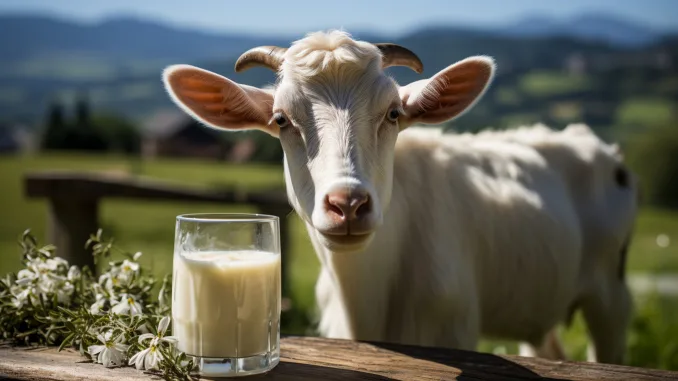
Goat’s milk ice cream occupies a distinctive place in the world of frozen desserts, bridging traditional dairying practices with contemporary culinary curiosity. While cow’s milk dominates commercial ice cream production, goat’s milk has been used for centuries in pastoral cultures across the Mediterranean, the Middle East, South Asia, and parts of Africa. Its transformation into ice cream represents both an extension of historic goat dairying and a modern reappraisal of alternative dairy sources. The result is a product that differs subtly yet perceptibly from conventional ice cream in flavour, texture, nutritional profile, and digestibility.
At the most fundamental level, goat’s milk differs from cow’s milk in its fat globule structure and protein composition. Goat’s milk contains smaller fat globules, which are more evenly dispersed and naturally homogenized. This structural difference contributes to a smoother mouthfeel when churned into ice cream, often described as velvety or light despite comparable butterfat levels. Additionally, goat’s milk typically contains slightly lower lactose content and a different ratio of casein proteins, particularly lower levels of alpha-s1-casein. For some individuals who experience discomfort with cow’s milk, these compositional differences can translate into improved digestibility, although goat’s milk is not lactose-free and remains unsuitable for those with true dairy allergies.
Flavour is the most discussed characteristic of goat’s milk ice cream. Fresh goat’s milk has a clean, mildly sweet taste with subtle grassy or herbal undertones that reflect the animal’s diet. However, when the milk is sourced from poorly managed herds or improperly handled, it can develop a pronounced “goaty” or tangy note due to the presence of short- and medium-chain fatty acids such as caproic, caprylic, and capric acids. In well-crafted ice cream, these compounds are balanced rather than dominant, contributing complexity rather than pungency. The tang can resemble the brightness of cultured dairy products, lending itself particularly well to fruit flavours, honey, caramel, pistachio, and dark chocolate. The acidity enhances contrast and can make sweet components taste more vivid.
The production process for goat’s milk ice cream parallels that of traditional ice cream but requires careful formulation. Because goat’s milk fat behaves differently during freezing, stabilizer and emulsifier systems must be adjusted to achieve optimal overrun and prevent iciness. Artisanal producers often emphasize minimal processing, relying on egg yolks in custard-style bases to create structure and creaminess. Others prefer Philadelphia-style bases without eggs to highlight the milk’s intrinsic flavour. Pasteurization remains essential for food safety, but excessive heat treatment can mute the delicate aromatic profile of the milk. Thus, small-batch production methods frequently aim to preserve freshness and terroir.
Nutritionally, goat’s milk ice cream offers both parallels and distinctions relative to cow’s milk ice cream. Caloric density depends largely on sugar and fat content rather than milk species alone. Goat’s milk contains comparable levels of saturated fat, but it also provides meaningful quantities of calcium, phosphorus, potassium, vitamin A, and certain B vitamins. The medium-chain triglycerides present in goat’s milk are metabolized somewhat differently than long-chain fats, being more readily absorbed and utilized for energy. While it would be inaccurate to frame goat’s milk ice cream as a health food, some consumers perceive it as a more “natural” or digestively gentle indulgence, especially when produced without artificial additives.
Culinary applications of goat’s milk ice cream extend beyond the dessert bowl. Chefs increasingly integrate it into plated desserts where its tang and aromatic complexity can counterbalance sweetness. A quenelle paired with roasted stone fruit, a drizzle of thyme-infused honey, or a shard of brittle can create a sophisticated interplay of flavours. In savory contexts, lightly sweetened goat’s milk ice cream can accompany beet carpaccio, balsamic reductions, or walnut salads, echoing the established affinity between goat cheese and earthy vegetables. The frozen format tempers intensity, allowing diners to experience familiar goat dairy notes in a novel temperature and texture.
From an agricultural standpoint, goat dairying often requires fewer resources than large-scale cow operations. Goats are adaptable browsers capable of thriving on marginal land unsuitable for other livestock. Their smaller size and lower feed requirements can make them attractive for small farms pursuing diversified, sustainable production models. As interest in local food systems grows, goat’s milk ice cream frequently emerges from farmstead operations that control the process from herd management through final packaging. This vertical integration enables traceability and encourages experimentation with seasonal flavours based on available fruits, nuts, and herbs.
Consumer perception plays a decisive role in the market for goat’s milk ice cream. Some individuals approach it with hesitation, anticipating an overpowering barnyard flavour. Educational tastings and transparent sourcing help counteract these assumptions. When sampled blind, many people struggle to distinguish high-quality goat’s milk ice cream from premium cow’s milk versions, aside from a subtle brightness. Marketing strategies often emphasize craftsmanship, animal welfare, and the distinctive sensory experience rather than positioning the product as a substitute for those with allergies. Indeed, clarity is important: goat’s milk remains a dairy product and contains lactose and milk proteins.
Texture engineering is central to product quality. Because goat’s milk contains slightly different protein micelle structures, its freezing curve can yield a softer scoop at standard serving temperatures. This can be advantageous in retail settings, where excessive hardness frustrates consumers. However, formulation must guard against rapid melt-down or graininess. Balancing total solids—sugars, milk solids-not-fat, and fat—is essential to achieve stable air incorporation and a cohesive body. Professional ice cream makers frequently adjust sucrose with glucose or invert sugars to control freezing point depression and maintain scoopability.
Flavour pairings capitalize on goat’s milk’s inherent complexity. Citrus zest, fig compote, lavender, espresso, and toasted coconut each complement its tang. Chocolate, particularly varieties with higher cocoa percentages, benefits from the milk’s acidity, which sharpens cocoa’s fruity notes. Nut-based inclusions such as almonds or hazelnuts integrate seamlessly, echoing pastoral landscapes where goats graze among scrub and orchard. The ice cream’s aromatic profile can even evoke terroir, reflecting seasonal feed variations—spring grasses yielding fresher notes, late-summer forage contributing deeper undertones.
Ultimately, goat’s milk ice cream represents more than a novelty. It illustrates how small variations in raw material composition cascade into meaningful differences in sensory experience. It challenges the assumption that ice cream must conform to a single dairy standard and invites exploration of biodiversity within familiar categories. For consumers seeking nuance, artisans seeking differentiation, and farmers seeking viable small-scale dairy models, goat’s milk ice cream offers a compelling intersection of tradition, science, and gastronomy. Its appeal lies not in replacing conventional ice cream but in expanding the repertoire of what frozen dairy desserts can express—subtle tang, supple texture, and a quiet reminder of the landscapes and animals from which it originates.
Leave a Reply