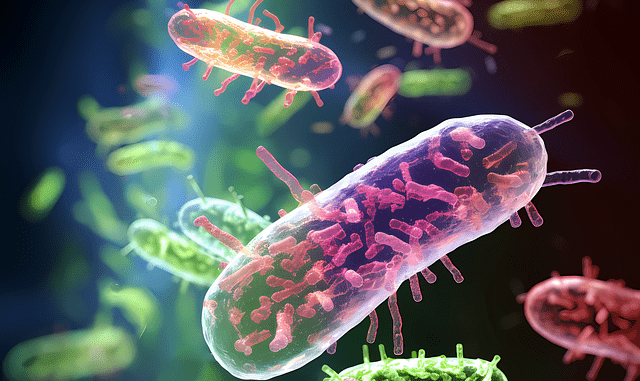
Escherichia coli (E. coli), a Gram-negative bacterium that resides in the intestines of warm-blooded organisms, has long served as a model organism in molecular biology. Because it is often subjected to sudden fluctuations in temperature—both in natural environments and in laboratory settings—it has evolved a robust and highly coordinated system for surviving thermal stress. When exposed to elevated temperatures, E. coli experiences protein misfolding, membrane destabilization, and metabolic disruption. To counteract these challenges, it launches a complex transcriptional and translational program called the heat shock response (HSR).
This article explores the molecular underpinnings of the E. coli heat shock response, examining its regulatory networks, physiological adaptations, and evolutionary significance. The analysis will cover (1) the cellular consequences of heat stress, (2) the transcriptional regulation mediated by sigma factors, (3) the roles of molecular chaperones and proteases, (4) cross-talk with other stress responses, and (5) implications for biotechnology and medicine.
1. Cellular Consequences of Heat Stress
1.1 Protein Denaturation and Aggregation
One of the most immediate consequences of heat shock in E. coli is the destabilization of protein structure. Proteins rely on delicate balances of hydrogen bonds, hydrophobic interactions, and ionic forces to maintain their folded states. Elevated temperatures disrupt these interactions, leading to partial unfolding or complete denaturation. Misfolded proteins often expose hydrophobic residues that drive aggregation, which can be cytotoxic by sequestering essential proteins and overwhelming the proteostasis machinery.
1.2 Membrane Fluidity
Heat also alters the physical state of the bacterial cytoplasmic membrane. Increased fluidity can compromise barrier function, affect proton motive force, and disrupt transport systems. To mitigate this, E. coli modulates lipid composition in its membranes, shifting toward saturated fatty acids to maintain stability.
1.3 DNA Stability and Replication Stress
Though DNA itself is relatively stable under moderate heat stress, secondary structures and supercoiling can be affected. Elevated temperatures may cause problems with DNA replication, transcription, and repair. E. coli employs DNA-binding proteins such as HU and heat shock proteins that stabilize nucleoid architecture during thermal stress.
2. Regulation of the Heat Shock Response
The central feature of the E. coli heat shock response is the rapid induction of a set of genes encoding heat shock proteins (HSPs). The expression of these genes is tightly controlled at the transcriptional and post-transcriptional levels.
2.1 The Heat Shock Regulon
The heat shock regulon encompasses more than 100 genes, many of which are transcriptionally activated upon heat stress. These genes primarily encode molecular chaperones, proteases, and regulatory proteins.
2.2 Sigma Factor σ^32 (RpoH)
The master regulator of the heat shock response is the alternative sigma factor σ^32, encoded by the rpoH gene. Sigma factors guide RNA polymerase to specific promoter sequences, and σ^32 specifically recognizes promoters upstream of heat shock genes.
2.2.1 Synthesis and Stability
σ^32 levels are controlled at multiple levels:
-
Translational regulation: The rpoH mRNA has a secondary structure that hinders ribosome binding at normal temperatures. Heat destabilizes this structure, allowing increased translation.
-
Proteolytic regulation: Under non-stress conditions, σ^32 is rapidly degraded by the FtsH protease. During heat shock, chaperones such as DnaK and DnaJ, which normally facilitate σ^32 turnover, are titrated away by misfolded proteins, thereby stabilizing σ^32.
2.2.2 Promoter Recognition
σ^32 binds to RNA polymerase core enzyme, directing it to heat shock promoters. This induces expression of chaperones (e.g., DnaK, GroEL) and proteases (e.g., Lon, ClpP) that restore protein homeostasis.
2.3 Negative Feedback Control
The system is self-limiting. Once protein folding is restored, chaperones rebind σ^32, leading to its degradation and attenuation of the heat shock response. This ensures that the response is transient and finely tuned to the degree of stress.
3. Molecular Chaperones and Proteases
The primary effectors of the heat shock response are molecular chaperones and proteases. These proteins safeguard proteostasis by assisting refolding of denatured proteins or removing irreversibly damaged ones.
3.1 The DnaK-DnaJ-GrpE System
This system is homologous to the eukaryotic Hsp70 machinery.
-
DnaK (Hsp70) binds exposed hydrophobic regions of unfolded proteins.
-
DnaJ (Hsp40) stimulates DnaK’s ATPase activity, stabilizing its interaction with substrates.
-
GrpE acts as a nucleotide exchange factor, facilitating the release of refolded proteins.
This cycle prevents aggregation and promotes productive folding.
3.2 The GroEL-GroES Chaperonin
GroEL (Hsp60) is a large oligomeric complex that forms a double-ring barrel. GroES (Hsp10) acts as a lid. Together, they provide a protected chamber where misfolded proteins can refold without risk of aggregation.
3.3 Small Heat Shock Proteins
Proteins such as IbpA and IbpB act as “holdases,” binding denatured proteins to prevent aggregation until ATP-dependent chaperones can refold them.
3.4 Proteases
When proteins are irreversibly damaged, proteases degrade them.
-
Lon protease degrades abnormal proteins and regulates certain transcription factors.
-
ClpXP and ClpAP proteases provide ATP-dependent proteolysis of misfolded proteins.
Together, these systems maintain protein quality control during heat stress.
4. Integration with Other Stress Responses
Heat shock is not an isolated phenomenon; it intersects with other stress responses in E. coli.
4.1 The General Stress Response (σ^S)
Sigma factor σ^S (RpoS) regulates a broad array of genes that help E. coli survive stationary phase and multiple stresses, including osmotic shock, oxidative stress, and acid stress. Heat shock can induce σ^S activity indirectly, linking thermal adaptation to broader stress tolerance.
4.2 The Envelope Stress Response
Heat destabilizes membrane proteins, triggering envelope stress responses such as the Cpx and σ^E pathways. These systems upregulate periplasmic chaperones and proteases that assist in folding outer membrane proteins.
4.3 Oxidative Stress Cross-Talk
Heat stress can enhance reactive oxygen species (ROS) production due to destabilization of electron transport chains. The oxidative stress response overlaps with the heat shock response, with shared use of chaperones and proteases.
5. Physiological and Evolutionary Implications
5.1 Survival in Host and Environment
For E. coli as a commensal and sometimes pathogenic organism, the ability to mount a heat shock response is critical for colonization of mammalian hosts, where fever can expose bacteria to elevated temperatures.
5.2 Laboratory and Industrial Contexts
In biotechnology, E. coli is widely used for recombinant protein production. Heat shock proteins can either aid in folding heterologous proteins or complicate expression systems by diverting resources. Understanding and manipulating the heat shock response is therefore key in optimizing industrial bioprocesses.
5.3 Evolutionary Conservation
The heat shock response is conserved across domains of life. The parallels between bacterial chaperones and their eukaryotic counterparts underscore the evolutionary importance of proteostasis networks.
6. Experimental Insights into the Heat Shock Response
6.1 Genetic Studies
Mutants in rpoH, dnaK, or groEL exhibit severe heat sensitivity, confirming their essential roles.
6.2 Proteomic Analyses
Quantitative proteomics has revealed the dynamic changes in the abundance of chaperones, proteases, and metabolic enzymes following heat stress.
6.3 Structural Biology
Cryo-EM and X-ray crystallography have provided detailed views of GroEL-GroES and DnaK complexes, illuminating their mechanisms of action.
7. Applications and Biotechnological Exploitation
7.1 Recombinant Protein Folding
Overexpression of GroEL-GroES or DnaK-DnaJ-GrpE is often used in industrial strains to enhance folding of heterologous proteins.
7.2 Vaccine Development
Attenuated E. coli mutants with defective heat shock responses have been explored as vaccine carriers, since they exhibit reduced virulence under stress conditions.
7.3 Synthetic Biology
Heat shock promoters are exploited as temperature-sensitive genetic switches for controlled gene expression in synthetic circuits.
The heat shock response in E. coli exemplifies the remarkable adaptability of bacteria to environmental stress. Through the coordinated action of σ^32, molecular chaperones, and proteases, the cell reestablishes proteostasis and ensures survival under otherwise lethal conditions. The interplay of this system with other stress pathways highlights the integrated nature of bacterial stress physiology.
From a practical standpoint, understanding the heat shock response has profound implications for biotechnology, medicine, and synthetic biology. More broadly, the conservation of this response across all domains of life reflects the universal challenge of protein stability and the evolutionary pressure to preserve mechanisms that protect against thermal stress.
Leave a Reply