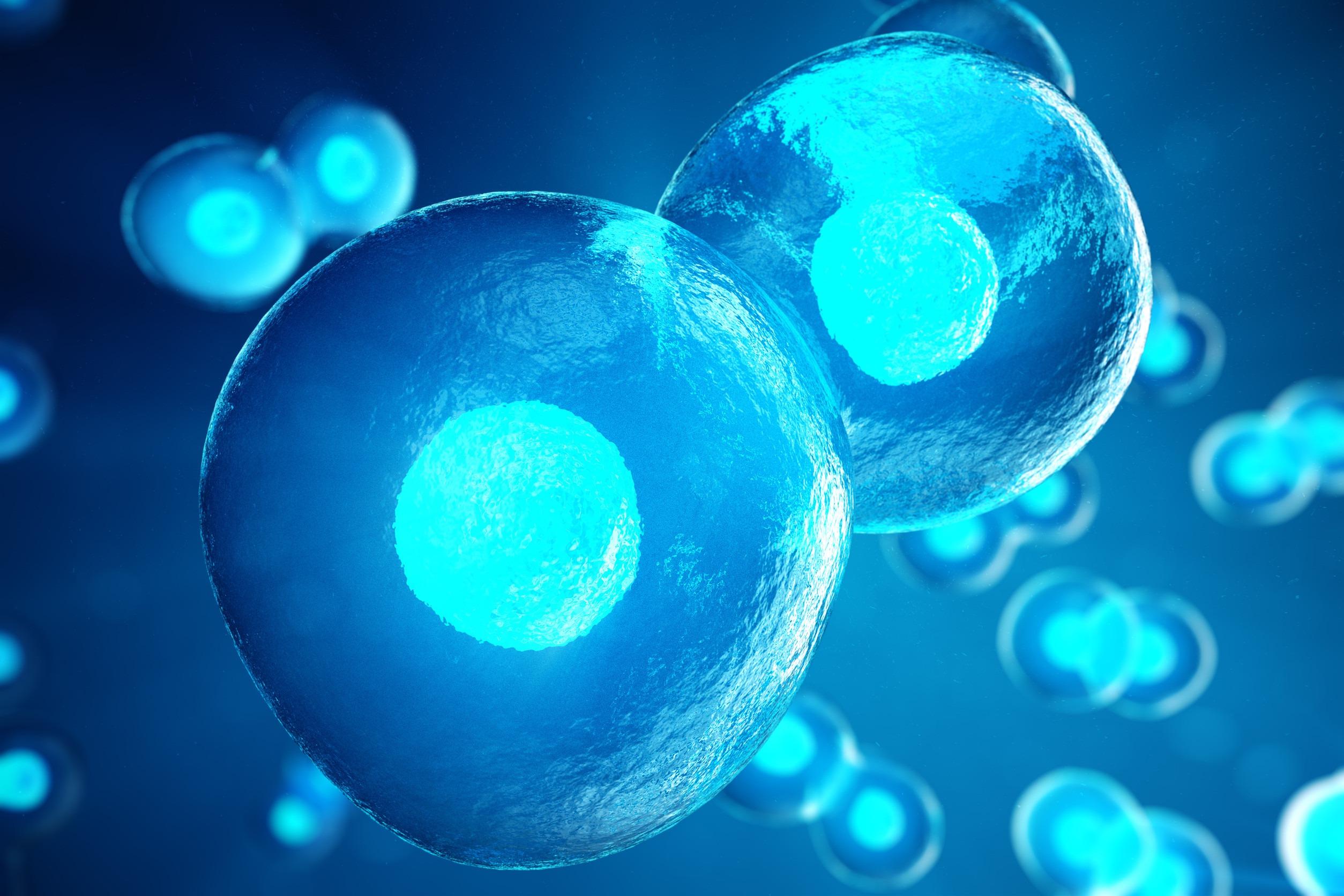
Mesenchymal stem cells (MSCs) are a type of adult stem cell that can be found in various tissues throughout the body, including bone marrow, adipose tissue (fat), umbilical cord tissue, and dental pulp. They are multipotent cells, meaning they have the capacity to differentiate into several different cell types, including bone cells (osteocytes), fat cells (adipocytes), and cartilage cells (chondrocytes).
It’s important to note that the term “mesenchymal stem cells” has been the subject of debate in the scientific community, and the nomenclature has evolved over time. We know that some researchers prefer to use the term “mesenchymal stromal cells” to highlight their supportive and regenerative properties rather than their strict stem cell characteristics. It will no doubt remain an ongoing development rather than debate because nomenclature is so critical to understanding how this fast developing field is playing out. You may also see them described as human mesenchymal stem cells (hMSCs) in research literature.
The key characteristics of mesenchymal stem cells are:-
- Multipotency: MSCs have the ability to differentiate into cells of mesodermal origin, such as osteoblasts, adipocytes, and chondrocytes. In certain conditions, they have also been reported to differentiate into cells of other lineages, including muscle cells and neural cells.
- Self-renewal: MSCs can undergo multiple divisions and replicate themselves while maintaining their undifferentiated state. This property allows for their long-term culture and expansion in the laboratory.
- Immunomodulatory properties: MSCs possess immunomodulatory capabilities, which means they can regulate the immune response by modulating the activity of immune cells and reducing inflammation. This characteristic makes them of interest for potential therapeutic applications in immune-related diseases and tissue transplantation.
- Tissue repair and regeneration: MSCs have the ability to migrate to sites of injury or inflammation and participate in tissue repair and regeneration. They can contribute to tissue remodeling, secrete growth factors and cytokines, and promote the formation of new blood vessels (angiogenesis).
- Low immunogenicity: MSCs have been shown to have low immunogenicity, meaning they are less likely to be recognized and attacked by the recipient’s immune system when used in transplantation or cell-based therapies. This property allows for the potential use of MSCs from unrelated donors (allogeneic transplantation) without the need for strict matching.
- Ease of isolation and expansion: MSCs can be obtained from various easily accessible sources, such as bone marrow or adipose tissue, and can be isolated and expanded in culture relatively easily compared to other types of stem cells.
The therapeutic potential of mesenchymal stem cells is being explored in various fields, including regenerative medicine, tissue engineering, and immunotherapy. These therapeutic benefits are due to their immunomodulatory properties. They also have the capacity to differentiate into multiple cell lineages. Research with them shows promise in the treatment of conditions such as bone and cartilage defects, autoimmune diseases, graft-versus-host disease (GVHD), and certain inflammatory disorders.
One of the most promising fields for exploration is their application in cardiac muscle regeneration (Lei et al., 2025). Given the high mortality and morbidity of heart failure, one of the most plausible methods for repairing and regenerating damaged myocardial tissue is through the application of MSCs. MSCs, derived from bone marrow or adipose tissue, exhibit immunomodulatory, anti-fibrotic, and pro-angiogenic properties that facilitate cardiac tissue repair .
Cultivation
Human mesenchymal stem cells (hMSCs) are typically cultivated using a carefully controlled process to maintain their stemness, proliferation, and differentiation potential. The process for cultivation is as follows:
1. Source and Isolation
hMSCs are isolated from various tissues, including:
-
Bone marrow (most common)
-
Adipose tissue
-
Umbilical cord (Wharton’s jelly)
-
Dental pulp
-
Placenta
Isolation process:
-
Tissue is collected under sterile conditions.
-
It’s enzymatically digested (e.g., with collagenase or trypsin) or mechanically dissociated.
-
The cell suspension is filtered and centrifuged to collect cells.
2. Initial Plating and Culture Conditions
-
Cells are seeded onto tissue culture-treated plastic, where hMSCs adhere, while non-MSCs typically do not.
-
Use basal media such as:
-
Dulbecco’s Modified Eagle Medium (DMEM) (low or high glucose)
-
Alpha Minimum Essential Medium (α-MEM)
-
-
Supplemented with:
-
10–20% Fetal Bovine Serum (FBS) or human platelet lysate (for xeno-free cultures)
-
Antibiotics (optional): penicillin-streptomycin
-
Glutamine and other growth factors (optional)
-
3. Incubation Environment
-
Temperature: 37°C
-
CO₂: 5%
-
Humidity: 95%
-
Oxygen: Atmospheric (21%) or hypoxic (2–5%) for better stemness maintenance
4. Passaging
-
When cells reach ~70–90% confluence, they are passaged using:
-
Trypsin-EDTA or Accutase for detachment
-
Resuspension and reseeding at lower density (e.g., 5,000–6,000 cells/cm²)
-
-
hMSCs should be used at early passages (P2–P6) for optimal differentiation potential.
5. Characterization
hMSCs must meet criteria defined by the International Society for Cellular Therapy (ISCT):
-
Adherence to plastic
-
Specific surface markers: CD73+, CD90+, CD105+ and CD34–, CD45–, CD14–/CD11b–, CD19–, HLA-DR–
-
Capability to differentiate into:
-
Osteoblasts (bone)
-
Adipocytes (fat)
-
Chondroblasts (cartilage)
-
6. Optional Enhancements
-
Use coating materials like fibronectin or gelatin to enhance adhesion.
-
Culture in 3D systems or bioreactors for scale-up and improved cell quality.
-
Add cytokines (e.g., bFGF, TGF-β) for directed expansion or pre-differentiation
Cells are conventionally produced in two-dimensional (2D) culture systems where the cell densities are significantly high enough for most purposes but not for the wide-ranging number of clinical applications now being suggested. Large cell doses of between 108 and 109 cells per patients are required depending on the indication (Chen et al., 2013).
References
Chen, A. K. L., Reuveny, S., & Oh, S. K. W. (2013). Application of human mesenchymal and pluripotent stem cell microcarrier cultures in cellular therapy: achievements and future direction. Biotechnology Advances, 31(7), pp. 1032-1046
Lei, W., Wang, X., Cai, J., & Pan, L. (2025). Mesenchymal and Pluripotent Stem Cell‐Based Strategies for Cardiac Regeneration: Mechanisms, Challenges, and Future Directions. Biotechnology Journal, 20(11), e70152.
Leave a Reply