
Cock-a-Leekie Soup
Cock-a-leekie is one of those proper, honest soups. It’s old-school Scottish comfort food, but don’t let that put you off — this thing is all […]
Cock-a-leekie is one of those proper, honest soups. It’s old-school Scottish comfort food, but don’t let that put you off — this thing is all […]
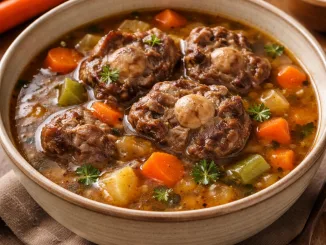
Oxtail soup (ox-tail) is a very old recipe which came to prominence in the 19th century but has seen a resurgence because of interest in […]
Pottage, often described as a thick, hearty soup or stew, occupies a significant place in the culinary history of Europe and beyond, serving as both […]

A single-use fermenter (SUF), also known as a disposable fermenter or single-use bioreactor, is a type of vessel used in biotechnology and bioprocessing industries for […]
Chinese distillers grains, commonly referred to in technical and commercial contexts as Chinese distillers dried grains (CDG) with solubles (DDGS) or, more broadly, distillers grains […]

In the packaged beverages and liquid consumer goods industries, PET bottles dominate primary packaging due to their favourable strength-to-weight ratio, clarity, recyclability and compatibility with […]
Sauce grand veneur is a classic French hunter-style sauce associated with haute cuisine and game cookery. Its name literally means “great huntsman,” which reflects its […]
Nikkei cuisine refers to the culinary tradition that emerged from the encounter between Japanese immigrants and Peruvian ingredients, techniques, and tastes, beginning in the late […]
Olive oil ice cream works because it aligns unusually well with the underlying chemistry and sensory mechanics of frozen desserts, while also delivering contrast that […]
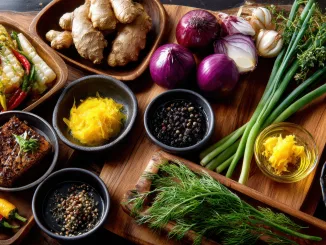
The European Savoury Ingredients Market has always represented a critical and dynamic segment of the broader food ingredients industry. It encompasses a wide array of […]
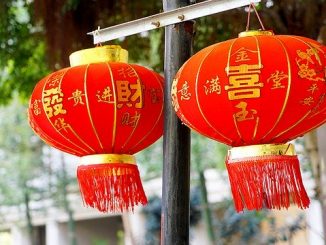
The new lunar year is one of the most important events in Chinese culture. Various foods are eaten in a feast on the day ending […]
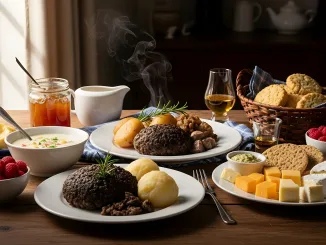
Burns Night is a supper rather than a feast, domestic in spirit even when it is ceremonial, and what is eaten is as important for […]
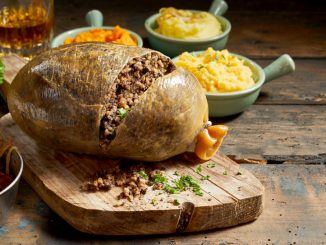
Haggis is a savoury pudding that originally came from Scotland. Indeed, the best haggis is to be found there and is a mix of minced […]

There is no single, universally prescribed food tradition for Martin Luther King Jr. Day in the United States, but the meals people associate with the […]
AI has enormous potential in biotechnology, but its use is still incomplete because of several persistent data-related challenges. These challenges span data availability, quality, structure, […]
A zinc finger is a small, independently folded protein structural motif that stabilizes its shape by coordinating one or more zinc ions (Zn²⁺). Zinc fingers […]
Colorectal cancer (CRC) is one of the most common malignancies worldwide and a leading cause of cancer-related morbidity and mortality. It encompasses cancers arising in […]
Small interfering RNA (siRNA)–based therapeutics represent one of the most mature clinical applications of RNA interference (RNAi), a conserved cellular mechanism for sequence-specific gene silencing. […]
AAV1-hOTOF gene therapy is an experimental molecular treatment developed for Autosomal Recessive Deafness 9 (DFNB9), a form of congenital, prelingual, severe-to-profound hearing loss caused by […]
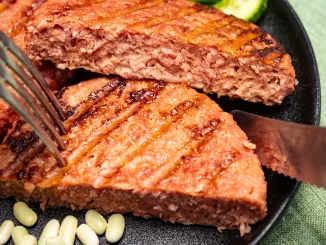
High-moisture extrusion (HME) is a thermomechanical processing technology primarily used to create dense, fibrous structures from protein-rich formulations. It is most widely associated with plant-based […]
Copyright © 2026 | WordPress Theme by MH Themes