In the packaged beverages and liquid consumer goods industries, PET bottles dominate primary packaging due to their favourable strength-to-weight ratio, clarity, recyclability and compatibility with high-speed filling lines. Downstream of filling and labelling, secondary and tertiary packaging choices are driven by a combination of mechanical protection, pallet efficiency, logistics cost, line compatibility, sustainability targets and retailer requirements. As a result, three secondary packaging formats prevail across Europe and most industrialised markets: fully enclosed corrugated boxes (RSC and die-cut cases), corrugated trays combined with shrink film overwrap, and shrink-film-only multipacks. Each format imposes distinct requirements on corrugated board grades, flute profiles, polymer film formulations and palletisation strategies, and each delivers different cost, performance and damage outcomes.
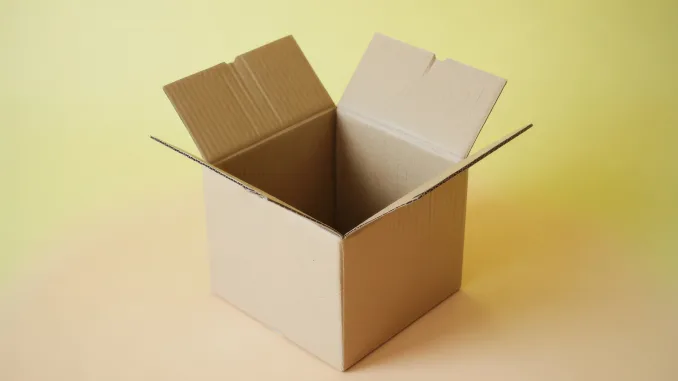
From an industry perspective, fully enclosed corrugated boxes represent the most traditional and conservative format. They are widely used for premium beverages, export shipments, long-distance distribution and channels where stacking strength and product concealment are valued. These boxes are typically manufactured from kraft-based or semi-chemical linerboards with medium weights selected to balance compression strength and cost. Common board constructions include single-wall 3-ply combinations such as B-flute or C-flute for small and medium bottle formats (330 ml to 1 L), and double-wall 5-ply constructions (BC or EB flute combinations) for heavier packs such as 1.5 L to 2 L bottles or glass-PET hybrid assortments. Typical liner weights range from 125 to 175 g/m² for testliner or kraftliner on single wall cases, increasing to 175–250 g/m² per liner in double wall applications. Flute choice is dictated by stacking load and pallet height; C-flute remains favoured for its superior top-to-bottom compression resistance, while B-flute is selected where print quality and dimensional precision are prioritised.
Shrink film plays no structural role in this format beyond optional inner bundling, so polymer specifications are secondary. Palletisation with full corrugated boxes is straightforward and highly stable. Standard interlocked or column-stacked pallet patterns are used, typically achieving pallet efficiencies of 85–90% of theoretical footprint utilisation. Transport damage rates for fully boxed PET bottles are consistently the lowest among all formats, commonly reported in the range of 0.1–0.3% of shipped units under normal European road transport conditions. However, this robustness comes at a cost: corrugated boxes represent the highest material consumption per litre of beverage shipped, and they impose higher erection, handling and disposal costs across the supply chain.
Corrugated trays combined with shrink film overwrap have become the dominant format for mainstream bottled water, carbonated soft drinks and value-segment beverages sold through modern retail. In this configuration, the corrugated component provides vertical load-bearing strength and edge protection, while the shrink film delivers unitisation, lateral stability and tamper evidence. Tray designs are typically die-cut, low-wall structures with heights ranging from 40 to 90 mm, depending on bottle diameter and centre-of-gravity considerations. The most common tray heights fall between 55 and 70 mm, sufficient to restrain bottle bases and resist shear forces during transport without excessive board usage.
Board grades for trays are optimised for compression rather than puncture resistance. As a result, 3-ply single-wall constructions dominate, with B-flute accounting for the majority of installations due to its balance of stiffness, low caliper and efficient die-cutting performance. Typical liner combinations include 125/125/125 g/m² or 140/140/140 g/m² testliner-medium-testliner structures. In higher-load scenarios, such as 2 L bottles stacked five or six layers high, upgraded liners or lightweight 5-ply EB constructions may be specified, but these remain the exception rather than the rule. Recycled fibre content is high, often exceeding 80%, aligned with retailer sustainability mandates.
Shrink film specifications in tray-plus-shrink systems are more technically demanding than in film-only packs because the film must interact with both rigid bottles and the corrugated substrate. Polyethylene formulations are predominantly blends of linear low-density polyethylene (LLDPE) and low-density polyethylene (LDPE). LLDPE provides tensile strength, tear resistance and downgauging capability, while LDPE contributes shrink force and optical clarity. Typical formulations range from 60/40 to 80/20 LLDPE/LDPE ratios, depending on machine speed, shrink tunnel temperature and desired pack rigidity. Film gauges most commonly fall between 40 and 60 microns, with 45–50 microns widely regarded as the industry sweet spot for 6-, 12- and 24-bottle PET packs. Increasingly, post-consumer recycled (PCR) content is incorporated at levels of 20–50%, subject to optical and mechanical performance constraints. At PCR levels above 30%, adjustments to gauge or resin ratios are often required to maintain tear resistance.
From a logistics standpoint, corrugated tray plus shrink film formats offer excellent pallet efficiency. Because the tray footprint is tightly matched to bottle geometry and film tension locks the load, pallet utilisation typically reaches 90–95%, outperforming full boxes. Pallet patterns are usually column-stacked to maximise compression transfer through the tray corners, with shrink film contributing to unit load integrity. Transport damage rates are slightly higher than for full boxes but remain low in absolute terms, generally reported between 0.3 and 0.8%. Most damage incidents involve bottle scuffing or film tearing rather than catastrophic pack failure.
Shrink-film-only packaging represents the most material-efficient and lowest-cost secondary packaging format and is heavily favoured for high-volume, price-sensitive segments such as still water and private-label beverages. In this format, bottles are collated directly and overwrapped with shrink film without any corrugated support. Film specifications are therefore critical, as the polymer must provide both containment and load stability. LLDPE-rich formulations dominate, typically in the range of 80–95% LLDPE with minimal LDPE or metallocene-catalysed PE for improved toughness. Gauges are higher than in tray-assisted systems, commonly between 60 and 100 microns, depending on bottle size and pack count. For large multipacks or pallet-ready formats, gauges of 80–90 microns are not uncommon. PCR content is increasingly specified, but practical limits often sit at 20–30% due to the increased risk of film splitting and inconsistent shrink behaviour.
Palletisation with film-only packs is more constrained. While footprint utilisation can still approach 90%, overall pallet stability is lower because vertical loads are borne by the bottles themselves rather than a corrugated structure. As a result, pallet heights are often reduced by one layer compared to tray-based formats, and stretch-wrap or top-sheet reinforcement is frequently required. Transport damage rates for film-only formats are the highest of the three, typically ranging from 1.0 to 2.5%, with sensitivity to road quality, pallet handling discipline and ambient temperature. Bottle deformation, film rupture and pack collapse are the most common failure modes.
When comparing cost, fully enclosed corrugated boxes are consistently the most expensive solution. Depending on board grade, box design and regional paper prices, secondary packaging costs for boxed PET bottles can be 100% on a relative index basis. Corrugated tray plus shrink film systems typically achieve cost reductions of 20–35% versus full boxes, driven by lower corrugated tonnage and faster packing line speeds. Shrink-film-only formats deliver the lowest costs, often reducing secondary packaging expenditure by 40–60% relative to full boxes, despite higher film gauges, due to the complete elimination of corrugated material and simplified logistics.
In terms of industry preference, corrugated tray plus shrink film is the most favoured format overall, particularly in Europe, where it balances cost efficiency, pallet performance and acceptable damage rates. A typical preference ranking by volume would place corrugated tray plus shrink film first, shrink-film-only second for highly cost-driven channels, and full corrugated boxes third, reserved for premium, export or risk-averse applications.
From a technical optimisation standpoint, the currently favoured configuration for PET bottles in mainstream retail consists of a B-flute, 3-ply corrugated tray with 125–140 g/m² liners, a tray height of approximately 60 mm, and a 45–55 micron shrink film based on a 70/30 LLDPE/LDPE blend incorporating 20–30% PCR. This configuration provides sufficient compression strength for five to six pallet layers, excellent pallet pattern efficiency, manageable damage rates below 1%, and a cost position significantly below that of full corrugated cases.
To summarise this, the evolution of PET bottle secondary packaging reflects a broader industrial trend toward material minimisation, logistics efficiency and sustainability compliance. While fully enclosed corrugated boxes retain a role where maximum protection is required, the corrugated tray plus shrink film format has emerged as the dominant technical and commercial compromise. Shrink-film-only solutions continue to expand in ultra-high-volume applications but demand tighter control of film formulation and distribution conditions. The preferred format, materials and specifications ultimately reflect a calculated trade-off between cost, performance and risk, shaped by the realities of modern beverage supply chains.

Leave a Reply