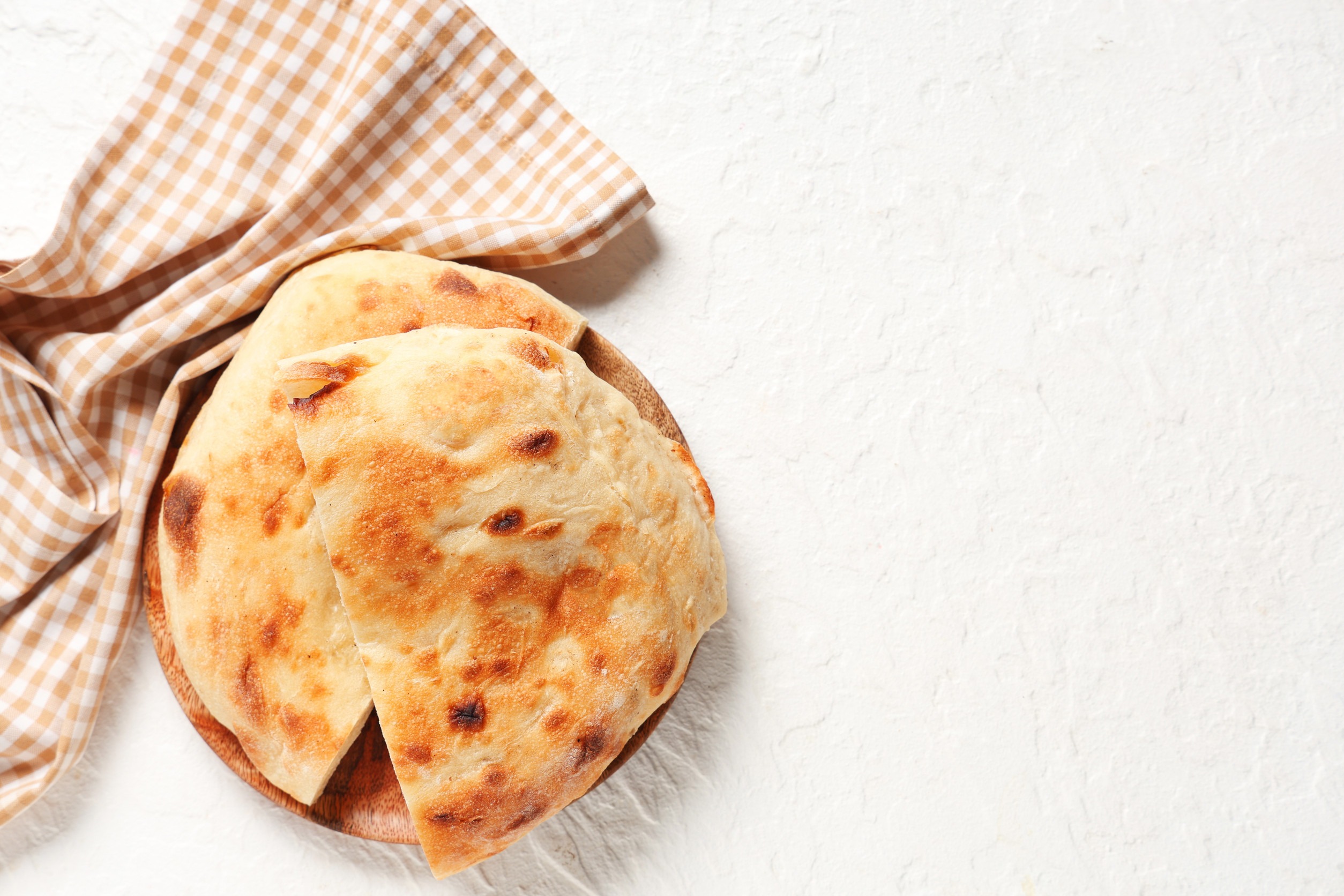
Lavash is a traditional thin flatbread with deep historical and cultural roots, especially in Armenia, Iran, Turkey, and other parts of the Caucasus and Middle East. It is more than just a bread—it is a symbol of community, heritage, and daily life in these regions.
Here’s a Lavash recipe, a thin, crisp or soft Armenian flatbread, traditionally made with simple ingredients. This version allows you to bake it as either soft wrap-style bread or crispy crackers.
History of Lavash Bread
Origins
-
Ancient Beginnings (possibly 3,000+ years ago):
Lavash likely originated in Armenia, where it has been a staple for millennia. Its method of preparation—thin dough stretched and slapped onto the walls of a clay oven called a tonir (or tandoor)—is ancient, suggesting a deep-rooted tradition. -
Etymology:
The name “lavash” is Armenian, but similar flatbreads with different names exist across Central and Western Asia. Though shared among cultures, lavash is distinct in technique and texture—soft when fresh, crisp when dried.
Cultural Significance
-
In Armenian culture, lavash is closely tied to identity and tradition. Families, especially women, would gather to make large batches of lavash for storage. Dried lavash can last for months and is later rehydrated with water or steam.
-
UNESCO Recognition:
In 2014, lavash was inscribed on UNESCO’s list of the Intangible Cultural Heritage of Humanity, recognizing its role in Armenian communal life, rituals, and cultural identity.
How It Was Traditionally Made
-
Baking Method:
Traditional lavash is made by rolling dough very thin, then slapping it quickly onto the hot inner walls of a tonir (a deep cylindrical clay oven dug into the ground). It cooks in 30–60 seconds and peels off with characteristic bubbles and brown blisters. -
Community Activity:
Making lavash was often a social or familial task involving multiple women—rolling, stretching, baking—especially before winter, when households would stockpile large quantities.
Spread Across Cultures
-
Lavash has spread widely across the Caucasus, Turkey, Iran, and parts of Central Asia.
-
In Turkey, it’s often served with kebabs or used for wraps.
-
In Iran, a thinner version called naan-e lavash is common.
-
In Azerbaijan and Georgia, it accompanies stews, cheeses, and grilled meats.
Despite regional variations, lavash remains defined by its soft, pliable texture when fresh or its cracker-like crispness when dry.
Modern Lavash
-
Today, lavash is commonly mass-produced, especially for wraps and sandwich rolls.
-
However, traditional handmade versions are still found in villages and bakeries across Armenia and neighboring countries.
-
In the West, lavash is gaining popularity for its versatility, low fat content, and rustic simplicity.
Key Features of Traditional Lavash
| Feature | Description |
|---|---|
| Ingredients | Flour, water, salt, sometimes yeast |
| Texture | Soft and flexible when fresh; crisp when dry |
| Cooking method | Slapped onto a hot tonir/tandoor wall |
| Shelf life | Very long when dried and stored properly |
Lavash Recipe
Servings: 4 large sheets (or 16 crackers)
Preparation Time: 15 minutes
Resting Time: 30 minutes
Cooking Time: 10–12 minutes
Ingredients
-
200g wheat flour (plain or bread flour)
-
50g wholemeal wheat flour (optional, for extra flavor)
-
½ tsp salt
-
½ tsp sugar (optional, for a slight sweetness)
-
½ tsp baking soda (sodium bicarbonate)
-
¼ tsp malic acid or tartaric acid (to activate the soda)
-
100ml warm water
-
1 tbsp olive oil
Optional toppings (for crispy lavash crackers)
-
Sesame seeds
-
Nigella seeds
-
Sea salt flakes
Equipment Needed
- Mixing bowl – For combining ingredients
Rolling pin – To roll out thin dough
Baking sheet – For baking
Parchment paper – To prevent sticking
Pastry brush – If adding toppings (optional)
Fork or skewer – To dock the dough and prevent puffing
Preparation
-
Mix the dry ingredients: In a bowl, whisk together the flour, salt, sugar, baking soda, and malic (or tartaric) acid.
-
Add wet ingredients: Pour in the warm water and olive oil. Mix until a rough dough forms.
-
Knead: Transfer the dough to a floured surface and knead for 5 minutes until smooth.
-
Rest: Cover with a damp towel and let the dough rest for 30 minutes at room temperature.
-
Preheat oven: Set to 200°C (400°F). Line a baking sheet with parchment paper.
-
Roll out the dough: Divide the dough into 2–4 portions. Roll each portion out very thin (1–2mm thick) into a rectangle or oval.
-
For soft lavash:
-
Place directly on the hot baking sheet and bake for 5–7 minutes until puffed and slightly golden.
-
-
For crispy lavash crackers:
-
Dock with a fork to prevent excessive bubbling.
-
Brush with olive oil and sprinkle with seeds or salt (optional).
-
Bake for 10–12 minutes until golden and crisp.
-
-
Cool: Let cool on a wire rack. Break into pieces for crackers or use whole for wraps.
Serving Suggestions
-
Soft lavash: Use for wraps, sandwiches, or kebabs.
-
Crispy lavash: Serve with hummus, baba ganoush, or cheese platters.

Leave a Reply