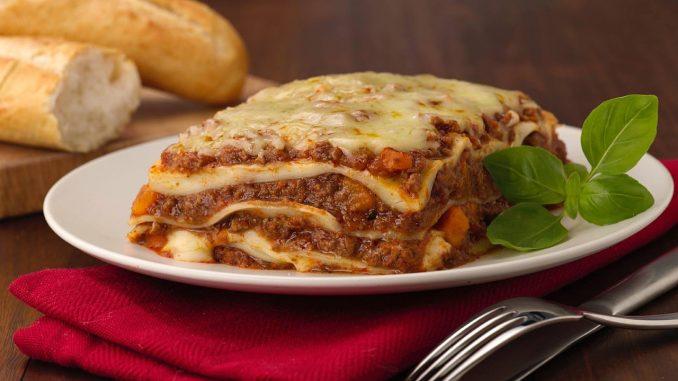
Lasagne (or lasagna in American English) has a long and layered history—much like the dish itself. It is one of the oldest types of pasta and one of Italy’s most iconic culinary exports. Here’s a concise history of lasagne:
Ancient Origins
-
Greek and Roman Influence:
The name lasagne may derive from the Greek word laganon, which referred to flat sheets of pasta dough cut into strips. The Romans adopted this concept, calling it lasanum, meaning “cooking pot.” This word evolved to refer not just to the pot, but to the pasta dish cooked in it. -
Early Recipes:
A dish resembling lasagne appears in De Re Coquinaria, a Roman cookbook attributed to Apicius from the 1st century CE. It describes layers of pasta and sauce, though it lacked modern ingredients like tomatoes.
Medieval Developments
-
First Written Lasagne Recipe (14th century):
In Liber de Coquina (Book of Cookery), a 14th-century Neapolitan cookbook, a recipe resembling modern lasagne was documented. It included fermented dough, layered with cheese and spices—but still no tomatoes, which weren’t introduced to Europe until after the Columbian Exchange.
Modern Lasagne Emerges (18th–19th century)
-
Tomatoes Arrive:
By the 18th century, tomatoes became widely used in Italian cuisine, especially in the south. Bolognese ragù (a meat sauce from Bologna) and béchamel sauce began to be layered with pasta and cheese, forming the lasagne we recognize today. -
Regional Variations:
-
Lasagne al Forno (Emilia-Romagna):
Uses fresh egg pasta, ragù (Bolognese), béchamel, and Parmigiano-Reggiano. This is the classic version from northern Italy. -
Neapolitan Lasagne (Southern Italy):
Richer and more festive, with ricotta, mozzarella, meatballs, sausages, and sometimes hard-boiled eggs.
-
20th Century and Global Spread
-
Lasagne became internationally popular during the 20th century, especially after World War II when Italian immigrants brought the recipe abroad.
-
It evolved in places like the U.S. and the U.K., often with more cheese, store-bought pasta sheets, and tomato-based sauces.
Today
Lasagne remains a beloved comfort food with endless variations, including vegetarian, vegan, seafood, and gluten-free versions. While traditionally a labor-intensive dish, it’s now widely available frozen, in restaurants, and made at home.
Preparation: 30 minutes, Cooking time: up to 2 hours: Serves: 6
Ingredients:
For the meat sauce:
- 2 tbsp olive oil for frying
- 1 onion, chopped and sliced
- 500g to 600g beef mince – lean would be ideal
- (optional) 50g prosciutto, cubetti di pancetti or dry bacon but chopped up. I find what ever is available but it’s flavour that matters.
- 1 large celery stick, finely chopped
- (optional) 1 chopped up carrot
- 1 to 2 cloves of crushed fresh garlic
- 2 (400g) tins chopped tomatoes
- 1 beef stock cube or 100ml of beef stock. If you use beef stock be sure to reduce any other liquids as the lasagne is watery.
- 1 or 2 tablespoon tomato puree
- 1 to 2 drops of Worcestershire sauce
- fresh basil with the leaves picked otherwise dried basil will do but you need more to obtain the equivalent taste
- herbes de Provence to taste or fresh, finely chopped oregano, thyme (1 tbsp should do it).
- salt and pepper to taste
- 1 to 2 handfuls grated Cheddar cheese
- 1 packet (250g) of fresh lasagne sheets
- 1 glass of red wine
For the béchamel sauce:
- 60g or about 2 tbsp unsalted butter
- 60g or about 2 tbsp plain flour
- 700ml whole milk
- 80g to 100g parmesan, finely grated
- Pinch of freshly grated nutmeg
- A bay leaf
A large baking dish – 2 litres is good enough
Preparation:
- Pre-heat the oven to 200 C / 190 C Fan / Gas 6.
- Fry the chopped onion in olive oil for about 5 to 7 minutes on a medium-high heat.
- Add the beef mince and garlic to the pan. Keep cooking to brown the mince. Once the mince has browned continue to cook for another 5 minutes.
- Add the chopped tomatoes and their juices into the pan. Mix thoroughly and keep cooking for another 15 to 20 minutes until the meat sauce has thickened. Add the stock cube, tomato puree, Worcester sauce, basil and any other herbs.
- Season with salt and pepper. Stir well. If the mixture is runny add some cornflour to thicken it up. About 1 tablespoon should do it but I tend to keep cooking until the mixture has dried a little. You can overdo the addition of flour in thickening by the way.
- Let the mince sauce simmer away
- The white bechamel sauce is now prepared. Melt butter in a large pan and do it gently.
- When the butter has melted, add the plain flour and mix well until it forms a thick paste. When the paste has been formed, pour in some milk while constantly mixing with a whisk. Do this on a medium heat, whisking constantly and continuing to add milk until the mixture is lump free and has thickened a lot.
Once the sauce has thickened you can add a handful of grated Cheddar cheese. I use Cheddar but I’m sure any other type of mature cheese will work well. Keep stirring on the heat until the cheese has melted and is smooth. Finally, season to taste with salt, then remove from heat.


Nice recipe ad it works well. I have tried others but this one seems to be up there. My eight year old son liked it which says a lot.