Attiéké (pronounced ah-chee-keh) is a traditional Ivorian dish made from fermented, grated cassava. Often likened to couscous because of its appearance and texture, attiéké is a cornerstone of Ivorian cuisine and a beloved staple across much of West Africa. Its mild flavor, light texture, and versatility make it a perfect accompaniment to grilled fish, meat, spicy sauces, and vegetables.
Origins and Cultural Significance
Attiéké originates from the coastal ethnic groups of southern Côte d’Ivoire, particularly the Adjoukrou, Ebrié, and Alladian peoples. Over time, it has become a national dish enjoyed across the country and increasingly exported to the Ivorian diaspora.
More than just a food, attiéké holds cultural value. It’s a symbol of hospitality, often served during family gatherings, street feasts, weddings, and celebrations. Women, especially in rural areas, have traditionally led its production, and its sale in markets is a source of income and empowerment for many.
How It’s Made
Attiéké is made through a lengthy and careful fermentation process of cassava (manioc):
-
Peeling and Grating: Fresh cassava roots are peeled and finely grated into a pulp.
-
Fermentation: The pulp is allowed to ferment for 1–2 days, developing its characteristic slightly sour flavor.
-
Pressing and Sieving: The fermented pulp is pressed to remove excess water, then sifted into fine granules.
-
Steaming: The granules are steamed—traditionally in a large clay or metal pot—until fluffy and light.
While traditional methods are still used, commercial production of attiéké has expanded to urban centers and overseas markets, where it’s sold fresh, frozen, or dried for convenience.
How It’s Eaten
Attiéké is almost always served warm and used as a base starch, much like rice or couscous. It is often paired with:
-
Grilled fish (especially poisson braisé), topped with sliced onions, tomatoes, and a spicy pepper sauce.
-
Fried or grilled chicken, beef, or mutton.
-
Alloco (fried ripe plantains), salad, and boiled eggs for a filling platter.
-
Sauces like peanut stew or tomato-based meat sauces.
Street vendors, especially in cities like Abidjan, commonly serve attiéké with fried fish and a fiery chili sauce—an affordable and delicious meal loved by all classes.
Nutritional Profile
Attiéké is gluten-free and provides energy through its high carbohydrate content. It is:
| Nutrient | Approx. per 100g |
|---|---|
| Calories | 120–150 kcal |
| Carbohydrates | 30–35g |
| Protein | 1–2g |
| Fat | <1g |
| Fiber | 2–3g |
Though low in protein and fat, attiéké becomes nutritionally balanced when paired with protein-rich and vegetable-based accompaniments.
Where to Find It
-
In Côte d’Ivoire, attiéké is found everywhere—from street food stalls to upscale restaurants.
-
In West African markets worldwide, you can find fresh or frozen attiéké in African grocery stores.
-
Some online retailers sell vacuum-sealed or instant attiéké that can be steamed at home.
Varieties of Attiéké
There are different textures and types of attiéké based on region and preparation:
-
Petit grain: Fine-grained, soft, and fluffy (most common).
-
Gros grain: Coarser and slightly chewier texture.
-
Garba-style: Popular street version served with fried thony fish and lots of chili.
A Symbol of Ivorian Identity
Attiéké isn’t just food—it’s a symbol of national identity and culinary pride. Many Ivorians consider it a dish that connects them to their roots. It has even been promoted as an economic product for export, with Ivorian women’s cooperatives producing and packaging it for international markets.
Attiéké is more than a side dish—it’s a cultural icon of Côte d’Ivoire. With its unique preparation, sour-sweet flavor, and endless pairing possibilities, it represents the creativity, tradition, and communal spirit of Ivorian cuisine. Whether eaten with spicy fish by the roadside or served at a formal dinner, attiéké remains at the heart of the Ivorian plate.
Here’s a detailed recipe for Attiéké, including the necessary equipment, preparation, and cooking times. This is the traditional method, though some shortcuts are noted if you are using store-bought attiéké.
Attiéké (Fermented Cassava Couscous) – Homemade Recipe
Time Required
-
Preparation Time: 30 minutes (plus fermentation: 24–48 hours)
-
Cooking Time: 15–20 minutes
-
Total Time: 1.5 to 2.5 days (if making from scratch)
Using pre-packaged attiéké reduces total time to just 20–25 minutes.
Equipment Needed
-
Large mixing bowls
-
Grater or food processor
-
Cheesecloth or clean kitchen towel
-
Large sieve or fine mesh strainer
-
Steamer or large pot with steaming insert
-
Wooden spoon or spatula
-
Clean flat surface or tray (for drying or fluffing)
Ingredients
For Homemade Attiéké (from fresh cassava):
-
2–3 large cassava (manioc) roots (about 1.5 kg / 3–4 lbs)
-
Clean water (for soaking and rinsing)
For Cooking Pre-Made Attiéké:
-
2 cups pre-packaged attiéké (fresh, frozen, or instant)
-
1/2 cup water
-
1 tablespoon vegetable oil (optional, for fluffier texture)
-
Salt to taste
Method 1: Traditional Homemade Attiéké (from cassava)
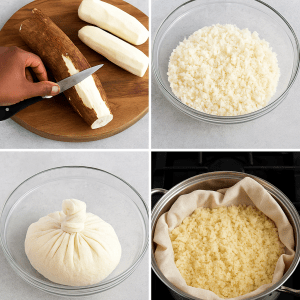
Step 1: Peel and Grate the Cassava
-
Peel the tough brown skin and inner pink layer of cassava using a knife or peeler.
-
Grate finely using a manual grater or food processor.
Step 2: Ferment the Grated Cassava
-
Wrap the cassava pulp in a cheesecloth and place it in a bowl.
-
Leave it to ferment at room temperature for 24–48 hours, pressing it occasionally to remove moisture. The longer it ferments, the more sour and authentic the taste.
Step 3: Sieve and Dry
-
After fermentation, rub the pulp through a sieve to break it into small granules.
-
Spread the granules on a clean tray or cloth to air-dry for a few hours until no longer wet to the touch.
Step 4: Steam the Attiéké
-
Place the attiéké in a steamer lined with a cloth or in a colander over a pot of boiling water.
-
Steam for 15–20 minutes, stirring once or twice for even cooking.
-
Fluff with a fork or spoon before serving.
Method 2: Quick Version Using Store-Bought Attiéké
Pre-packaged attiéké is widely available in African markets—fresh, frozen, or instant.
Step 1: Rehydrate (if dried)
-
Place 2 cups of attiéké in a bowl.
-
Sprinkle with 1/2 cup of water, mix, and let it sit for 10–15 minutes to absorb moisture.
Step 2: Steam
-
Steam the attiéké in a steamer or microwave:
-
Steamer: 10–15 minutes, fluff halfway.
-
Microwave: Cover bowl with a damp paper towel and heat for 3–4 minutes.
-
Step 3: Add Oil and Salt (Optional)
-
Mix in a tablespoon of oil and a pinch of salt for added flavor and a soft texture.
Serving Suggestions
Serve hot, alongside:
-
Grilled fish or chicken
-
Alloco (fried plantains)
-
Tomato-onion salsa with chili
-
Hard-boiled eggs or avocado slices
Storage Tips
-
Cooked attiéké keeps in the fridge for up to 3 days.
-
It can be frozen and reheated by steaming or microwaving with a little water.

Leave a Reply