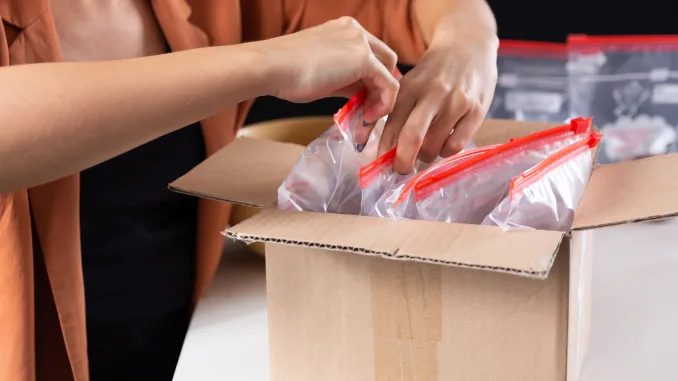
Antimicrobial packaging refers to a class of food, pharmaceutical, and consumer-goods packaging systems designed to inhibit the growth or survival of microorganisms on the package surface or within the packaged environment. Its fundamental objective is to enhance product safety, extend shelf life, and maintain quality by reducing microbial contamination during storage, distribution, and use. Unlike conventional passive packaging, which acts primarily as a physical barrier, antimicrobial packaging is an active or functional system that deliberately interacts with the packaged product or its surrounding headspace to suppress bacteria, fungi, and sometimes viruses. The growing interest in this technology is driven by increasing global food losses due to spoilage, heightened consumer expectations for minimally processed products, and stricter regulatory and safety requirements across supply chains.
The concept of antimicrobial packaging emerged from the broader field of active packaging, which includes oxygen scavengers, moisture absorbers, and ethylene regulators. Antimicrobial systems specifically target microorganisms responsible for foodborne illness and spoilage, such as Listeria monocytogenes, Escherichia coli, Salmonella spp., and various molds and yeasts. These microorganisms can contaminate products at multiple stages, including processing, handling, and post-packaging storage. Traditional preservation methods, such as thermal treatment or chemical preservatives, may negatively affect sensory attributes or nutritional value. Antimicrobial packaging offers a complementary approach by localizing antimicrobial action at the surface where contamination is most likely to occur, thereby reducing the need for high preservative concentrations within the product itself.
Antimicrobial packaging systems can be broadly categorized based on their mode of action and the way antimicrobial agents are incorporated. One approach involves the direct incorporation of antimicrobial substances into the packaging material matrix, such as polymers or coatings. In this case, the antimicrobial agent may migrate slowly to the surface or into the food, providing sustained inhibitory activity. Another approach relies on immobilized antimicrobials that are chemically or physically bound to the packaging surface. These systems act primarily through contact inhibition, preventing microbial adhesion and proliferation without significant migration into the product. A third strategy involves the controlled release of volatile or diffusible antimicrobial compounds into the package headspace, where they exert their effect on exposed surfaces.
A wide range of antimicrobial agents has been investigated for use in packaging applications. These include organic acids, enzymes, bacteriocins, essential oils, metal ions, and synthetic antimicrobial compounds. Among natural antimicrobials, bacteriocins such as nisin have attracted considerable attention due to their effectiveness against Gram-positive bacteria and their acceptance as food-grade additives in many jurisdictions. Enzymes like lysozyme disrupt bacterial cell walls and can be incorporated into films or coatings. Essential oils and plant extracts, including thymol, carvacrol, and eugenol, exhibit broad-spectrum antimicrobial activity but present challenges related to volatility, strong aroma, and stability.
Recent examples have looked at protecting chicken meat. One recent example looked at a konjac glucomannan/alginate-based film (NMP) incorporating either β-cyclodextrin-encapsulated Litsea cubeba oil (LCOP) or grape seed oil (GSOP) microcapsules (Li et al., 2026).
Inorganic antimicrobial agents, particularly metals and metal oxides, play a significant role in antimicrobial packaging research and commercialization. Silver ions and silver nanoparticles are widely studied due to their broad-spectrum antimicrobial activity and long-lasting effects. Zinc oxide and titanium dioxide nanoparticles are also used, often providing additional functionalities such as UV protection. These materials exert antimicrobial effects through multiple mechanisms, including disruption of cell membranes, generation of reactive oxygen species, and interference with cellular metabolism. However, concerns regarding nanoparticle migration, toxicity, and environmental persistence have prompted increased scrutiny from regulators and researchers.
Polymeric materials used in antimicrobial packaging must balance mechanical performance, barrier properties, processability, and compatibility with antimicrobial agents. Conventional petroleum-based polymers such as polyethylene, polypropylene, and polyethylene terephthalate are commonly used due to their established performance and low cost. Antimicrobial agents can be incorporated during extrusion, compounding, or applied as surface coatings. In parallel, biodegradable and bio-based polymers, including polylactic acid, starch-based films, and chitosan, are gaining prominence. Chitosan, in particular, is intrinsically antimicrobial due to its cationic nature and has been widely explored as both a packaging material and a coating.
The effectiveness of antimicrobial packaging depends on several interrelated factors, including the type and concentration of the antimicrobial agent, the characteristics of the packaging material, the target microorganisms, and the storage conditions. Temperature, humidity, and product composition can significantly influence antimicrobial performance. For example, high-fat foods may absorb hydrophobic antimicrobial compounds, reducing their availability at the surface. Similarly, high moisture levels can accelerate the release of certain agents, potentially leading to short-lived activity. As a result, antimicrobial packaging systems must be carefully tailored to specific applications rather than viewed as universally applicable solutions.
Evaluating the performance of antimicrobial packaging requires standardized testing methods to assess microbial inhibition, migration behavior, and overall safety. In vitro assays, such as agar diffusion tests and direct contact methods, are commonly used in early-stage research to screen antimicrobial efficacy. More advanced studies involve challenge tests using real food systems inoculated with target microorganisms under realistic storage conditions. Migration testing is critical to ensure that released antimicrobial agents remain within regulatory limits and do not pose risks to consumers. These evaluations are essential for demonstrating both efficacy and compliance with food-contact material regulations.
Regulatory considerations play a central role in the development and adoption of antimicrobial packaging. In most jurisdictions, packaging materials that release antimicrobial agents into food are regulated as food-contact materials, and the agents themselves must be approved for such use. In the European Union, for example, antimicrobial substances must comply with regulations governing active and intelligent packaging, as well as specific migration limits. In the United States, oversight is provided by the Food and Drug Administration, which evaluates antimicrobial agents under food additive or generally recognized as safe frameworks. Regulatory uncertainty and the complexity of approval processes can slow commercialization, particularly for novel materials or nanotechnology-based systems.
From an industrial perspective, antimicrobial packaging offers clear benefits but also presents economic and technical challenges. The addition of antimicrobial functionality can increase material costs and complicate manufacturing processes. Maintaining consistent antimicrobial performance at industrial scale requires precise control over formulation and processing conditions. Furthermore, the perceived value of antimicrobial packaging must be communicated effectively to brand owners, retailers, and consumers, who may be skeptical of new technologies or concerned about chemical additives. Transparent labeling and evidence-based claims are therefore essential for market acceptance.
Sustainability considerations are increasingly influencing the direction of antimicrobial packaging research. While extending shelf life can reduce food waste and associated environmental impacts, the materials and agents used in antimicrobial packaging must themselves be environmentally responsible. The use of non-renewable polymers, persistent metal nanoparticles, or toxic additives may conflict with circular economy goals. Consequently, there is growing interest in biodegradable materials, naturally derived antimicrobials, and systems designed for recyclability or compostability. Life cycle assessment is often employed to evaluate the net environmental benefits of antimicrobial packaging solutions.
Antimicrobial packaging is also finding applications beyond food, including pharmaceuticals, medical devices, and personal care products. In pharmaceutical packaging, antimicrobial materials can protect moisture-sensitive or sterile products from contamination during storage and use. In healthcare settings, antimicrobial surfaces and packaging may help reduce the spread of healthcare-associated infections. These applications often involve stricter performance requirements and regulatory oversight, but they also highlight the broader relevance of antimicrobial packaging technologies.
Despite significant progress, antimicrobial packaging is not a panacea for microbial safety. It should be viewed as one component of an integrated food safety and quality management system that includes good manufacturing practices, hygiene controls, and appropriate storage conditions. Overreliance on antimicrobial packaging could potentially contribute to microbial adaptation or resistance, although current evidence suggests this risk is limited when such systems are used responsibly. Ongoing research is focused on understanding long-term effects, optimizing combinations of antimicrobials, and developing smart systems that respond dynamically to environmental changes.
In conclusion, antimicrobial packaging represents a sophisticated and evolving approach to improving product safety and shelf life by actively controlling microbial growth at critical interfaces. Its development draws on advances in materials science, microbiology, and chemical engineering, and its successful implementation requires careful consideration of efficacy, safety, regulation, cost, and sustainability. As consumer demand for fresh, minimally processed products continues to grow, and as global supply chains become longer and more complex, antimicrobial packaging is likely to play an increasingly important role in modern packaging strategies. The challenge for researchers and industry alike lies in translating promising laboratory concepts into robust, scalable, and socially acceptable solutions that deliver real-world benefits without unintended consequences.
References
Li, Y., Chen, L., Wen, G., He, J., Wang, J., Chen, Z., … & Qin, N. (2026). Development of Antimicrobial Packaging Films Incorporated Litsea cubeba Oil or Grape Seed Oil and Their Applications on Chilled Chicken Meat. Packaging Technology and Science, 39(1), pp. 3-19 (Article)

Leave a Reply