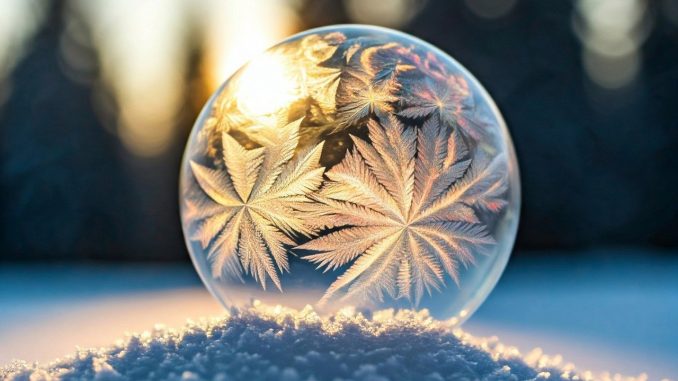
Nanobubbles offer tremendous variety, novelty and functional benefits in the delivery of nutraceuticals. They are already showing promise with drug delivery especially in the pharmaceutical industry and will undoubtedly do the same in consumer healthcare products too. Now it should be possible to deliver nutraceuticals in beverages relying on the exceptional benefits in stability of nanobubbles (Pasupathy et al., 2022).
Nanobubbles are gas carrying concavities in aqueous solution. The size range is below 1µm. These special bubbles are round, globular particles with a shell surrounding a gas-filled core structure that enables them to have perceptibly different dynamic properties to other types of bubbles (Unger et al., 2004; Sirsi & Borden, 2009). The slightly larger bubble form is the microbubble which has a size range typically from 1 to 100 micrometers.
The shell is composed of various polymers, lipids, proteins, surfactants, polyelectrolytes usually in heterogenous and multilayer formats. They are very closely related to liposomes except for the characteristic gas-filled core. They can also be filled with an array of gases – oxygen, air, nitrogen, carbon dioxide, perflurocarbon etc. (Cavalli et al., 2016). The make-up of the shell has a significant impact on the half-life of the bubble. This shell alters the interchange of gas from the medium into the core and more commonly from core to surrounding milieu. The overall stability of the bubble depends on elasticity and shell thickness (Delalande et al., 2012).
Nanobubbles have a high surface area to volume ratio which means an exceptionally high level of mass transfer. There is a high solubility of gas when placed in a nanobubble format (Liu et al., 2013). There is the possibility of modifying chemical reactions and physical adsorption processes because of the differences between the internal and external environments (Gurung et al., 2016).
Microbubbles are less stable because of higher buoyancy and these tend to rise and collapse quickly. They do not have the strong surface charge which prevents them from coalescing. In a beverage, microbubbles will rise like any other type of bubble unless encapsulated. They are ideal for delivering gases such as oxygen because of their high coalescence.
Methods Of Production
The main methods of production are four-fold but few have been scaled-up to industrial levels:-
- Acoustic cavitation
- Hydrodynamic cavitation
- Membrane method
- Electrolysis Method.
Hydrodynamic Cavitation
The hydrodynamic cavitation method is a cutting-edge technique for generating nanobubbles, which have significant applications in the beverage industry due to their ability to enhance flavour, stability, and texture. This process leverages the rapid formation and collapse of vapour cavities, or cavitation bubbles, within a liquid when it flows through a specially designed constriction, such as a venturi tube, or past an impeller. It could be described as a phase transition created by a sudden pressure drop below a specific critical threshold (Wu et al., 2012). The resulting intense pressure fluctuations and shear forces break larger bubbles into nanobubbles, typically less than 200 nanometers in diameter but some systems generate bubble diameters up to 1000 nm (Etchepare et al., 2017). It is one of the least expensive and most energy-efficient of all the four methods at this moment in time. It relies on relatively straightforward and simple equipment and is easy and cheap to maintain. These benefits make it the most frequently found system of manufacture (Zheng et al., 2022).
It is worth noting that this technology can also serve as a pasteurization technology especially in fruit juice processing. It potentially rivals pulsed electric field (PEF), high-pressure processing (HPP) etc. (Bustos et al., 2024).
Accoustic Cavitation
Acoustic cavitation is a method of generating nanobubbles in beverages by using high-frequency sound waves (ultrasonic waves) to create rapid pressure fluctuations in a liquid. These fluctuations produce microscopic vapour cavities that collapse violently, releasing energy and forming stable nanobubbles (Agarwal et al., 2011). The production of nanobubbles using ultrasonic waves can be better achieved when the pressure is lower than normal vapour pressure. This technique is effective for producing uniform, long-lasting nanobubbles, which enhance the texture, carbonation, and oxygenation of beverages. It relies on an ultrasonic transducer as part of the manufacturing mechanism.
Electrolysis Method
A technology not commonly encountered in beverage production but has useful application elsewhere in industry.
Membrane Method
A system whereby fluid under pressure is pumped through a porous membrane whilst a gas phase is forced through the pores of the membrane into the flowing phase. Nano-pore porcelain is effective for producing NBs of about 300 to 400nm at an elevated pressure of up to 400 kPa (Ahmed et al., 2018). TIA Co., (Bolene, France) produce ceramic membrane tubes within a membrane cartridge (Phan et al., 2021).
A less well defined method is ultrasonication where high-frequency sound waves can break larger bubbles into smaller ones, producing nanobubbles from microbubbles..
Delivery Of Nutraceuticals
- Enrichment of Beverages
Nanobubbles have been used to infuse drinks with oxygen or carbon dioxide, improving nutrient delivery and enhancing flavour and texture.
Example: Nutraceutical beverages with dissolved antioxidants or probiotics, where nanobubbles help stabilize active ingredients and increase shelf life (Čolić et al., 2024). We will discuss curcumin later in the article. - Fortified Water
Microbubbles can deliver vitamins (like Vitamin C or D) or minerals (such as calcium) in functional water products, ensuring even distribution and better absorption.
Pharmaceutical and Nutraceutical Supplements
- Bioavailability Enhancement:
Nanobubbles are employed to encapsulate hydrophobic nutraceuticals like curcumin, omega-3 fatty acids, or polyphenols. These bubbles improve solubility in aqueous environments, increasing the effectiveness of the active compounds. - Targeted Delivery:
Microbubbles can act as carriers for nutraceuticals, ensuring targeted release in the gastrointestinal tract. This approach is particularly useful for probiotics or enzymes that require precise delivery for maximum efficacy.
Aquaculture and Animal Feed
- Nutritional Enhancement of Water:
Nanobubbles infused with nutrients, such as amino acids or vitamins, to improve water quality and the delivery of essential compounds to aquatic species, enhancing their growth and health. - Fortified Animal Feed Solutions:
Microbubble technology is used to improve the distribution and absorption of nutritional additives in animal feed, including omega-3s and probiotics.
Agriculture
- Enhanced Foliar Sprays:
Nanobubbles loaded with bioactive compounds like plant-based antioxidants or growth stimulants ensure even distribution and rapid uptake when sprayed on crops. - Soil Nutrient Delivery:
Infused microbubbles containing essential nutrients (e.g., potassium or phosphorus) improve soil penetration and plant absorption, promoting healthier growth.
Biomedical Applications
- Nutraceutical Drug Delivery:
Nanobubbles are being explored for their potential in targeted nutraceutical delivery for disease management, such as delivering resveratrol or curcumin to specific tissues for anti-inflammatory or anti-cancer benefits. - Enhanced Ultrasound-Triggered Delivery:
Microbubbles loaded with nutraceutical compounds can be directed to specific tissues and triggered by ultrasound to release the active ingredients
Delivery Of Curcumin: A Case Study
The case study here is curcumin because it is such a difficult polyphenol to deliver because of its insolubility (Chen et al., 2020; Colic et al., 2024). The general methods for creating nanobubbles are typically using gas-liquid injection systems or ultrasound cavitation methods.
1. Gas-Liquid Injection Systems
- A curcumin solution is prepared by dissolving curcumin in a small amount of a carrier oil or surfactant (e.g., lecithin or polysorbates).
- The solution is then mixed with water.
- A specialized nanobubble generator injects gas (e.g., air, oxygen, or nitrogen) into the liquid under high pressure and forces it through a nozzle or diffuser.
- This creates bubbles in the nanometer range, encapsulating or dispersing curcumin molecules.
2. Ultrasound Cavitation
- Curcumin is pre-mixed in a surfactant-stabilized emulsion.
- Ultrasound waves are applied, creating high-frequency vibrations that induce cavitation (the formation of microbubbles).
- The microbubbles collapse under pressure, forming nanobubbles while encapsulating curcumin in the process.
Incorporating Nanobubbles into Beverages
After generating the nanobubbles with curcumin:
- Homogenization:
The nanobubble solution is homogenized to ensure even distribution of curcumin throughout the liquid. - Stabilization:
Stabilizers like lecithin, pectin, or other emulsifiers are added to prevent the nanobubbles from aggregating or collapsing over time. - Infusion into Beverages:
The stabilized curcumin-loaded nanobubbles are infused into the beverage (e.g., water, tea, or juice) using a gentle mixing process.
Benefits in Beverages
Unlike conventional bubbles, nanobubbles exhibit high surface energy, stability, and a unique capacity to dissolve gases efficiently, which can optimize carbonation or oxygenation in beverages. These properties also promote antimicrobial effects and improved shelf life, making nanobubbles an innovative solution for creating enhanced, sustainable, and premium beverage products.
- Transparency:
Nanobubbles maintain the clarity of beverages, avoiding the cloudiness that often results from traditional curcumin formulations. - Shelf Stability:
The small size and encapsulation protect curcumin from degradation, allowing for longer storage. - Functional Improvement:
Beverages with curcumin-loaded nanobubbles deliver health benefits without altering taste or appearance significantly - Surface Tension: Surface tension affects wettability, dispersibility and solubility of fine powders. Surface tension also has a direct effect on the rate of homogeneous and heterogeneous nucleation in water crystallisation relating to freezing foods (Kiani & Sun, 2011). It also impacts emulsion stability. There is a decrease of 10% in the surface tension of water when mixed with ozone infused ultrafine bubbles with a range of 10 to 500 nm (Ushida et al., 2017).
- Stable Foam Formation: Instant coffee foams can be stabilised using nanobubbles. These are better than microbubbles because of their high surface area and high stagnation in the liquid phase and without seeing undesirable liquid change. The best approach to introducing nanobubbles is spray-freeze drying (SFD). The SFD coffee powder is dissolved in water at 90C to produce foam and remained for 40 minutes.
Commercial Producers of Nanobubbles
Several companies specialize in the industrial production of nanobubbles, offering tailored solutions across various sectors.
- Moleaer Inc. (Hawthorne, Calif. USA): A global leader in nanobubble technology, Moleaer provides specialized nanobubble generators designed for applications in beverages, aquaculture, horticulture, wastewater treatment, and more. Moleaer
- Kran: In their industrial division, Kran implements customized nanobubble solutions for different stages of production processes where water usage is critical. Beverages are one of their acclaimed specialities. Kran Nanobubble
- Nano Gas Environmental: This company offers patented nanobubble water treatment solutions for industries such as wastewater lagoons, enhanced oil recovery, and produced water treatment. Nano Gas Environmental
- Acniti LLC: Based in Osaka, Japan, Acniti specializes in the development and production of nanobubble equipment and industrial oxygen concentrators, focusing on sales and marketing of nanobubble technology. Acniti
- Trident Bubble Technologies LLC: Trident Bubble Technologies offers nanobubble generators and has applications in the oil and gas industry, aiming to maximize efficiency in various operations.
These companies are at the forefront of integrating nanobubble technology into industrial applications, enhancing efficiency and sustainability across multiple sectors.
Challenges and Considerations
- Encapsulation Efficiency:
Achieving high encapsulation efficiency for curcumin can be complex due to its hydrophobic nature. - Cost:
Generating nanobubbles with precise control over size and stability can be expensive. - Regulatory Approval:
The use of nanotechnology in food requires compliance with safety regulations and consumer acceptance.
Nanobubbles And Nutritional Benefits
Studies of nanobubbles using curcumin have been conducted in mice models. One study found supplementation of a nanobubble curcumin extract in mice improved their gut flora and fauna as well as improving their exercise capability (Chen et al., 2020).
Microbubbles
Carbon dioxide microbubbles (MBCO2) can be mixed into liquid food but only at low temperature and pressures. The process has been applied to treating microorganism in unpasteurised beer and sake and for inactivating enzymes (Kobayashi & Odake, 2015; 2019).
Dried juice droplets will form specifically microbubbles rather than nanobubbles when treated with plasma nanosecond spark charges (Kozhayeve et al., 2017; Dubinov et al., 2019).
The University of Sheffield have explored the production of yeast with microbubbles (Hanotu et al., 2016) using oxygen rich or carbon dioxide rich bubbles to serve as substrate. In other examples, the anthocyanins in blackcurrant beverages can be stabilised with carbon dioxide microbubbles (Kawasaki et al., 2012).
To summarise all this, nanobubbles offer a promising delivery mechanism for curcumin in beverages, addressing solubility and bioavailability challenges while enhancing functionality and stability.
References
Agarwal, A., Ng, W. J., & Liu, Y. (2011). Principle and applications of microbubble and nanobubble technology for water treatment. Chemosphere, 84(9), pp. 1175-1180.
Ahmadi, R., Khodadadi, D. A., Abdollahy, M., & Fan, M. (2014). Nano-microbubble flotation of fine and ultrafine chalcopyrite particles. International Journal of Mining Science and Technology, 24(4), pp. 559-566 (Article).
Ahmed, A. K. A., Sun, C., Hua, L., Zhang, Z., Zhang, Y., Zhang, W., & Marhaba, T. (2018). Generation of nanobubbles by ceramic membrane filters: The dependence of bubble size and zeta potential on surface coating, pore size and injected gas pressure. Chemosphere, 203, pp. 327-335.
Bhat, A. A., Chen, Y. W., Liang, Y. S., Chen, S. Y., Hsieh, C. W., Lin, C. M., … & Hou, C. Y. (2024). Exploring the Potential of Microbubble Innovation in Revolutionizing Food Industry: A Comprehensive Review. Food and Bioprocess Technology, 1-20.
Bustos, K. G., Meza, K. T., Alarcon, M. A. F., dos Santos, J. C., Andrade, G. C., & Hilares, R. T. (2024). Hydrodynamic cavitation as a promising technology for fresh produce-based beverages processing. Innovative Food Science & Emerging Technologies, 103784.
Cavalli, R., Soster, M., Argenziano M. (2016) Nanobubbles: a promising efficient tool for therapeutic delivery. Ther. Deliv. 7(2) pp. 117-138.
Chen, Y. M., Chiu, W. C., Chiu, Y. S., Li, T., Sung, H. C., & Hsiao, C. Y. (2020). Supplementation of nano-bubble curcumin extract improves gut microbiota composition and exercise performance in mice. Food & Function, 11(4), pp. 3574-3584.
Čolić, M., Kraljević Pavelić, S., Peršurić, Ž., Agaj, A., Bulog, A., & Pavelić, K. (2024). Enhancing the bioavailability and activity of natural antioxidants with nanobubbles and nanoparticles. Redox Report, 29(1), 2333619.
Delalande A, Postema M, Mignet N, Midoux P, Pichon C. (2012) Ultrasound and microbubble-assisted gene delivery: recent advances and ongoing challenges. Ther. Deliv . 3(10) pp. 1199-1215.
Dubinov, A. E., Kozhayeva, J. P., Lyubimtseva, V. A., & Selemir, V. D. (2019). Hydrodynamic and physicochemical phenomena in liquid droplets under the action of nanosecond spark discharges: A review. Advances in Colloid and Interface Science, 271, 101986. .
Etchepare, R., Oliveira, H., Nicknig, M., Azevedo, A., & Rubio, J. (2017). Nanobubbles: Generation using a multiphase pump, properties and features in flotation. Minerals Engineering, 112, pp. 19-26.
Hanotu, J., Kong, D., & Zimmerman, W. B. (2016). Intensification of yeast production with microbubbles. Food and Bioproducts Processing, 100, pp. 424-431.
Javed, M., Matloob, A., Ettoumi, F. E., Sheikh, A. R., Zhang, R., & Xu, Y. (2023). Novel nanobubble technology in food science: Application and mechanism. Food Innovation and Advances, 2(2), pp.135-144
Kawasaki, T., Ohara, H., Nakamura, N., Xu QingYi, X. Q., Matsumoto, H., Kanegae, M., & Shiina, T. (2012). Stabilization of anthocyanin in blackcurrant beverages using CO2 microbubbles. J Japanese Soc. Fd Sci. Technol. 59 (12) pp. 611-615.
Kiani, H., & Sun, D. W. (2011). Water crystallization and its importance to freezing of foods: A review. Trends in Food Science & Technology, 22(8), pp. 407-426.
Kobayashi, F., Ikeura, H., Odake, S., & Hayata, Y. (2013). Inactivation of enzymes and Lactobacillus fructivorans in unpasteurized sake by a two-stage method with low-pressure CO2 microbubbles and quality of the treated sake. Innovative Food Science & Emerging Technologies, 18, pp. 108-114
Kobayashi, F., & Odake, S. (2015). Quality evaluation of unfiltered beer as affected by inactivated yeast using two-stage system of low pressure carbon dioxide microbubbles. Food and Bioprocess Technology, 8, pp. 1690-1698
Kobayashi, F., & Odake, S. (2019). Flavour retention and removal of dissolved carbon dioxide in the solution treated with low-pressure carbon dioxide microbubbles. LWT, 108, pp. 338-343
Kobayashi, F., & Odake, S. (2019). Application of a two-stage system with pressurized carbon dioxide microbubbles for inactivating enzymes and microorganisms in unpasteurized sake and unfiltered beer. In Alcoholic Beverages. Chapt. 7 (pp. 199-241). Woodhead Publishing (Article).
Kozhayeva, J. P., & Dubinov, A. E. (2017). Producing of Microbubbles in Dried Juice Droplets Treated With Nanosecond Spark Discharges. IEEE Transactions on Plasma Science, 45(12), pp. 3089-3093
Liu, S., Kawagoe, Y., Makino, Y., & Oshita, S. (2013). Effects of nanobubbles on the physicochemical properties of water: The basis for peculiar properties of water containing nanobubbles. Chemical Engineering Science, 93, pp. 250-256.
Nisar, M. F., & Wan, C. (2025). Nanotechnology-based Delivery Systems for Enhanced Bioavailability of Antioxidant Compounds in Fruits and Vegetables. Current Research in Nutrition and Food Science Journal, 13 (Special Issue Phytonutrients June 2025)
Pasupathy R, Pandian P, Selvamuthukumar S. (2022) Nanobubbles: a novel targeted drug delivery system. Braz. J Pharm Sci. 58: e19608 (Article).
Phan, K., Truong, T., Wang, Y., & Bhandari, B. (2021). Effect of CO2 nanobubbles incorporation on the viscosity reduction of fruit juice concentrate and vegetable oil. International Journal of Food Science & Technology, 56(9), pp. 4278-4286 (Article)
Sirsi, S., Borden, M. (2009) Microbubble compositions, properties and biomedical applications. Bubble Sci. Eng. Technol. 1(1-2) pp. 3-17
Unger EC, Porter T, Culp W, Labell R, Matsunaga, T., Zutshi, R. (2004) Therapeutic applications of lipid-coated microbubbles. Adv Drug Deliv. Rev . 56(9) pp. 1291-1314.
Ushida, A., Koyama, T., Nakamoto, Y., Narumi, T., Sato, T., & Hasegawa, T. (2017). Antimicrobial effectiveness of ultra-fine ozone-rich bubble mixtures for fresh vegetables using an alternating flow. Journal of Food Engineering, 206, pp. 48-56
Wu, C., Nesset, K., Masliyah, J., & Xu, Z. (2012). Generation and characterization of submicron size bubbles. Advances in Colloid and Interface Science, 179, pp. 123-132
Zhang, Z. H., Wang, S., Cheng, L., Ma, H., Gao, X., Brennan, C. S., & Yan, J. K. (2023). Micro-nano-bubble technology and its applications in food industry: A critical review. Food Reviews International, 39(7), pp. 4213-4235
Zheng, H., Zheng, Y. Zhu, J. (2022) Recent developments in Hydrodynamic cavitation reactors: Cavitation mechanism, reactor design, and applications. Engineering 19 pp. 180-198
Related Posts
 Beverages Showcased At IFE 2017
The IFE 2017 at the ExCel Arena in Docklands, London was the biggest to date…
- Synchronous Fluorescence: Measurement Of Riboflavin And Folic Acid In Beverages
Measuring riboflavin and folic acid simultaneously in beverages can be difficult to achieve but research…
 Sugar-Sweetener Beverages. Is There An Association With Endometrial Cancer?
A study from the journal, Cancer Epidemiology, Biomarkers & Prevention is claiming that postmenopausal women…
 Degradation Of Vitamin C In Beverages
The degradation of vitamin C (ascorbic acid) always continues to create interest because it has…
Leave a Reply