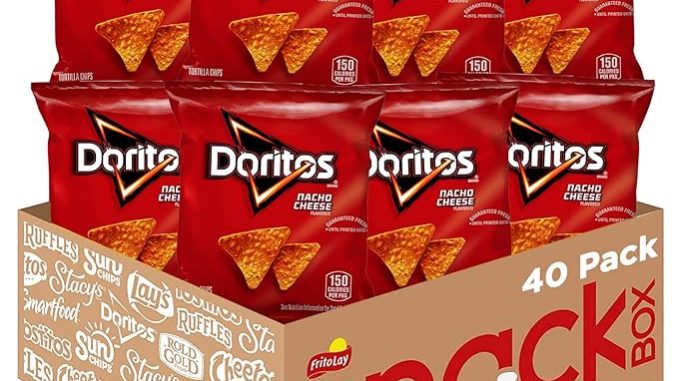
Frito-Lay is one of the world’s most recognisable snack food companies, a division of PepsiCo that has built a global empire on chips, corn snacks, tortilla chips, cheese snacks, popcorn and an array of related products. Its story begins in the depths of the Great Depression and, through mergers, innovation and international expansion, has transformed into a multinational powerhouse responsible for some of the largest-selling savoury snacks in the global market.
The origins of Frito-Lay trace back to 1932, when two independent snack entrepreneurs were operating in Texas and the southeastern United States. Charles Elmer Doolin purchased a small corn chip recipe and business in San Antonio, Texas, and began producing Fritos corn chips from his mother’s kitchen. Across the country in Nashville, Herman W. Lay established Hercules Potato Chip Company before renaming it H.W. Lay & Company as he expanded distribution through the southeastern United States. These parallel enterprises quickly grew in regional importance by capitalising on the rising American appetite for convenient snack foods. In 1961, the Frito Company and H.W. Lay & Company merged to form Frito-Lay, Inc., consolidating their product lines, production facilities and distribution. Four years later, in 1965, Frito-Lay merged with the Pepsi-Cola Company to create PepsiCo, giving the snack business access to global marketing, logistics and capital necessary for worldwide expansion. Today Frito-Lay North America operates out of Plano, Texas, and remains one of PepsiCo’s most profitable divisions.
Across the decades, Frito-Lay nurtured and acquired a portfolio of brands that dominate the salty snack category in North America and beyond. These brands each developed into broad product lines with numerous flavours, formats and regional variants. The foundational brands include Lay’s potato chips, Fritos corn chips, Doritos and Tostitos tortilla chips, Cheetos cheese snacks, Ruffles crinkle-cut chips, SunChips multigrain snacks, Funyuns onion-flavoured rings, and Smartfood popcorn. Frito-Lay’s product family also includes pretzels such as Rold Gold, and in some markets products as diverse as Cracker Jack popcorn snacks and other regionally recognised snacks.
Lay’s is perhaps the most iconic Frito-Lay brand and a global synonym for potato chips. Herman Lay’s potato chips became one of the first snack foods to be distributed nationwide following the merger, buoyed by memorable marketing campaigns and the simple appeal of crunchy, salted potato slices. Lay’s offers an extensive range of styles, from classic thin-cut and kettle-cooked chips to oven-baked varieties and Poppables (a light, hollow, poppable chip format). Flavour innovation has been a hallmark of the Lay’s brand, with standard offerings such as Classic, Sour Cream & Onion and Barbecue complemented in many markets by limited-edition and locally inspired flavours. In the United States and around the world, Lay’s has experimented with region-specific tastes that reflect local culinary preferences; examples include sweet and sour pork flavours in China, apple and caramel in Poland, and Patatje Joppie Max in the Netherlands.
Fritos corn chips represent one of the original snack products of the Frito Company, introduced in 1932. Made from deep-fried extruded whole cornmeal, Fritos are a foundational element of American snack culture. Beyond the classic salted corn chip, the Fritos line has expanded into variants such as BBQ, spicy jalapeño and ranch flavours, and often extends into corn chip-based dipping sauces and bean dips.
Doritos are one of Frito-Lay’s most successful innovations in the tortilla chip category. First test-marketed in the mid-1960s, Doritos distinguished themselves with bold seasoning and distinctive triangular shapes. The brand has grown into a multi-billion dollar franchise with core flavours like Nacho Cheese and Cool Ranch, alongside a multitude of limited editions and regional variants. Doritos chips often serve as platforms for seasonal and co-branded flavours.
Tostitos builds on the tortilla chip category with products designed for sharing and dipping. Launched nationally in the late 1970s, Tostitos includes classic triangle chips, Scoops (bowl-shaped chips for holding dips) and flavour extensions such as Hint of Lime or Hint of Jalapeño. The brand also markets a line of salsas, queso and other dips designed to complement the chips and target party and casual entertainment occasions.
Cheetos occupies the cheese-flavoured snack segment with products featuring the brand’s signature puffed or crunchy extruded corn snack dusted in cheese seasoning. Since its introduction, Cheetos has diversified into puffs, curls, popcorn, and heat-intensified versions such as Flamin’ Hot. The playful Chester Cheetah mascot has been central to the brand’s identity, supporting marketing that emphasises bold flavour and fun.
Ruffles delivers a ridged potato chip experience, with thicker cuts and textures designed for robust dipping and bold seasoning adhesion. In different countries, Ruffles may be branded under local names or variants, but it maintains the core appeal of ridged texture and strong flavour.
SunChips introduced a multigrain chip alternative to traditional potato or corn chips, first successfully brought to market in 1989 after earlier attempts. These chips feature rippled multigrain compositions and have appeared in flavours such as Original, Harvest Cheddar, French Onion and Honey BBQ, with various limited editions and health-oriented formulations over time.
Other brands under the Frito-Lay umbrella include Funyuns onion-flavoured corn snacks, Smartfood popcorn, and a range of pretzel, multigrain and better-for-you snack options. Many of these products have inspired sub-variants, seasonal editions and regional adjustments that reflect local market preferences. Some Frito-Lay products have also developed highly devoted followings that lead to occasional discontinuations, revivals or nostalgic reintroductions.
Throughout its history, Frito-Lay has continually evolved both its core products and its broader portfolio to respond to shifts in consumer tastes and global markets. The company has introduced lines marketed on health-oriented platforms, such as baked or organic ingredient chips, and more recently has adapted recipes in response to regulatory changes by eliminating artificial colours and flavours ahead of deadlines. These product strategies reflect both the company’s scale and its agility in reformulating and repositioning offerings to meet changing consumer expectations.
Internationally, Frito-Lay’s reach extends far beyond North America. In many countries, global brands like Lay’s or Doritos are sold alongside or under local sub-brands tailored to regional tastes. In the United Kingdom and Ireland, for example, Frito-Lay products are distributed under the Walkers brand, which produces similar potato chips with locally popular flavour profiles. PepsiCo’s international divisions adapt Frito-Lay products for diverse markets, ensuring that the snack portfolio resonates across cultures while maintaining global brand equity.
Frito-Lay’s development from a pair of regional snack producers into a global snack industry titan illustrates the power of strategic mergers, brand development and continuous product innovation. The company’s portfolio now spans hundreds of individual products and flavours, generating significant revenue and maintaining strong positions in snack categories worldwide. As consumer preferences continue to evolve, Frito-Lay remains at the forefront of product development and market expansion, balancing the heritage of its classic brands with the demands of modern snacking.
Products
Frito-Lay’s product portfolio includes some of the most iconic snack brands, such as:
- Lay’s: Potato chips available in various flavors.
- Doritos: Flavored tortilla chips.
- Cheetos: Cheese-flavored puffed cornmeal snacks.
- Tostitos: Tortilla chips and salsas.
- Fritos: Corn chips.
- Ruffles: Ridged potato chips.
- SunChips: Multigrain chips.
- Smartfood: Popcorn snacks.
We’ll have a little chat about some of these because they are so iconic!
Headquarters
Frito-Lay is headquartered in Plano, Texas, United States. This location also serves as the main hub for its North American operations.
Market Presence and Value
Frito-Lay dominates the snack food market in the United States, holding a significant market share in the salty snack category. Its products are sold in over 200 countries and territories. The company’s contribution to PepsiCo’s overall revenue is substantial, often accounting for a significant portion of the company’s profits.
As of recent reports, Frito-Lay’s value as part of PepsiCo is immense, with the snack division being a key driver of the company’s growth. The estimated revenue of Frito-Lay North America alone exceeds $17 billion annually.
Lay’s Potato Chips
Lay’s Potato Chips are one of the most iconic and widely recognized snack brands globally, being produced by Frito-Lay. Lay’s have been offering a wide range of flavours and varieties to cater to different consumer preferences for nearly 75 years. The brand is known for its consistent quality and has become synonymous with potato chips in many markets.
Types of Lay’s Potato Chips
- Regular Lay’s Chips
- Texture and Cooking Method: These are the classic thin and crispy potato chips that most people are familiar with. They are made by slicing potatoes thinly and frying them in oil until they reach a golden, crispy texture. The oil used is canola oil with corn oil.
- Taste: The regular Lay’s chips have a light, crunchy texture with a balanced flavor that comes from the natural taste of the potato and the seasoning. They are available in various flavors, including classic, sour cream & onion, barbecue, and more.
- Nutrition: Regular Lay’s chips are fried, which gives them a higher fat content compared to some other types of chips.
- Kettle-Cooked Lay’s Chips
- Texture and Cooking Method: Kettle-cooked chips are thicker and crunchier than regular Lay’s chips. They are made using a batch-cooking process where small batches of potato slices are cooked in kettles of hot oil. This method results in a more rigid, hearty chip with a distinctive crunch.
- Taste: The thicker cut and unique cooking process give kettle chips a more robust potato flavor and a crunchier texture. They often have a slightly rustic, homemade feel.
- Nutrition: Kettle chips typically have a similar fat content to regular Lay’s, but because they are thicker and cooked differently, they might be perceived as being heartier and more filling.
- Baked Lay’s Chips
- Texture and Cooking Method: Baked Lay’s are not fried; instead, they are baked in an oven. This process results in a chip that is much lighter and less greasy than regular or kettle-cooked chips.
- Taste: Baked Lay’s have a crisper, less oily texture, and the flavor can be slightly different due to the baking process. They are available in similar flavors to the regular chips, but the taste can be perceived as milder.
- Nutrition: Baked Lay’s have significantly less fat than regular or kettle-cooked chips, making them a popular choice for those looking for a healthier snack option. They are often marketed as having 65% less fat than regular potato chips.
The Regular Lay’s Chips are thin, crispy, and fried, offering a classic potato chip experience with a balanced flavor. By comparison the Kettle-Cooked Lay’s Chips are thicker, crunchier, and cooked in batches for a heartier, more rustic texture and robust flavor. The final type are the Baked Lay’s Chips: Lighter, crisper, and baked instead of fried, with a focus on lower fat content and a milder taste.
Products
Lay’s potato chips can be purchased as individual flavours or in mixed bag sets. However my first interest is the packaging. The single-serve packs are ideal as on-the-go snacks because these bags are easy to store and carry. They are meant for school lunches and work lunch boxes. Having the single size means they are excellent for portion control although many of us will still have two bags – naughty! The classic type of chip comes in a 1 ounce bag.
The regular types include Classic, Salt & Vinegar and Sour Cream & Onion. There are three very traditional flavours which I would choose whilst having a lager at the local pub or alehouse or whatever passes nowadays as a drinking establishment. Barbecue came in to offer a more spicy but recognizable flavour and then we have the annual challenge of adding the one-off flavours. Some become regulars and others just disappear, there moment in the sun being like a mayfly.
As I mentioned above, Kettle-Cooked chips come in less conventional flavours although we still have Original (thank goodness), Jalapeno and the Mesquite BBQ.
In this section I am going to cover briefly the variety packs and mixes that are available. Variety packs offer the customer choice – there must be something for everyone in these bags.
[Please note we are an affiliate marketing partner and will make a sales commission if you purchase any items through our affiliate links. Please read our affiliate disclosure]

If you just want the classic types then I would recommend the 4 variety multi-pack.
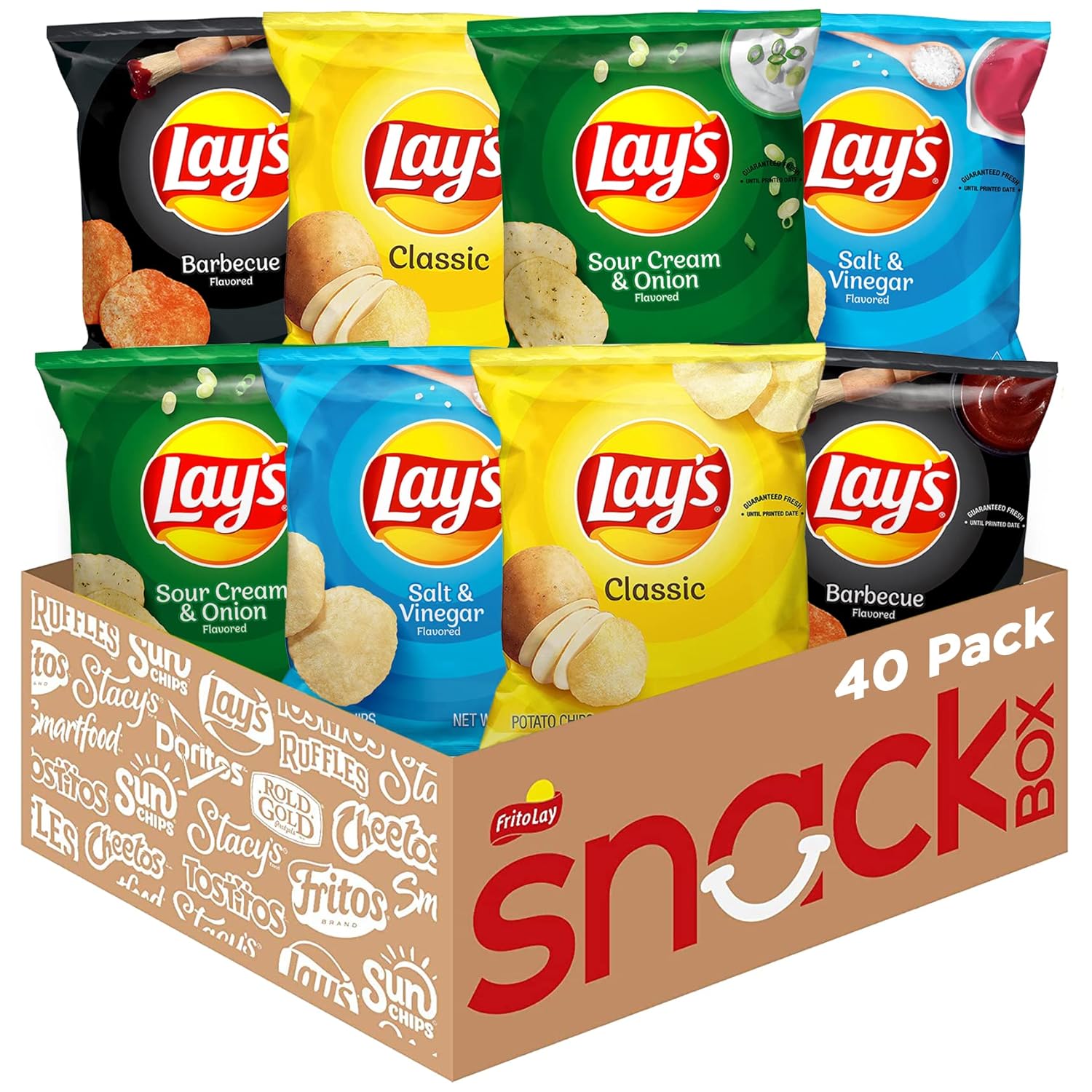
Each type of Lay’s chip offers a different snacking experience, catering to various preferences for texture, flavour, and nutritional content.
Frito-Lay continues to innovate, expanding its product lines to include healthier snack options, new flavors, and sustainable packaging initiatives.
Doritos
Doritos is a popular brand of flavored tortilla chips produced by Frito-Lay, a subsidiary of PepsiCo. Known for their bold and intense flavors, Doritos have become a staple snack food in many households worldwide since their introduction.
History
- Introduction: Doritos were first introduced in 1966. The idea for Doritos originated from leftover tortilla pieces that were seasoned and served as a snack at a restaurant in Disneyland. Frito-Lay took this idea and developed it into the Doritos brand.
- Name: The name “Doritos” is derived from the Spanish word “doradito,” which means “little golden things,” referring to the color of the chips.
Product Evolution
- Original Flavor: The original Doritos flavor was Toasted Corn, introduced in 1966. However, the brand gained widespread popularity with the introduction of the Taco flavor in 1967 and the Nacho Cheese flavor in 1972, which remains one of the most popular flavors to this day.
- Variety of Flavors: Over the years, Doritos have expanded to include a wide range of flavors, catering to different taste preferences around the world. Some of the most popular flavors include:
- Nacho Cheese: A tangy, cheesy flavor that is the most iconic.
- Cool Ranch: A zesty, creamy ranch flavor that is also extremely popular.
- Spicy Nacho: A spicier take on the original nacho cheese flavor.
- Sweet Chili Heat: A sweet and spicy flavor combination.
- Flamin’ Hot: A fiery, spicy flavor that caters to those who love intense heat.
In addition to these core flavors, Doritos regularly releases limited-edition and regional flavors to keep the brand fresh and exciting.
Product Characteristics
- Base: Doritos are made from ground corn, which is formed into triangles, fried, and then seasoned. The texture is crunchy, and the flavor coating is typically intense and evenly distributed.
- Shape: The chips are triangular, making them easy to snack on and ideal for dipping into various sauces or salsas.
- Packaging: Doritos are known for their vibrant and bold packaging, which often reflects the boldness of the flavors.
Market Presence
- Global Popularity: Doritos are sold in over 50 countries, with flavors tailored to local tastes in different regions. For instance, in Japan, you might find flavors like “Seaweed” or “Wasabi,” while in the UK, flavors like “Chili Heatwave” are popular.
- Cultural Impact: Doritos have become more than just a snack; they are a part of popular culture, often featured in advertisements, movies, and even memes. The brand has also been involved in various promotional campaigns, including collaborations with video games, movies, and sports events.
Nutritional Information
- Calories and Fat: Like most flavored chips, Doritos are relatively high in calories and fat. A typical serving (about 12 chips or 28g) contains around 140-150 calories, with about 7-8 grams of fat.
- Sodium: Doritos are also high in sodium, with a typical serving containing around 180-210 mg of sodium, depending on the flavor.
- Serving Suggestion: While delicious on their own, Doritos are often enjoyed with dips like salsa, guacamole, or cheese dip.
Innovations and Promotions
Doritos is known for its innovative marketing strategies. The brand has sponsored events like the “Crash the Super Bowl” campaign, which invited fans to create their own commercials for a chance to have them aired during the Super Bowl. Doritos is also active on social media, engaging with fans through various challenges and campaigns.
[Please note we are an affiliate marketing partner and will make a sales commission if you purchase any items through our affiliate links. Please read our affiliate disclosure]
Products

Doritos have grown from a simple tortilla chip into a globally recognized brand, known for its bold flavors, crunchy texture, and innovative marketing. Whether you prefer the classic Nacho Cheese or one of the many other varieties, Doritos offers a snack experience that is both flavorful and satisfying.

Leave a Reply