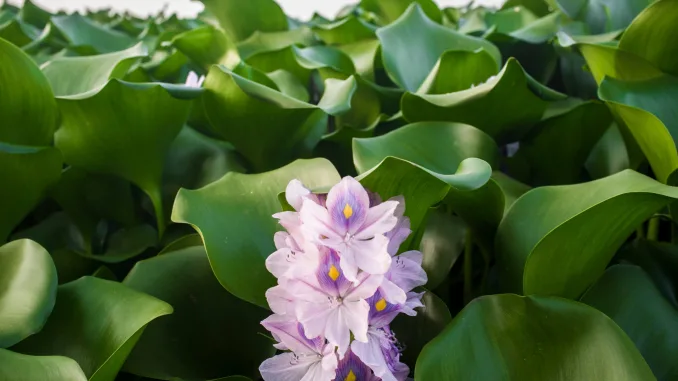
Water hyacinth, often regarded as an invasive aquatic plant, has found a surprisingly practical role in the kitchen in several parts of the world. Although it is more widely known for clogging waterways and disrupting ecosystems, communities in regions such as Southeast Asia and parts of India have adapted to its abundance by incorporating it into local cuisine. The young shoots, tender leaf stalks, and sometimes the roots are the most commonly used parts, as older portions of the plant tend to be too fibrous and tough to eat comfortably.
In culinary use, water hyacinth is valued less for a strong, distinctive flavor and more for its texture and its ability to absorb the tastes of accompanying ingredients. The young stems are crisp and slightly spongy, making them suitable for stir-fries, curries, and soups. When cooked, they soften while still retaining a mild crunch, somewhat similar to bamboo shoots or water chestnuts. In Thai and Vietnamese cooking, for example, the peeled stems may be sliced and added to spicy soups or mixed vegetable dishes, where they soak up broths rich in herbs, chili, and fish sauce.
Preparation is important, both for taste and safety. The plant must be harvested from clean, unpolluted water sources, as it readily absorbs contaminants, including heavy metals and toxins. Once collected, the outer layers of the stems are usually stripped away to reveal the tender inner core, which is then washed thoroughly. Cooking methods such as boiling, sautéing, or simmering help further soften the fibers and make the plant more palatable.
Beyond its direct use as a vegetable, water hyacinth has occasionally been incorporated into animal feed or processed into flour-like substances in experimental or resource-scarce contexts, though these uses are less common in everyday cuisine. Its role in food culture is therefore often tied to necessity and sustainability—transforming an environmental nuisance into a usable resource. While it has not become a mainstream ingredient globally, water hyacinth demonstrates how local knowledge and adaptability can turn even problematic plants into a source of nourishment.

Leave a Reply