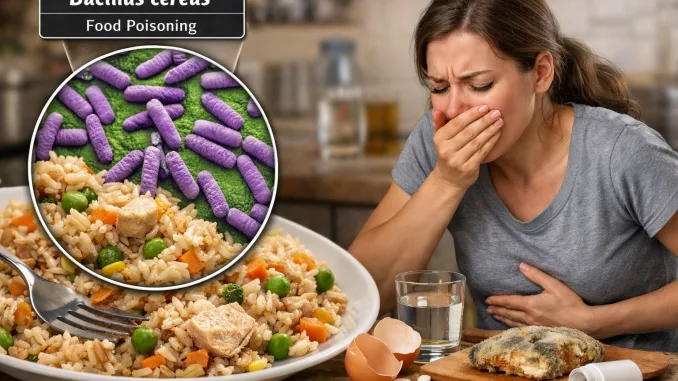
Bacillus cereus produces several clinically relevant toxins that fall into two main categories: emetic (vomiting-type) toxins and diarrheal toxins. These toxins differ in structure, mechanism of action, and clinical presentation.
1. Emetic Toxin
Cereulide
-
Type: Heat-stable cyclic dodecadepsipeptide
-
Disease association: Emetic (vomiting) syndrome
-
Mechanism: Acts as a potassium ionophore → mitochondrial dysfunction → stimulation of the vagus nerve
-
Key features:
-
Preformed in food (commonly rice and starchy foods)
-
Resistant to heat, acid, and proteolysis
-
Symptoms begin rapidly (1–5 hours)
-
-
Clinical significance: Can cause severe toxicity, including acute liver failure in rare cases
2. Diarrheal Enterotoxins
These are heat-labile, protein-based toxins produced in the intestine after ingestion of spores or vegetative cells.
Hemolysin BL (HBL)
-
Components: Three-part toxin (B, L1, L2)
-
Mechanism: Pore formation in intestinal epithelial cell membranes
-
Effects: Diarrhea, abdominal cramps, fluid secretion
Non-hemolytic Enterotoxin (NHE)
-
Components: Three-part toxin (NheA, NheB, NheC)
-
Mechanism: Pore formation → epithelial cell damage
-
Effects: Diarrhea and abdominal pain
-
Note: Most common diarrheal toxin produced by B. cereus
Cytotoxin K (CytK)
-
Type: Single-protein toxin
-
Mechanism: Pore-forming cytolysin
-
Clinical relevance: Associated with severe and occasionally fatal diarrheal disease
3. Additional Virulence Factors (Less Central to Food Poisoning)
-
Phospholipases (e.g., phosphatidylinositol-specific phospholipase C)
-
Proteases
-
Hemolysins
These contribute to tissue destruction and extraintestinal infections (e.g., endophthalmitis, wound infections).
| Toxin | Syndrome | Heat Stability | Key Feature |
|---|---|---|---|
| Cereulide | Emetic | Heat-stable | Preformed in food |
| HBL | Diarrheal | Heat-labile | Three-component toxin |
| NHE | Diarrheal | Heat-labile | Most common enterotoxin |
| CytK | Diarrheal | Heat-labile | Severe disease association |


Leave a Reply