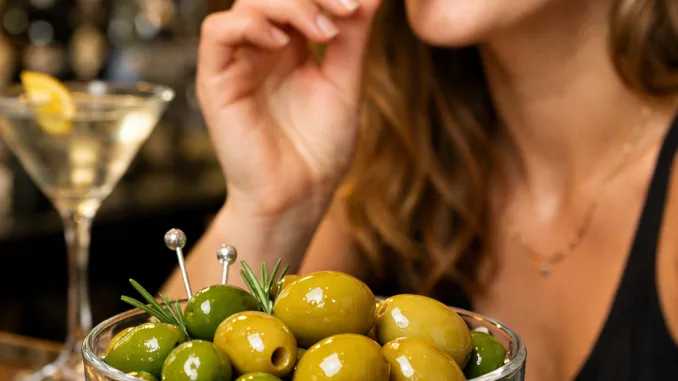
Nocellara and Gordal olives are often set side by side in a bowl not by accident or convenience, but because together they create a kind of quiet dialogue about what table olives can be: how geography, cultivar, processing, and sensory contrast combine to make a simple nibble feel deliberate and complete. To understand why they work so well together, it helps to look closely at each olive on its own, and then at the way their differences balance when eaten in alternation.
Nocellara olives originate in Sicily, most famously around Castelvetrano in the southwest of the island. The cultivar, Nocellara del Belice, is prized both as a table olive and as an oil olive, which is relatively unusual. As a table olive it is most recognizable for its vivid green colour, almost jade-like when properly prepared, and its plump, rounded shape. That colour is not natural in the sense of being untouched; it is the result of careful harvesting while the fruit is still unripe and a processing method that preserves chlorophyll rather than allowing it to dull into olive-drab. Traditionally this is done using a mild lye treatment followed by brining, a method that removes bitterness quickly while maintaining a sweet, vegetal character. The result is an olive that tastes fresh, grassy, and slightly buttery, with very little of the aggressive saltiness or sharp fermentation that people sometimes associate with olives.
Texturally, Nocellara olives are crisp and juicy. When you bite into one, there is resistance followed by a clean snap, and then a release of mild, almost creamy flesh. The flavour profile leans toward green almond, fresh herbs, and sometimes a faint note of artichoke. Bitterness is minimal, acidity is low, and salt is present but restrained. These qualities make Nocellara olives especially appealing to people who think they do not like olives at all; they are approachable, friendly, and easy to eat in quantity. They invite casual snacking rather than contemplation, which is part of their popularity as a nibble.
Gordal olives, by contrast, come from Spain, particularly Andalusia, and their name tells you something important straight away. “Gordal” means “the fat one,” and these olives live up to that description. They are among the largest olives commonly eaten whole, sometimes two or three times the size of a Nocellara. Gordal olives are grown almost exclusively for the table rather than for oil, because their flesh-to-pit ratio and mild oil content make them better suited to eating than pressing. Visually, they are imposing: big, oval, and pale green to yellow-green in colour, often pitted and sometimes stuffed, though plain Gordals are common in traditional tapas settings.
In flavour, Gordal olives are subtler than their size suggests. They are mild, gently salty, and slightly lactic, with a soft, rounded taste that can include hints of green apple or fresh dough. They are typically brined and lightly fermented, which gives them a faint tang and a softer texture than Nocellara olives. When you bite into a Gordal, there is less snap and more yielding flesh. The experience is plush rather than crisp, and the olive feels substantial in the mouth, almost meaty. Because of their mildness, Gordals often act as a canvas for other flavours, which is why they are frequently marinated with garlic, herbs, citrus peel, or peppers in Spanish bars.
When these two olives are served together as a nibble, the logic is sensory rather than regional. They do not share an origin or a traditional pairing in their home cuisines; instead, they complement each other through contrast. Nocellara brings brightness, crunch, and a green, almost sweet freshness. Gordal brings size, softness, and a mellow, briny depth. Eating one after the other highlights what each does best. A bite of Gordal makes the crisp snap of the Nocellara feel sharper and more refreshing; a bite of Nocellara makes the Gordal feel richer and more satisfying. Together, they prevent palate fatigue, which is essential for something meant to be nibbled over time rather than consumed in a single focused moment.
There is also a visual and tactile reason for the pairing. A bowl that contains only one kind of olive can feel monotonous, even if the olives themselves are excellent. Mixing Nocellara and Gordal creates variation in size, shape, and colour that makes the bowl more inviting. The hand reaches in and does not know exactly what it will come back with. That small element of unpredictability keeps the act of snacking engaging. The contrast between a medium-sized, glossy green olive and a very large, pale, matte one adds to the sense that this is a considered selection rather than a random assortment.
Salt balance plays an important role as well. Nocellara olives, when well prepared, are relatively low in perceived salt, while Gordals tend to carry a more noticeable briny note simply because of their size and fermentation. Together, they average out to something that feels seasoned but not aggressive. This makes them ideal as a pre-meal nibble, especially alongside drinks. They stimulate appetite without overwhelming it. With wine, beer, or sparkling water, the pair offers enough salinity and fat to soften acidity and bitterness, while their mild flavours avoid clashing with whatever is in the glass.
Culturally, the modern practice of pairing these olives reflects a broader Mediterranean-inspired approach to casual eating, where the goal is generosity and balance rather than strict authenticity. In restaurants and at home, serving Nocellara and Gordal together signals an awareness of quality and contrast. It suggests that olives are not just a salty afterthought, but an ingredient worthy of curation. The pairing also bridges Italian and Spanish olive traditions, two of the most influential olive cultures in Europe, in a way that feels natural at the table even if it would not be traditional in either place.
Ultimately, Nocellara and Gordal olives are put together as a nibble because they offer more together than they do alone. One is crisp, bright, and immediately pleasing; the other is large, soft, and quietly satisfying. Their differences create balance in flavour, texture, salt, and appearance, turning a simple bowl of olives into an experience that unfolds bite by bite. In that sense, the pairing is less about the olives themselves and more about how we eat them: slowly, casually, and with pleasure, letting contrast do the work that complexity sometimes tries too hard to achieve.


Leave a Reply