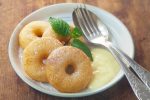
Bimuelos are a traditional Sephardi Hanukkah food whose story reflects the broader history of Sephardi Jewry: migration, adaptation, and continuity expressed through everyday cooking. Like many Jewish ritual foods, bimuelos are not tied to a single moment of origin but developed gradually, shaped by symbolism, local ingredients, and the cultural environments in which Jews lived after the medieval period.
The core idea behind bimuelos is simple: a soft batter fried in oil and sweetened. This simplicity is precisely what made the dish portable across time and geography. After the expulsion of the Jews from Spain in 1492, Sephardi communities dispersed throughout the Ottoman Empire, North Africa, Italy, and parts of the Middle East. They carried with them a culinary vocabulary rooted in Iberian and Mediterranean cooking, which emphasized fried pastries, honey, citrus, and aromatic flavorings. Bimuelos emerged within this context as a natural Hanukkah food, aligning perfectly with the holiday’s central symbol of oil while using inexpensive, widely available ingredients.
The name “bimuelos” is derived from Spanish and Ladino, related to words meaning fritters or fried dough, and it reflects the continued use of Ladino as a communal language among Sephardi Jews for centuries after the expulsion. In Ladino-speaking homes, bimuelos were closely associated with Hanukkah evenings, when families gathered after lighting the menorah to eat sweets fried in oil. The act of frying was not incidental; it was a deliberate reenactment of the miracle of the Temple oil, transformed into a sensory and communal experience.
Unlike sufganiyot, which became standardized relatively late, bimuelos remained a flexible, home-based dish. Each region adapted the batter, frying method, and sweetening agent to local tastes and resources. In the Ottoman lands, including modern-day Turkey and the Balkans, bimuelos were often light and airy, made with yeast and fried quickly in olive or seed oil. They were typically soaked in honey or sugar syrup scented with lemon or orange blossom water, reflecting the broader Ottoman tradition of syrup-soaked pastries. Sesame seeds were sometimes sprinkled on top, adding texture and a subtle nutty flavor.
In Greece, particularly among the Romaniote and Sephardi communities of cities such as Thessaloniki, bimuelos were closely related to loukoumades, the Greek honey fritters sold in markets and festivals. Jewish versions were distinguished primarily by timing and intention: they were made specifically for Hanukkah and sometimes flavored with cinnamon or citrus zest. The shared culinary form underscores the close interaction between Jewish and non-Jewish foodways in the eastern Mediterranean.
North African Sephardi communities developed richer and more aromatic versions. In Morocco, similar fritters were flavored with anise or fennel seeds and soaked in honey infused with orange blossom water, a signature element of Moroccan Jewish desserts. These bimuelos were often smaller and more irregular in shape, emphasizing a rustic, homemade quality. In Tunisia and Libya, variations overlapped with local sweets such as yoyos or sfenj, with Jewish cooks adapting Muslim festival foods to Hanukkah by emphasizing oil frying and communal preparation after candle lighting.
In the Levant, including parts of Syria and the Land of Israel, bimuelos sometimes took on a simpler form, fried quickly and dusted with sugar rather than soaked in syrup. This reflected both local preferences and economic considerations, as sugar syrups could be costly. Dairy-based versions, incorporating milk or yogurt into the batter, were also known in some communities, linking bimuelos to the broader Sephardi custom of eating dairy foods during Hanukkah in memory of the story of Judith.
Despite these regional differences, the meaning of bimuelos remained consistent. They were not everyday sweets but ritual foods, made once a year, in large batches, and shared generously. Their softness and sweetness symbolized abundance and divine favor, while their immersion in oil recalled the miracle that lies at the heart of Hanukkah. Today, as Sephardi traditions are increasingly documented and revived, bimuelos serve as a tangible link to Ladino-speaking kitchens and to a form of Jewish life in which history, language, and faith were preserved through food.
Here is what I believe to be a clear, traditional-style recipe for bimuelos, the Sephardi Hanukkah fritters typically served soaked in honey or sugar syrup. The recipe I’ve written is for reliability and home use, with equipment, timing, and process specified.
Yield
Approximately 20–24 fritters
Equipment Needed
-
Large mixing bowl
-
Medium saucepan (for syrup)
-
Whisk
-
Wooden spoon or silicone spatula
-
Small bowl (for activating yeast)
-
Deep, heavy-bottomed pot or Dutch oven (for frying)
-
Slotted spoon or spider strainer
-
Paper towels or wire rack
-
Candy or instant-read thermometer (recommended)
-
Measuring cups and spoons
Ingredients
For the Dough
-
1 cup warm water (about 105–110°F / 40–43°C)
-
2 teaspoons active dry yeast
-
2 tablespoons granulated sugar
-
2 cups all-purpose flour
-
¼ teaspoon salt
-
1 large egg
-
1 tablespoon vegetable oil (for the dough)
For Frying
-
Neutral oil with a high smoke point (vegetable or canola), about 4–5 cups
For the Syrup
-
1 cup honey or granulated sugar
-
½ cup water
-
1 teaspoon lemon juice
-
Optional flavorings: orange zest, cinnamon stick, or a few drops of orange blossom water
Preparation and Cooking Times
-
Active preparation time: 20 minutes
-
Dough resting time: 60 minutes
-
Cooking time: 15–20 minutes
-
Total time: Approximately 1 hour 45 minutes
Preparation
1. Prepare the Syrup
In a medium saucepan, combine the honey (or sugar), water, and lemon juice. Add any optional flavorings if using. Bring to a gentle boil over medium heat, then reduce to a simmer and cook for 8–10 minutes, until slightly thickened. Remove from heat and set aside. The syrup should be warm, not hot, when the fritters are added later.
2. Activate the Yeast
In a small bowl, combine the warm water, yeast, and sugar. Stir gently and let stand for 5–10 minutes, until the mixture becomes foamy. This indicates the yeast is active.
3. Make the Batter
In a large mixing bowl, whisk together the flour and salt. Add the yeast mixture, egg, and tablespoon of oil. Stir with a wooden spoon or spatula until a thick, sticky batter forms. The consistency should be looser than bread dough but thicker than pancake batter.
4. Rest the Batter
Cover the bowl with a clean kitchen towel or plastic wrap. Let the batter rest in a warm, draft-free place for about 1 hour, or until slightly puffed and airy. It will not double dramatically, but it should show bubbles and lightness.
5. Heat the Oil
In a deep pot or Dutch oven, heat the frying oil to 350°F (175°C). Maintain this temperature throughout frying to ensure the bimuelos cook evenly without absorbing excess oil.
6. Fry the Bimuelos
Using a spoon or your fingers, carefully drop small portions of batter (about 1 tablespoon each) into the hot oil. Fry in batches to avoid crowding. Cook for 2–3 minutes per side, turning once, until golden brown and puffed.
Remove the fritters with a slotted spoon and briefly drain on paper towels or a wire rack.
7. Soak in Syrup
While still warm, place the bimuelos into the warm syrup. Turn gently to coat and allow them to soak for 1–2 minutes so they absorb sweetness without becoming soggy.
Serving
Serve warm or at room temperature, optionally sprinkled with sesame seeds or chopped nuts. Bimuelos are best eaten the same day they are made.


Leave a Reply