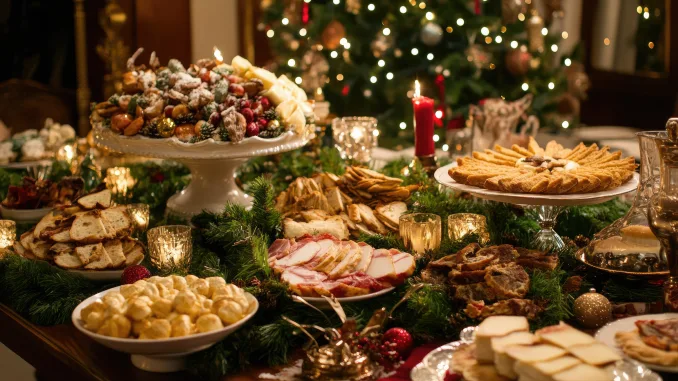
Christmas party food, particularly when laid out as a generous buffet, occupies a special place in the domestic imagination. It is convivial rather than formal, abundant rather than restrained, and rooted as much in memory as in appetite. A Christmas buffet invites guests to wander, to graze, to return for seconds without ceremony, and to sample a wide range of flavors that together express the season’s spirit of warmth and hospitality. Unlike a sit-down dinner, which can feel performative and precise, buffet food reflects the inclusive, practical heart of home entertaining. It is designed to please many palates at once, to hold well at room temperature, and to feel festive without being fussy.
At its core, Christmas buffet food is about balance. There is richness, certainly, but also contrast: something crisp beside something creamy, something sharp to cut through the indulgence, something sweet that feels earned rather than cloying. This instinct is not new. Historically, midwinter feasting has always been shaped by what could be prepared in advance, preserved, cured, or baked to last. In Britain and much of northern Europe, Christmas celebrations developed during a time when fresh produce was scarce and households relied on stored grains, root vegetables, preserved meats, dried fruits, and warming spices. These constraints gave rise to foods that were sturdy, shareable, and deeply flavored, qualities that still define buffet classics today.
Savory dishes tend to anchor the Christmas buffet, beginning with meats that can be served cold or warm without losing their appeal. The glazed ham is perhaps the most iconic example, its origins stretching back to medieval winter feasts when pork, salted and cured, was slaughtered in late autumn and reserved for the holidays. Over time, honey, mustard, cloves, and brown sugar became customary glazes, lending sweetness and spice that felt celebratory and luxurious. Sliced thinly and arranged on a platter, ham suits the buffet format perfectly, offering substance without demanding last-minute carving or elaborate accompaniments.
Alongside ham, roast turkey often appears in buffet form, especially in households where leftovers are abundant after Christmas Day. Turkey itself is a relatively late arrival in British Christmas traditions, becoming popular in the nineteenth century as farming practices improved and the bird became more affordable. Cold turkey, served with cranberry sauce or a subtly spiced mayonnaise, has a quiet elegance that works well in a party setting. It recalls the practical Victorian approach to entertaining, when economy and propriety went hand in hand, and nothing was wasted.
In more contemporary buffets, cured and smoked fish have earned a prominent place, particularly salmon. Gravlax, smoked salmon, and salmon pâté bring a sense of refinement and lightness that balances heavier meats. These dishes also reflect the influence of Scandinavian Christmas traditions, where preserved fish has long been central to holiday tables. Served with rye bread, lemon wedges, and dill, salmon dishes introduce freshness and acidity, key elements in preventing buffet fatigue.
Cheese, too, is indispensable. A Christmas buffet cheese board is not merely an afterthought but a bridge between savory and sweet. Stilton, with its crumbly texture and assertive flavor, has been associated with Christmas since the eighteenth century, when improved transport allowed it to reach London markets in time for the season. Cheddar, Wensleydale, and soft-ripened cheeses provide contrast, while dried fruits and nuts echo medieval feasting traditions, when spiced fruits were symbols of wealth and celebration. Cheese suits the leisurely pace of a buffet, inviting guests to linger and return, pairing it with crackers, bread, or a spoonful of chutney.
Baked goods form another essential layer of the buffet, both savory and sweet. Mince pies are perhaps the most enduring Christmas party staple, their history revealing much about how buffet food evolves. Originally filled with chopped meat, suet, dried fruit, and spices, early mince pies were substantial, almost meal-like, and often rectangular to resemble a manger. Over centuries, the meat disappeared, leaving behind the sweet, spiced mincemeat we know today. Their small size makes them ideal for buffets, allowing guests to indulge without committing to a full dessert. Warm or cold, dusted with icing sugar or served plain, they carry with them the unmistakable aroma of Christmas.
Sausage rolls occupy a similar place in the modern buffet, prized for their familiarity and universal appeal. While they are not exclusively festive, their presence at Christmas parties feels entirely natural. Pork sausages wrapped in buttery pastry draw on the same traditions of preserved meat and baking that shaped earlier holiday foods. Variations, such as cranberry-studded sausage meat or puff pastry enriched with herbs, add seasonal flair without alienating traditionalists. Served at room temperature, they embody the practical genius of buffet fare.
Vegetarian dishes have become increasingly important, reflecting broader changes in how we eat and entertain. Yet even these newer additions often draw inspiration from older practices. Nut roasts, mushroom tarts, and vegetable terrines echo the medieval fondness for elaborate pies and molded dishes, designed to be made ahead and displayed with pride. Roasted root vegetables dressed with honey and herbs, or spiced lentil salads studded with pomegranate seeds, offer color and brightness while remaining grounded in winter ingredients. These dishes demonstrate how the Christmas buffet continues to evolve while respecting its roots.
No discussion of Christmas party food would be complete without addressing the role of dips, spreads, and small bites. Pâtés, whether chicken liver or mushroom-based, harken back to French influences on British entertaining, particularly in the twentieth century when hostess cookery embraced sophistication and international flair. Served with toast points or crackers, they add a touch of indulgence without requiring formal service. Similarly, bowls of olives, spiced nuts, and crisps may seem casual, but their presence reflects a long-standing understanding of hospitality: guests should never be left without something to nibble.
Sweet dishes at a Christmas buffet often lean toward the nostalgic. Trifles, though more commonly associated with the dessert table, sometimes appear in miniature glasses, their layers of sponge, custard, and cream offering visual appeal and indulgence in equal measure. The trifle’s history dates back to the sixteenth century, evolving from a simple cream dessert into the elaborate, alcohol-laced centerpiece familiar today. In buffet form, it becomes lighter, more playful, and easier to share.
Fruitcake and Christmas pudding, while less suited to grazing, still exert a powerful symbolic pull. Slices of rich cake studded with dried fruit and soaked in spirits recall a time when such ingredients were precious and celebratory. Even when guests take only a small piece, the presence of these desserts reinforces the sense that Christmas is a moment apart from the ordinary, governed by its own rituals and flavors.
Underlying all of this is the philosophy that has long guided Good Housekeeping-style entertaining: food should be generous, reliable, and made with care. A Christmas buffet is not about showcasing culinary virtuosity but about creating an atmosphere in which guests feel comfortable and welcome. The best buffets are thoughtfully planned, with attention to texture, temperature, and timing, yet they appear effortless, as though abundance simply happens at Christmas.
The history of Christmas party food shows that while tastes and trends change, the essential purpose remains constant. From medieval feasts to Victorian spreads to today’s inclusive, adaptable buffets, the food of Christmas has always been about bringing people together in the darkest days of the year. A well-chosen buffet, rich in tradition and enlivened by modern touches, continues that legacy. It allows hosts to share not just food, but stories, memories, and a sense of continuity that makes the season feel both comforting and special.


Leave a Reply