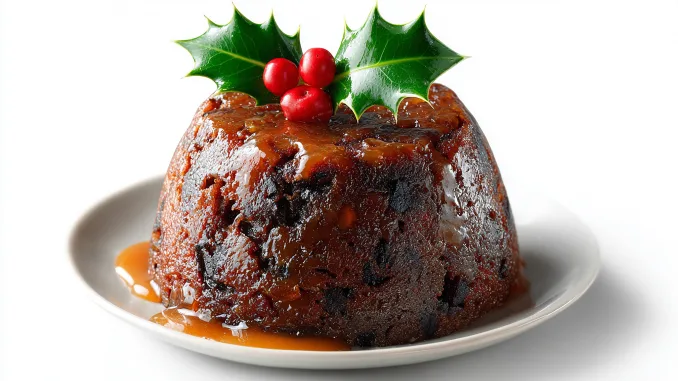
The history of the Christmas pudding is a long, winding story that reflects centuries of British culinary evolution, religious tradition, social change and festive symbolism. What is now understood as a dense, fruit-laden, brandy-soaked dessert began with origins far removed from the sweet celebration dish familiar today. Early ancestors of the pudding emerged in the Middle Ages, when winter feasting required foods that were nourishing, calorie-dense and capable of lasting for months without spoiling. One of the earliest forms was pottage, a thick stew made from meat, vegetables, dried fruits and spices. This mixture, known as “plum pottage,” was served around Christmastime and combined sweet and savoury ingredients in a way that now seems unusual but was typical of medieval cooking. Dried fruits like prunes, raisins and currants—collectively called “plums”—were valuable ingredients imported through trade routes and used by wealthier households to add sweetness and richness to their dishes. Over time, the pottage evolved as ingredients and cooking methods changed, but it remained far from a solid or steamed pudding.
By the 16th and 17th centuries, the dish began shifting closer to something recognisable as a pudding. The pottage thickened as grains such as oatmeal or breadcrumbs were added, and increased use of sugar transformed the mixture into a sweeter, more luxurious preparation. The Reformation and subsequent Puritan influence had a temporary dampening effect on festive foods, including plum-based dishes, as Puritans associated rich feasting with gluttony and Catholic excess. However, the Restoration of the monarchy in 1660 brought back many traditional celebrations, including Christmas feasts. Pudding made a strong return, and its association with holiday cheer became firmly re-established.
The next major transformation came in the 18th century, when the modern method of steaming puddings in cloths or basins took hold. British cooks increasingly used suet—the hard fat from beef or mutton—to enrich puddings, adding moisture and helping the mixture bind into a dense, cohesive form. As steaming gained popularity, plum pudding became a distinct entity: a firm, dark, sweet, boiled or steamed dessert filled with dried fruit, spices, and spirits such as brandy or rum. For many households, the pudding was made several weeks before Christmas so that the flavours could deepen and the alcohol could preserve the mixture. In an age without refrigeration, heavily spiced and alcohol-soaked desserts were ideal for storing through winter.
Victorian England elevated Christmas pudding from a popular seasonal dish to a defining icon of the holiday. This transformation was influenced by the broader revival of Christmas traditions during Queen Victoria’s reign, helped along by writers such as Charles Dickens, whose novels enshrined warm family gatherings and festive foods as central to the British Christmas. Dickens’s A Christmas Carol famously features a triumphant plum pudding brought in with ceremony, steamed to perfection and greeted with admiration by the Cratchit family. The Victorian era also cemented many rituals associated with pudding preparation. It became customary to make the pudding on “Stir-up Sunday,” the last Sunday before Advent. The name comes from the opening words of the Anglican collect: “Stir up, we beseech thee, O Lord,” which, by coincidence or design, encouraged families to stir their pudding mixtures on that weekend. Every family member was expected to stir the bowl from east to west in honour of the biblical Magi, and to make a wish as they did so.
Superstitions and symbolism became woven into the pudding’s identity during the 19th century. Metal charms were sometimes hidden inside, each with its own meaning: a coin for wealth, a ring for marriage, a thimble for good luck, or a button for bachelorhood. Finding one symbolised omens for the year ahead. The number of ingredients in a pudding was sometimes said to be thirteen, representing Christ and the twelve apostles, though such rules were more folklore than actual recipe standards. Dousing the pudding in brandy and setting it alight—a dramatic flourish still practiced today—became another Victorian custom. The blue flame represented the spirit of Christmas, and the ignition symbolised purification or celebration, depending on the interpretation.
The industrial era also shaped the pudding’s evolution. Improvements in trade and shipping made exotic spices, sugar, and dried fruits more accessible and affordable, allowing more families to produce puddings once reserved for the wealthy. Cookbooks proliferated, with authors like Eliza Acton and Mrs Beeton publishing detailed recipes that guided households in standardising the pudding. The clarity and structure of these recipes helped the Christmas pudding become a national mainstay, consistent in its main components yet accommodating of personal and regional variations.
During the 20th century, Christmas pudding weathered both challenges and innovations. Wartime rationing in the 1910s and again in the 1940s forced cooks to adapt recipes, using fewer dried fruits, less sugar, and alternative fats when suet was scarce. Nevertheless, the pudding remained a cherished tradition, often prepared with whatever ingredients could be sourced. The very act of making a pudding during hardship became symbolic of resilience and continuity. After wartime scarcity faded, the popularity of convenience foods grew. Ready-made Christmas puddings appeared on the shelves of grocers and later supermarkets, providing a quicker option for families who lacked time or confidence to make their own. Despite convenience production, the homemade pudding retained a nostalgic appeal—something evoking family heritage, patience and the comforting ritual of slow, careful preparation.
As British food culture has become more global and diverse, so too has the Christmas pudding. Modern recipes might replace suet with butter or vegetable alternatives, reduce sugar, or incorporate gluten-free and vegan adaptations. Spices may vary, and cooks experiment with new fruits, nuts, or flavourings. Yet the essential identity of the pudding endures: a dense, moist, fragrant, richly spiced dessert steeped in tradition. Its blackened surface, glossy from steaming and often decorated with holly, remains instantly recognisable.
In the 21st century, Christmas pudding continues to occupy a distinctive place in the cultural imagination. While some view it as an acquired taste and others prefer lighter or more contemporary desserts, it remains a powerful symbol of continuity—linking medieval feasting, Victorian nostalgia and modern celebration. It embodies a blend of practicality and indulgence: a dish designed to nourish in winter scarcity but elevated into a ritual of abundance and ceremony. More than simply food, the Christmas pudding represents memory, family, storytelling and the enduring human desire to mark midwinter with comfort and warmth.
Here is a classic, reliable Christmas pudding recipe with full ingredients, equipment, step-by-step instructions, and accurate cooking and steaming times. This version is traditional, rich, moist, and suitable for making several weeks in advance (or even just a few days if necessary).
Classic Christmas Pudding Recipe
Equipment You Will Need
-
1 large mixing bowl
-
Measuring spoons and scales
-
Wooden spoon
-
1 x 1.2 litre / 2-pint pudding basin (ceramic or plastic, with lid or foil)
-
Baking parchment
-
Aluminium foil
-
String (for securing the cover)
-
Steamer or a large deep saucepan with a lid
-
Heatproof plate or trivet (if using a pan instead of a steamer)
Ingredients
(Makes one large pudding – about 6–8 servings)
-
125g raisins
-
125g sultanas
-
125g currants
-
50g chopped dried apricots or glace cherries
-
75g mixed peel
-
100g soft brown sugar
-
100g fresh breadcrumbs
-
100g suet (beef or vegetable)
-
100g self-raising flour
-
1 tsp mixed spice
-
½ tsp cinnamon
-
½ tsp nutmeg
-
1 small apple, grated
-
1 orange: zest and 2 tbsp juice
-
1 lemon: zest only
-
2 large eggs
-
100ml stout, dark beer, or strong black tea
-
50ml brandy or rum (optional but traditional)
-
Small knob of butter (for greasing)
Preparation
1. Prepare the mixture
-
In a large mixing bowl, combine all dried fruits, mixed peel, apple, sugar, suet, flour, spices, and breadcrumbs.
-
Add the orange zest, lemon zest, orange juice, eggs, stout (or tea), and brandy/rum.
-
Stir until everything is evenly combined. The mixture should be thick but soft; add a splash more stout/tea if it feels dry.
-
Traditionally, everyone in the household stirs and makes a wish.
2. Prepare the pudding basin
-
Butter the inside of your pudding basin.
-
Cut a circle of baking parchment to line the base.
-
Spoon the pudding mixture into the basin, pressing gently to remove any air pockets but not packing too tightly.
-
Smooth the top.
3. Cover the pudding
-
Cut a large sheet of baking parchment and a sheet of foil.
-
Lay the parchment on top of the foil and fold a pleat down the centre — this allows for expansion during steaming.
-
Place over the basin with the parchment side down.
-
Tie securely around the rim with string.
-
Make a small foil “handle” with more string to help lift it later (optional but useful).
4. Cook the Pudding
Steaming Time (Initial Cook): 6 hours
If using a steamer:
-
Place the pudding in the steamer over simmering water.
-
Cover and steam for 6 hours, topping up with boiling water as needed.
If using a large saucepan:
-
Place a small upturned saucer, trivet, or folded tea towel in the bottom.
-
Put the pudding on top.
-
Fill the pan with boiling water until halfway up the basin.
-
Cover with the lid and simmer very gently for 6 hours, checking water levels regularly.
5. After Cooking
-
Remove the pudding carefully and allow it to cool completely.
-
Replace the baking parchment and foil with fresh coverings.
-
Store in a cool, dark place for up to 8 weeks (or longer). The flavour improves as it matures.
6. Reheating on Christmas Day
Steaming Time: 2 hours
-
Re-steam the pudding (using the same method as above) for 2 hours until piping hot through the centre.
To flambé (optional but traditional):
-
Warm 2–3 tablespoons of brandy in a small pan.
-
Light it with a match.
-
Pour over the pudding just before bringing it to the table.
Serving Suggestions
-
Serve with brandy butter, custard, cream, or rum sauce.
-
Leftovers are wonderful fried in butter the next day
Leading Producers of Christmas Puddings
-
Waitrose & Partners No.1 Christmas Pudding — A traditional, full-bodied pudding with rich dried fruit, nuts and matured flavours. Waitrose markets this as a “luxury” pudding, often matured for extended periods for depth of taste, making it a good choice if you want something premium and reliably festive.
-
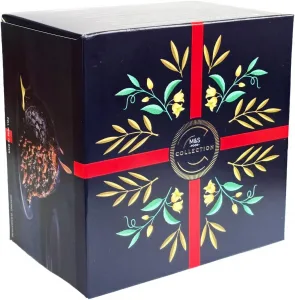
M&S Christmas Pudding 6‑Month Matured — From one of the UK’s most popular upmarket supermarkets, this pudding is often praised for consistent quality and a well-balanced mix of fruit, spice and suet. Reviews tend to highlight a classic flavour profile that suits traditional Christmas dinners. There is also a famous 12 month matured version.
-
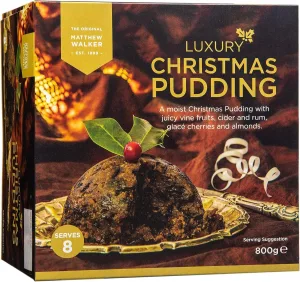
Matthew Walker Classic Christmas Pudding — A well-established “classic” pudding: simple, traditional and widely available. Because of its modest price point and familiar taste, it’s popular for families who want a reliably traditional pudding without frills.
-
Morrisons Rich & Fruity Christmas Pudding — Offers good value and a rich, fruit-forward taste, making it a fine choice for those shopping on a budget or feeding a larger group without compromising on festive tradition.
-
Tiptree Christmas Pudding — From a smaller, more artisanal producer. Tiptree focuses on quality ingredients and craftsmanship, often appealing to those who appreciate traditional methods and more “boutique” puddings rather than mass-produced supermarket versions.
-
Claridge’s Traditional Christmas Pudding — A luxury, hotel-style pudding made with a recipe designed for decadence and a refined finish. This is a more premium option — good if you want something special on the dessert table or as a gift.
-
Tesco Finest Christmas Pudding — Tesco’s “Finest” range offers a good balance between quality and price, making this a mainstream supermarket pudding that’s widely accessible and usually a safe bet for most households.
-
Cole’s Brandy Christmas Pudding — A smaller producer with a heritage in pudding-making. Cole’s puddings tend to appeal to people looking for traditional recipes and artisanal quality, especially those who value brandy-traced richness and a more handmade feel.

Leave a Reply