The sequencing revolution has transformed modern biology, leading to a vast increase in the number of protein sequences deposited in databases. While genome and transcriptome sequencing projects are producing millions of new protein sequences each year, only a fraction of these have been characterised experimentally. A protein’s sequence alone, although rich in information, rarely reveals its exact biological role without further analysis. Experimental approaches, such as crystallography, mutagenesis, and biochemical assays, are time-intensive and costly. As a result, computational methods that infer function directly from sequence data are essential to bridge the gap between raw sequence and biological understanding.
The challenge of predicting protein function from sequence rests on a simple but powerful principle: biological information is encoded at multiple levels within the sequence. Evolutionary conservation, conserved motifs, domain organisation, three-dimensional fold, and even statistical patterns within amino acid arrangements can provide insights into biochemical activity, interaction partners, or cellular roles. Over the years, a wide spectrum of bioinformatics approaches has emerged, ranging from traditional homology searches to modern machine learning strategies.
This essay presents a detailed account of the main computational strategies used to predict protein function when only the sequence is available. The discussion will consider homology-based inference, motif and domain analysis, phylogenetic profiling, structure-based predictions, artificial intelligence, and integrative pipelines, followed by an evaluation of limitations and future prospects.
1. Homology-Based Approaches
1.1 Principle of Sequence Homology
One of the most intuitive and powerful methods to predict protein function is based on sequence homology. The guiding principle is that proteins with similar amino acid sequences tend to adopt similar structures and share related functions, since evolutionary conservation often preserves functionally important residues.
1.2 Pairwise Sequence Comparison and BLAST
The Basic Local Alignment Search Tool (BLAST) remains the workhorse of protein functional annotation. By aligning a query sequence against large databases such as UniProt or NCBI’s RefSeq, BLAST identifies regions of local similarity. High similarity, particularly within conserved regions, strongly suggests functional relatedness.
-
High sequence identity (>40%) often implies strong functional conservation.
-
Intermediate similarity (20–40%) lies in the so-called “twilight zone,” where function cannot be inferred confidently.
-
Low similarity (<20%) is generally unreliable for direct annotation.
Despite its limitations, BLAST remains invaluable for quickly linking novel proteins to established families or enzymes.
1.3 Orthology versus Paralogy
Evolutionary relationships refine homology-based predictions.
-
Orthologues arise from speciation events and typically retain the same function across species.
-
Paralogues, generated by gene duplication, may evolve new functions.
Tools such as OrthoFinder, InParanoid, and OMA help discriminate between orthologues and paralogues, ensuring greater accuracy when transferring functional annotations.
1.4 Limitations
Homology-based predictions may fail when proteins diverge significantly, or when paralogues acquire novel functions. Incorrect annotations in databases may also propagate errors if blindly transferred to new proteins.
2. Domain and Motif Analysis
2.1 Importance of Domains in Protein Function
Proteins often function as modular assemblies of domains. Domains are evolutionary conserved structural units that confer discrete functions, such as DNA-binding, kinase activity, or ligand recognition. Analysing the domain composition of a protein provides strong clues to its biological role.
2.2 Domain Databases and Tools
Several curated resources catalogue protein domains:
-
Pfam provides hidden Markov model (HMM) profiles of domains.
-
SMART focuses on signalling domains and regulatory modules.
-
InterPro integrates multiple databases to provide comprehensive annotation.
By scanning a query protein sequence against these libraries, one can identify constituent domains and map them to known functional categories.
2.3 Motifs and Sequence Signatures
Beyond large domains, shorter conserved motifs often signify critical functions. Examples include:
-
The Walker A and B motifs in ATP-binding proteins.
-
The CXXC motif in redox-active proteins.
-
Phosphorylation sites recognised by kinases.
Databases such as PROSITE and tools like MEME Suite enable motif discovery and mapping, revealing potential catalytic or binding residues.
2.4 Advantages and Challenges
Domain and motif analysis is powerful for multi-domain proteins or when sequence similarity is low. However, the mere presence of a domain does not guarantee a specific function; context, localisation, and interaction partners must also be considered.
3. Phylogenetic Profiling and Comparative Genomics
3.1 Concept of Phylogenetic Profiling
Proteins that participate in the same biological pathways or complexes often co-occur across species. By constructing phylogenetic profiles—binary vectors indicating the presence or absence of genes in genomes—functional associations can be inferred.
3.2 Co-Evolutionary Clues
If two proteins consistently appear together across evolutionary distant organisms, they may interact physically or functionally. For example, enzymes from the same metabolic pathway often exhibit parallel evolutionary histories.
3.3 Tools and Applications
Computational platforms such as COG (Clusters of Orthologous Groups) and EggNOG utilise comparative genomics to group proteins into functionally related clusters. These groupings allow researchers to predict function even in the absence of direct sequence similarity.
3.4 Limitations
This method requires comprehensive genomic datasets and is most effective in prokaryotes, where horizontal gene transfer is less confounding. For eukaryotes with complex genomes, predictions can be more ambiguous.
4. Structure-Based Predictions
4.1 Structure as a Conserved Feature
While sequence diverges rapidly, protein structure is more conserved. Proteins with low sequence identity may still adopt similar folds, implying functional similarity. Thus, predicting or modelling structure from sequence provides valuable functional insights.
4.2 Homology Modelling
When a protein of known structure shares significant similarity with the query sequence, comparative or homology modelling can predict the 3D structure. Structural features, such as catalytic pockets or ligand-binding grooves, can then be mapped to known activities.
4.3 Ab Initio Structure Prediction
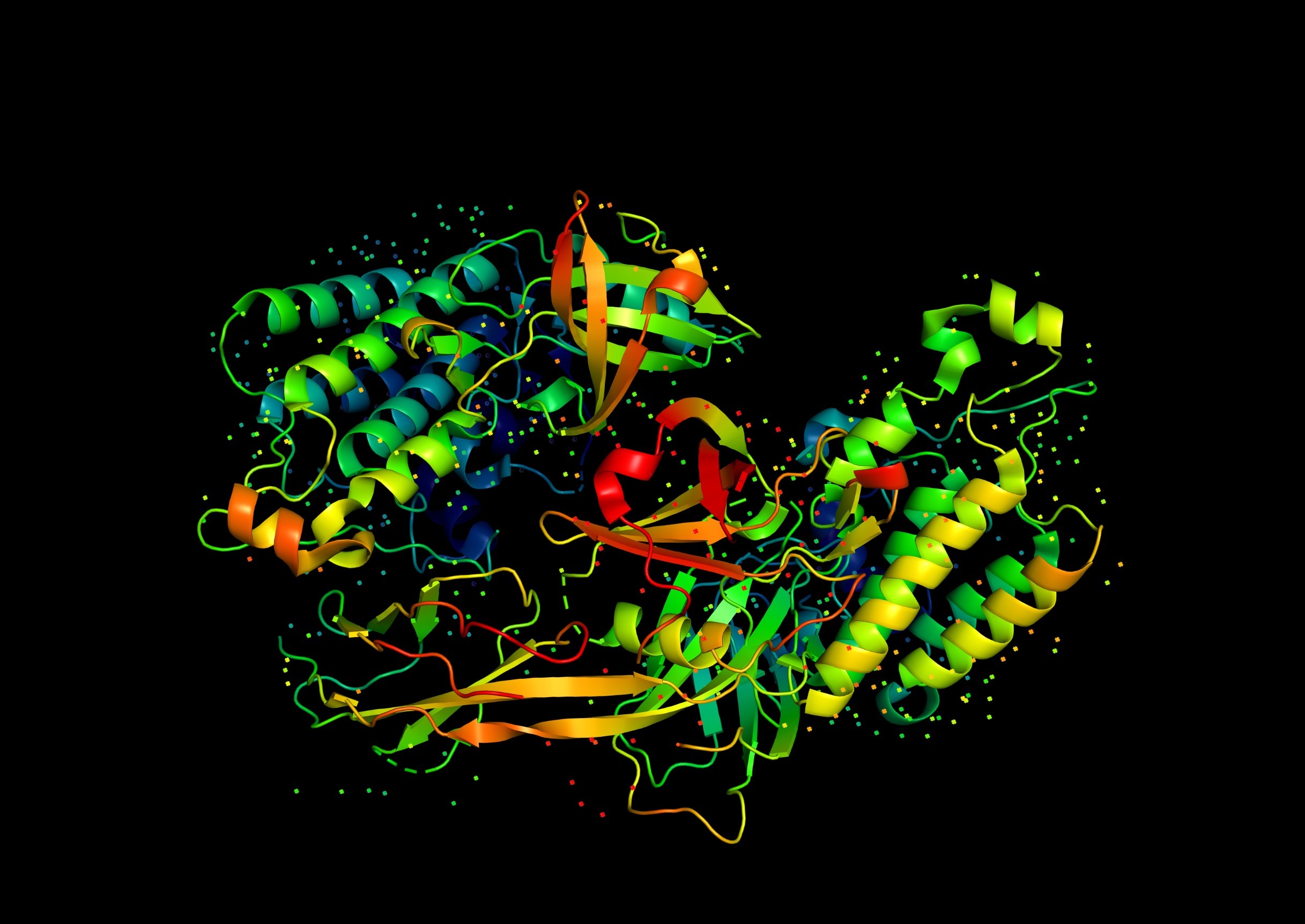
For proteins lacking homologous structures, ab initio modelling predicts 3D structure from first principles. Though historically challenging, recent advances—particularly AlphaFold2 and related deep learning systems—have revolutionised structural prediction. Predicted structures can now be used to infer function with high confidence.
4.4 Structure-Based Function Annotation
Once a structure is predicted, functional clues can be derived from:
-
Fold similarity with known structures (using DALI or CATH).
-
Identification of active sites or ligand-binding pockets.
-
Docking studies predicting potential substrates or interaction partners.
4.5 Caveats
Predicted structures must be interpreted carefully, as similar folds may serve different functions. Moreover, dynamic conformational changes are not always captured in static models.
5. Machine Learning and AI-Based Approaches
5.1 Rise of Data-Driven Protein Function Prediction
With the advent of large-scale protein databases and advances in computational power, machine learning (ML) has become an important tool in functional annotation. Unlike traditional homology methods, ML models can detect subtle sequence patterns not obvious to humans.
5.2 Sequence Embeddings and Language Models
Recent breakthroughs apply natural language processing (NLP) concepts to protein sequences. Models such as ProtBERT, ESM (Evolutionary Scale Models), and ProtT5 treat amino acid sequences as “sentences” and learn embeddings that capture biochemical and evolutionary properties.
These embeddings can then be used to:
-
Classify proteins into Gene Ontology (GO) terms.
-
Predict enzyme commission (EC) numbers.
-
Infer subcellular localisation.
5.3 Supervised Learning Approaches
Supervised ML models are trained on labelled datasets of proteins with known functions. Input features may include amino acid composition, k-mer frequencies, predicted secondary structures, and sequence motifs. Outputs can be functional classes or pathway assignments.
5.4 Advantages and Limitations
ML models excel when traditional homology fails, especially in the twilight zone of low sequence identity. However, they depend heavily on training data quality; biased or erroneous annotations may propagate errors. Interpretability also remains a challenge.
6. Subcellular Localisation Prediction
6.1 Importance of Localisation
A protein’s function is intimately tied to its cellular location. For instance, nuclear proteins often regulate transcription, while mitochondrial proteins typically participate in energy metabolism.
6.2 Sequence Signals for Localisation
Protein sequences often contain targeting signals:
-
Signal peptides direct proteins to the secretory pathway.
-
Mitochondrial targeting sequences guide import into mitochondria.
-
Nuclear localisation signals (NLS) mediate nuclear import.
6.3 Computational Tools
Tools such as TargetP, WoLF PSORT, and SignalP analyse sequences to identify these signals and predict localisation. Correct localisation predictions strongly narrow down potential functional roles.
7. Protein–Protein Interaction Predictions
7.1 Functional Inference from Interaction Networks
Proteins rarely act alone. By identifying potential interaction partners, one can infer roles within complexes or pathways.
7.2 Sequence-Based Interaction Prediction
Certain motifs and domains mediate interactions, such as SH3 domains binding to proline-rich sequences. Co-evolutionary analysis can also suggest interacting residues.
7.3 Integrative Databases
Resources like STRING and BioGRID integrate experimental interaction data with computational predictions. If a query protein is predicted to interact with proteins of known function, this provides strong functional clues.
8. Integrative Pipelines and Meta-Predictors
8.1 Need for Integration
No single approach guarantees accurate prediction. Integrative pipelines combine multiple methods—homology, domains, structure, and ML—into comprehensive annotation frameworks.
8.2 Examples of Pipelines
-
InterProScan integrates Pfam, SMART, and PROSITE domain searches.
-
EggNOG-mapper combines orthology and phylogenetic profiling.
-
UniProt uses automated annotation pipelines supplemented by manual curation.
8.3 Benefits
Such pipelines reduce reliance on any single source of evidence, increase robustness, and provide confidence scores for predictions.
9. Challenges and Limitations
9.1 Twilight Zone of Sequence Similarity
When sequence similarity drops below ~20%, reliable functional prediction becomes challenging, necessitating advanced approaches such as structural modelling or ML.
9.2 Multi-Domain and Moonlighting Proteins
Proteins with multiple domains may perform multiple unrelated functions, complicating annotation. Similarly, moonlighting proteins exhibit distinct roles in different contexts, defying simple classification.
9.3 Database Errors and Propagation
Erroneous annotations in primary databases can propagate through automated pipelines, leading to systemic inaccuracies.
9.4 Dynamic and Context-Dependent Functions
Many protein functions depend on post-translational modifications, expression levels, or tissue-specific contexts, which cannot always be inferred from sequence alone.
10. Future Directions
10.1 Advances in AI and Deep Learning
The success of AlphaFold2 has demonstrated the power of deep learning in structural biology. Similar approaches are being developed for direct function prediction, integrating structural predictions with functional annotations.
10.2 Multi-Omics Integration
Integrating sequence data with transcriptomics, proteomics, and metabolomics will provide richer functional insights. For instance, co-expression networks can refine functional predictions made from sequence alone.
10.3 Personalised and Contextual Annotation
As more individual genomes are sequenced, the need for context-specific annotation grows. Predicting function must account for organismal, tissue-specific, and disease-related contexts.
Predicting the function of an unknown protein from sequence data alone is one of the central challenges of computational biology. A wide array of strategies has been developed, each harnessing different layers of biological information encoded in the sequence. Homology-based inference provides rapid and intuitive predictions but falters at low similarity. Domain and motif analysis offer modular functional clues, while phylogenetic profiling captures evolutionary context. Structural prediction, especially with AI-driven tools, opens new horizons by linking fold to function. Machine learning models bring data-driven power to uncover hidden patterns, while localisation and interaction predictions provide cellular context. Ultimately, integrative pipelines combining multiple approaches yield the most robust predictions.
Despite challenges such as low similarity, multi-domain complexity, and context dependence, progress continues apace. With advances in deep learning, structural biology, and multi-omics integration, the functional annotation of proteins from sequence alone is becoming increasingly reliable. As experimental validation catches up with computational prediction, a more complete map of protein function will emerge, closing the gap between raw sequence and biological meaning.
Leave a Reply