Chemotaxis is one of the most fundamental behaviours exhibited by motile bacteria: the ability to sense chemical gradients in the environment and to adjust movement accordingly. Through chemotaxis, bacteria can locate nutrients, avoid toxins, and colonise favourable ecological niches. The molecular basis of chemotaxis has been most extensively studied in Escherichia coli, where decades of biochemical, genetic, and structural analyses have revealed a signal transduction system of remarkable elegance and sophistication. Central to this system are transmembrane chemoreceptors known as methyl-accepting chemotaxis proteins (MCPs), which detect external stimuli and transmit signals to the flagellar motors through a cascade of interactions with cytoplasmic proteins.
A defining feature of the bacterial chemotaxis system is its ability to adapt: bacteria do not merely respond to the absolute concentration of a chemical but to changes in concentration over time and space. This property ensures that cells can climb gradients of attractants or descend gradients of repellents, even when background concentrations vary. Adaptation is made possible by a covalent modification system that dynamically alters the signalling state of MCPs. Specifically, the methylation and demethylation of receptor glutamate residues provide a reversible molecular mechanism that adjusts receptor sensitivity. Thus, protein methylation lies at the heart of chemotaxis, linking environmental detection to cellular response while endowing the system with memory and adaptability.
This article explores the role of protein methylation in bacterial chemotaxis, focusing on the molecular mechanisms in E. coli, the enzymology of methylation and demethylation, the structural consequences of these modifications, the integration of methylation into receptor signalling complexes, and the broader evolutionary and physiological significance of this system.
The Chemotaxis System in E. coli
The E. coli chemotaxis network consists of several key components: the MCP receptors; the histidine kinase CheA; the adaptor protein CheW; the response regulator CheY, which interacts with flagellar motors; and the adaptation enzymes CheR (a methyltransferase) and CheB (a methylesterase/demethylase). MCPs are transmembrane homodimers organised into large hexagonal arrays at the cell poles. Each receptor senses specific attractants or repellents and transmits signals through conformational changes that regulate CheA kinase activity.
When attractants bind to receptors, CheA activity decreases, lowering phosphorylation of CheY. This results in smoother swimming by reducing the frequency of clockwise flagellar rotation, which otherwise produces tumbling. Conversely, repellents increase CheA activity, leading to more frequent tumbling and reorientation. Importantly, without adaptation, cells would rapidly saturate their response to persistent stimuli and become unable to sense further changes. Protein methylation provides the biochemical feedback necessary for adaptation.
Discovery of Receptor Methylation
The discovery of receptor methylation in bacterial chemotaxis was a milestone in understanding adaptive signalling. Early studies in the 1970s demonstrated that MCPs undergo reversible covalent modification and that these modifications correlate with sensory adaptation. Specifically, receptor methylation levels changed in response to attractant or repellent exposure, and mutants defective in methylation exhibited impaired adaptation. These observations led to the identification of CheR and CheB as the enzymes responsible for methylation and demethylation, respectively. The designation “methyl-accepting chemotaxis proteins” reflects this discovery, highlighting methylation as a defining feature of the receptors themselves.
Sites and Chemistry of Methylation
MCPs contain multiple methylation sites, typically located in the cytoplasmic signalling domain. In E. coli Tar and Tsr receptors, four to five conserved glutamate residues serve as methylation targets. These residues can exist in two states: as glutamate side chains or as glutamine substitutions generated post-translationally.
CheR catalyses the transfer of a methyl group from S-adenosylmethionine (SAM) to the γ-carboxyl group of glutamate residues, forming γ-glutamyl methyl esters. This reaction neutralises the negative charge of the side chain, subtly altering receptor conformation and its interaction with CheA. CheB, in its phosphorylated form, catalyses the hydrolysis of these methyl esters, restoring the negative charge. Notably, CheB can also deamidate glutamine residues at methylation sites, converting them to glutamate and thus creating new substrates for subsequent methylation. This dual activity ensures that the full complement of receptor sites can participate in the methylation cycle.
Enzymology of CheR and CheB
CheR Methyltransferase
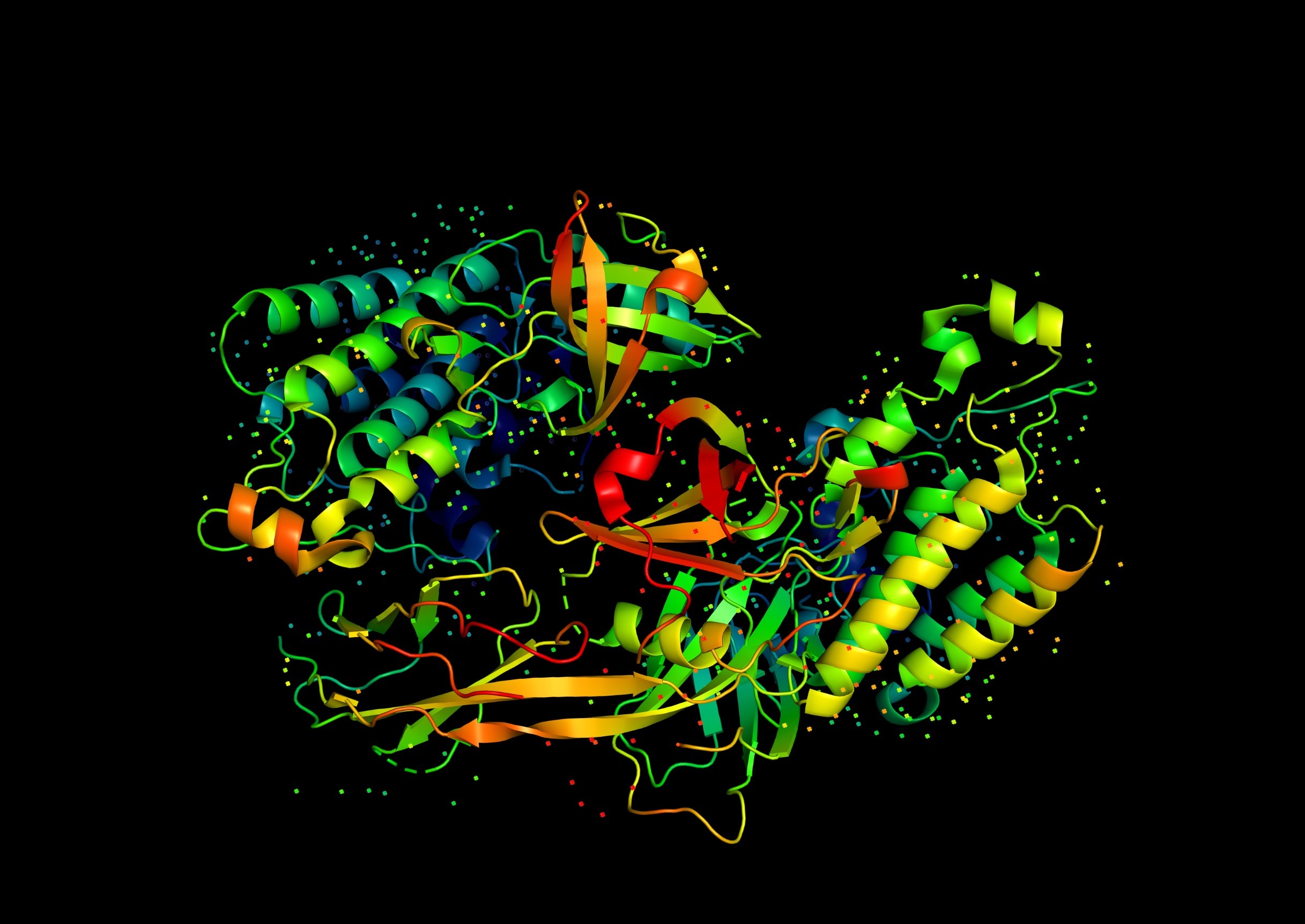
CheR is a small cytoplasmic enzyme that binds near the cytoplasmic tip of MCPs. Its localisation is facilitated by tethering interactions with receptor-specific sequences, ensuring that methylation occurs efficiently at receptor clusters. Using SAM as a methyl donor, CheR transfers methyl groups to unmethylated glutamate residues. Importantly, CheR activity is constitutive and not directly regulated by receptor signalling states. Instead, the direction of methylation-driven adaptation arises from the balance of CheR and CheB activities.
CheB Methylesterase/Demethylase
CheB is regulated by phosphorylation through CheA. When receptor signalling increases CheA activity, CheB is phosphorylated, stimulating its methylesterase activity. Phosphorylated CheB removes methyl groups from receptors, generating negatively charged glutamate residues. CheB also possesses deamidase activity, targeting glutamine residues at methylation sites to produce new glutamates. This activity ensures that all methylation sites can be brought into the cycle. Unlike CheR, CheB is strongly regulated, making it the dynamic counterbalance that drives adaptive responses.
Functional Role of Methylation in Adaptation
The methylation system operates as a negative feedback loop. When attractants bind and decrease CheA activity, the resulting reduction in CheB phosphorylation diminishes demethylation, allowing constitutive CheR activity to increase receptor methylation. This restores receptor signalling toward the pre-stimulus baseline, thereby adapting the cell to persistent attractant. Conversely, when repellents increase CheA activity, CheB phosphorylation rises, enhancing demethylation and lowering receptor methylation. Again, this shifts receptor activity back toward baseline.
Through this feedback, methylation enables the chemotaxis system to reset its sensitivity after stimulation. The system does not adapt to absolute concentrations but rather to changes, ensuring continued responsiveness across a wide dynamic range. This molecular mechanism underlies the behavioural property known as “perfect adaptation”: after a step change in attractant concentration, receptor activity and motor bias return precisely to prestimulus levels, even though methylation state has changed.
Structural and Biophysical Consequences of Methylation
At the structural level, methylation alters receptor conformations and their ability to transmit signals to CheA. The cytoplasmic domains of MCPs are coiled-coil structures organised into trimers of dimers, which form extended arrays with CheA and CheW. Within these arrays, receptors communicate cooperatively, amplifying signals and increasing sensitivity.
Methylation modifies the charge distribution in receptor signalling domains, subtly altering inter-dimer packing and stabilising active or inactive conformations. For example, increased methylation tends to stabilise receptor states that promote CheA activity, while demethylation biases receptors toward reduced activity. These changes are not dramatic structural rearrangements but fine-tuned modulations that shift the equilibrium of receptor states.
The cooperative nature of receptor arrays means that even small changes in methylation at individual receptors can have large effects on overall array activity. Thus, methylation serves as a tunable regulator of receptor signalling, enabling precise control over CheA output.
Receptor Clustering and the Importance of Arrays
The effectiveness of methylation in adaptation is amplified by the higher-order organisation of receptors. MCPs, CheA, and CheW form extended hexagonal lattices at the cell poles, creating signalling teams of receptors. Within these clusters, receptors function cooperatively, meaning that the signalling state of one receptor influences its neighbours.
Methylation plays a key role in tuning the cooperative properties of arrays. Changes in receptor modification state shift the collective activity of arrays, enabling graded adjustments to attractant or repellent stimuli. This cooperative mechanism explains the extraordinary sensitivity of bacterial chemotaxis, allowing cells to detect minute changes in ligand concentration over several orders of magnitude. Without methylation, receptor arrays would become locked into particular signalling states, losing adaptability.
Kinetics and Dynamics of the Methylation System
The dynamics of methylation and demethylation determine the temporal behaviour of chemotaxis. CheR acts slowly and constitutively, gradually increasing receptor methylation, while phosphorylated CheB provides rapid, regulated demethylation. The interplay between these activities produces adaptation kinetics that match the behavioural requirements of the cell.
The system also provides a form of molecular memory: the methylation state of receptors reflects recent environmental conditions. This biochemical memory allows cells to compare past and present concentrations, enabling them to respond not simply to stimuli but to temporal changes. The integration of sensory input with methylation-mediated memory underlies the capacity of E. coli to navigate complex chemical landscapes.
Evolutionary Conservation and Diversity
Protein methylation in chemotaxis is conserved across many bacterial species, though variations exist. The core principle of receptor modification by CheR and CheB is widespread, underscoring its evolutionary success. In some species, additional regulatory mechanisms augment or modify the methylation system, reflecting adaptation to specific ecological niches.
Comparative genomics has revealed that while the basic architecture of chemotaxis systems is conserved, the number and diversity of MCPs vary greatly. Some bacteria possess dozens of MCPs, each detecting distinct signals. Yet the methylation machinery remains central, providing a unifying mechanism for adaptation across receptors. This conservation suggests that methylation is not merely an incidental feature but a deeply entrenched solution to the problem of sensory adaptation.
Physiological Significance Beyond Chemotaxis
Although best known for their role in chemotaxis, MCP methylation systems have implications for other cellular processes. Chemoreceptors are linked to biofilm formation, virulence, and host colonisation in pathogenic bacteria. Methylation-mediated adaptation therefore indirectly influences ecological interactions and pathogenic strategies.
Moreover, the methylation system exemplifies a broader principle in biology: the use of reversible covalent modifications to tune protein activity and provide dynamic regulation. Parallels can be drawn with eukaryotic signalling systems, where phosphorylation, methylation, and other modifications regulate protein function. Thus, bacterial receptor methylation provides both a specific solution for chemotaxis and a general model for adaptive signalling.
Pathological and Synthetic Implications
Understanding protein methylation in bacterial chemotaxis also has practical implications. In pathogenic bacteria, chemotaxis contributes to infection by guiding cells to favourable sites within hosts. Interfering with methylation systems could therefore be a strategy for attenuating virulence.
Conversely, synthetic biologists are interested in harnessing chemotaxis for engineered behaviours, such as guiding bacteria toward pollutants for bioremediation. Manipulating receptor methylation states and adaptation dynamics provides a potential tool for tuning chemotactic responses. Thus, the study of protein methylation in chemotaxis extends from basic biology to applications in medicine and biotechnology.
Protein methylation plays a central role in bacterial chemotaxis, providing the molecular basis for adaptation and memory. Through the reversible modification of conserved receptor glutamates by CheR and CheB, bacteria can adjust receptor sensitivity, maintain responsiveness across wide concentration ranges, and exhibit the behavioural property of perfect adaptation. Methylation alters receptor conformations, tunes cooperative array activity, and integrates into a tightly regulated feedback loop with receptor signalling and CheA kinase activity.
The evolutionary conservation of methylation across diverse bacteria highlights its functional indispensability. At the same time, variations in methylation systems illustrate how evolutionary pressures tailor adaptation mechanisms to specific ecological contexts. Beyond chemotaxis, receptor methylation exemplifies broader themes in signal transduction: the use of covalent modifications for dynamic control, the integration of feedback for stability, and the embedding of memory into molecular circuits.
In sum, the study of protein methylation in bacterial chemotaxis reveals a system of remarkable elegance, in which simple chemical modifications translate environmental signals into precise behavioural outcomes. It demonstrates how evolution and development converge on molecular solutions that balance stability with flexibility, and it continues to serve as a paradigm for understanding adaptive signalling in biology.
Leave a Reply