
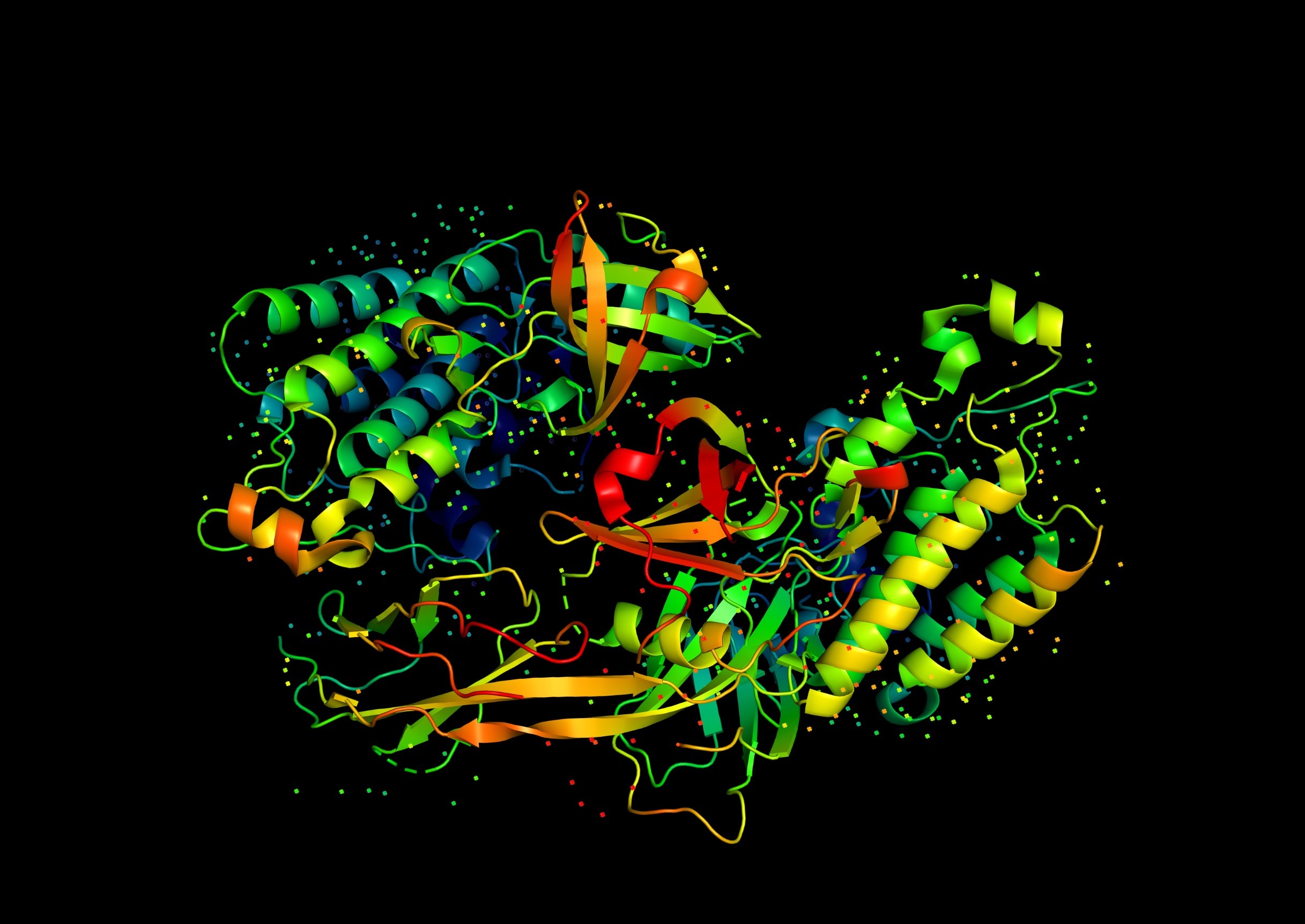
Proteins are the workhorses of biological systems, underpinning nearly every cellular process from catalysis and signaling to structural support and immune defense. Their extraordinary versatility arises from the capacity of linear chains of amino acids, encoded by genes, to fold into intricate three-dimensional conformations that dictate biological activity. Protein folding refers to the process by which a polypeptide chain acquires its functional, native structure. Although the principle that “structure determines function” is a cornerstone of molecular biology, the way proteins achieve this structure is a complex and multifaceted subject that has fascinated scientists for decades. Understanding protein folding is vital not only for basic biology but also for addressing diseases linked to misfolded proteins, for drug discovery, and for advances in synthetic biology and biotechnology.
At its most fundamental level, protein folding is driven by the physicochemical properties of amino acids and their interactions with one another and the surrounding solvent. A protein begins as a linear polymer synthesized on the ribosome, where amino acids are joined by peptide bonds according to the instructions encoded in messenger RNA. Once synthesized, the chain must transition from this extended form into a compact, energetically stable, three-dimensional structure. The challenge is immense: for a protein of 100 amino acids, the number of possible conformations is astronomically large. This “Levinthal’s paradox,” first articulated by Cyrus Levinthal in 1969, highlights that if proteins explored conformations randomly, folding would take longer than the age of the universe. Yet in reality, most proteins fold within milliseconds to seconds, suggesting that folding is guided by an energy landscape shaped by physicochemical principles rather than by random search.
The folding process is best understood through the concept of the folding funnel, a metaphor describing the energy landscape. At the top of the funnel, the unfolded chain can occupy many high-energy states, while at the bottom lies the unique native state with minimum free energy. Proteins fold by traversing this landscape in a biased manner, guided by favorable interactions that progressively reduce conformational entropy and stabilize particular structures. Hydrophobic collapse is often the initial driving force: nonpolar side chains tend to avoid the aqueous environment and cluster together in the interior of the protein, while polar and charged residues remain solvent-exposed. This hydrophobic effect, combined with hydrogen bonding, van der Waals interactions, and electrostatic forces, progressively stabilizes secondary structures such as α-helices and β-sheets, which then assemble into the tertiary structure.
Despite the elegance of this conceptual framework, folding is not always a simple two-state transition between unfolded and native states. Many proteins pass through intermediate conformations, which may be transiently populated during the folding process. These intermediates can be productive, guiding the chain toward the correct structure, or they can be off-pathway, forming kinetic traps that delay or prevent proper folding. Molecular chaperones, a diverse class of proteins, often assist in resolving such issues. Chaperones do not dictate the final structure but help nascent or stress-denatured proteins avoid misfolding and aggregation. Examples include the Hsp70 family, which binds exposed hydrophobic regions, and the chaperonin GroEL/GroES system in bacteria, which provides a protective cavity for folding.
The relationship between folding and function is evident in the consequences of misfolding. Proteins that fail to achieve or maintain their native conformation can aggregate into insoluble deposits, sometimes rich in β-sheet structures, forming amyloid fibrils. Such aggregates are implicated in numerous neurodegenerative disorders, including Alzheimer’s disease, Parkinson’s disease, and Huntington’s disease. In these conditions, misfolded proteins such as amyloid-β, tau, α-synuclein, or huntingtin accumulate, disrupting cellular homeostasis and triggering toxicity. Prion diseases provide another striking example: the infectious agent is not nucleic acid but a misfolded protein, PrPSc, which can induce the misfolding of its normal counterpart, PrPC, propagating disease through a templating mechanism. These pathological examples highlight the precarious balance between correct folding and disastrous outcomes, underscoring the importance of cellular quality control mechanisms such as the ubiquitin-proteasome system and autophagy, which help eliminate misfolded proteins.
The study of protein folding has relied on a range of experimental and computational techniques. Classical methods such as circular dichroism spectroscopy and fluorescence resonance energy transfer (FRET) have provided insights into secondary structure formation and intramolecular distances, respectively. Nuclear magnetic resonance (NMR) spectroscopy allows researchers to monitor folding intermediates in solution, while X-ray crystallography reveals atomic-resolution structures of native states. More recently, cryo-electron microscopy has opened new possibilities for visualizing large protein complexes. Kinetic experiments, often using temperature or chemical denaturation followed by rapid refolding, have illuminated the timescales of folding transitions. Hydrogen-deuterium exchange coupled with mass spectrometry has also proved invaluable in probing folding dynamics and stability.
On the computational front, molecular dynamics simulations have long promised to reveal folding trajectories, though they were historically limited by timescale challenges. Advances in computational power, particularly through specialized hardware such as Anton supercomputers, have enabled simulations of microsecond to millisecond folding events. More recently, machine learning approaches, epitomized by DeepMind’s AlphaFold, have revolutionized structural prediction. While AlphaFold predicts final structures rather than folding pathways, its accuracy has accelerated structural biology and expanded our understanding of the relationship between sequence and structure. Combining experimental and computational approaches continues to be the most powerful strategy for elucidating folding mechanisms.
The thermodynamic hypothesis, proposed by Christian Anfinsen in the 1960s, posits that the native structure of a protein is determined solely by its amino acid sequence and corresponds to the global minimum of free energy under physiological conditions. Anfinsen demonstrated this principle in his classic ribonuclease refolding experiments, showing that a denatured enzyme could regain activity simply by removing denaturants, without additional cellular factors. However, while generally valid, this hypothesis is nuanced by the fact that in vivo folding often depends on kinetic factors, chaperone assistance, and the crowded cellular environment, which differs significantly from dilute in vitro conditions. Thus, folding is not purely an equilibrium process but a dynamic interplay between thermodynamics, kinetics, and cellular context.
The crowded nature of the cytoplasm presents both challenges and opportunities for folding. Macromolecular crowding can stabilize compact conformations by favoring excluded volume effects, yet it also increases the risk of nonspecific interactions and aggregation. Cells manage these challenges through intricate networks of chaperones, folding catalysts such as protein disulfide isomerase, and degradation pathways. The proteostasis network, encompassing synthesis, folding, trafficking, and degradation, is essential for maintaining protein homeostasis. Age-related decline in proteostasis capacity is thought to underlie increased susceptibility to misfolding diseases in the elderly.
In addition to understanding folding pathways, researchers are increasingly interested in designing proteins de novo, exploiting the principles of folding for synthetic purposes. Computational protein design has yielded entirely novel folds and functions, demonstrating that the rules of folding can be harnessed creatively. These efforts also illuminate the limits of natural sequence space and expand the repertoire of possible protein architectures. Similarly, directed evolution approaches can optimize folding and stability of engineered proteins, enhancing their utility in industrial and therapeutic contexts.
The folding of membrane proteins represents a special case that illustrates the adaptability of folding principles. Membrane proteins, which constitute a large fraction of the proteome and are crucial drug targets, fold in a lipid bilayer environment rather than aqueous solution. Their folding involves partitioning hydrophobic transmembrane segments into the lipid bilayer while orienting hydrophilic regions appropriately. Experimental challenges have historically limited detailed study of membrane protein folding, but advances in detergents, nanodiscs, and computational models are shedding light on these processes.
Disordered proteins provide another complication. Intrinsically disordered proteins (IDPs) or regions (IDRs) lack stable tertiary structures under physiological conditions, existing instead as dynamic ensembles. Yet they are biologically functional, often involved in signaling, regulation, and phase separation phenomena such as the formation of membraneless organelles. Folding for IDPs is context-dependent, often induced upon binding to partners. Their prevalence challenges the traditional view that structure is essential for function and broadens the conceptual scope of folding studies.
The kinetics of folding remain a vibrant area of research. Proteins may fold through multiple parallel pathways, reflecting the ruggedness of the energy landscape. Small, fast-folding proteins often exhibit apparent two-state kinetics, transitioning directly between unfolded and native states. Larger proteins, however, frequently populate intermediates, sometimes detectable experimentally. Understanding these pathways is critical for deciphering the origins of misfolding, aggregation, and disease. Moreover, folding kinetics are central to the co-translational folding that occurs as proteins emerge from the ribosome. The vectorial nature of translation means that N-terminal segments may begin folding before synthesis is complete, influencing overall pathways and outcomes. Ribosome-associated chaperones further shape co-translational folding, ensuring nascent chains avoid problematic interactions.
From a biophysical perspective, folding is influenced by temperature, pH, ionic strength, and post-translational modifications. Extremophiles, for example, possess proteins adapted to fold and remain stable under high heat, salinity, or acidity, often through subtle sequence changes that enhance stability. Post-translational modifications such as phosphorylation or glycosylation can modulate folding and stability, sometimes serving as switches for regulation. Disulfide bonds, formed between cysteine residues, provide additional stabilization, particularly in secreted proteins exposed to harsh extracellular environments.
Protein folding research also intersects with biotechnology and medicine in practical ways. Understanding folding principles has enabled the design of therapeutic proteins with enhanced stability and shelf life, critical for biopharmaceutical production. Folding studies guide formulation strategies to prevent aggregation in protein-based drugs, such as monoclonal antibodies. In gene therapy and recombinant protein expression, optimizing folding is essential for achieving high yields of functional proteins. Folding knowledge also informs strategies to rescue misfolded proteins in genetic diseases. For example, in cystic fibrosis, small molecules known as pharmacological chaperones can stabilize mutant CFTR protein, improving its trafficking and function.
The future of protein folding research is poised to integrate experimental, computational, and theoretical approaches at unprecedented scales. High-throughput methods for assessing stability and folding, coupled with machine learning, promise to map sequence–folding relationships more comprehensively. Single-molecule techniques, such as optical tweezers and single-molecule FRET, offer real-time views of folding dynamics, revealing heterogeneity and stochasticity hidden in ensemble averages. Computational advances will continue to refine our ability to simulate folding pathways in atomistic detail. Ultimately, integrating these diverse approaches will deepen our grasp of how sequences encode not only final structures but also folding pathways and lifetimes.
In summary, protein folding is a central and multifaceted phenomenon in biology, reflecting the interplay of sequence, physics, and cellular context. The process transforms linear chains into functional machines, guided by an energy landscape that channels folding into productive outcomes while allowing for complexity and variation. Misfolding and aggregation illustrate the delicate balance required and the catastrophic consequences when it fails. Through decades of research, we have moved from simplistic views toward a nuanced understanding that embraces the roles of thermodynamics, kinetics, chaperones, crowding, and regulation. Folding is not merely an abstract curiosity but a problem with profound biomedical, technological, and evolutionary implications. Continued exploration of folding promises not only to answer fundamental questions about life’s molecular underpinnings but also to unlock new avenues for treating disease and engineering biology.
Leave a Reply