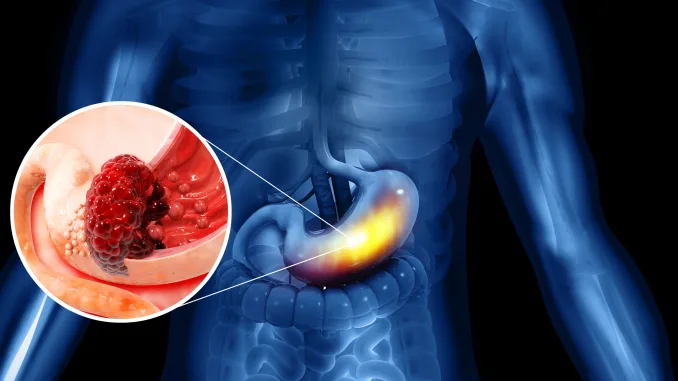
Gastric cancer, also known as stomach cancer, is a disease in which malignant (cancerous) cells form in the lining of the stomach. It is the fifth most common cancer worldwide and the third leading cause of cancer-related deaths, although its incidence has declined in many countries due to improved hygiene and H. pylori management.
Types of Gastric Cancer
Most gastric cancers are adenocarcinomas, which arise from the glandular cells lining the stomach. There are two main types of adenocarcinoma:
-
Intestinal type:
-
More common in older adults
-
Often linked to chronic gastritis, H. pylori infection, and dietary factors
-
Tends to grow more slowly and may form gland-like structures
-
-
Diffuse type:
-
Affects younger people more often
-
Less associated with environmental factors; may have a genetic basis
-
Grows aggressively and infiltrates the stomach wall without forming a clear mass
-
Other less common types of gastric cancer include:
-
Gastrointestinal stromal tumors (GISTs)
-
Lymphomas of the stomach
-
Carcinoid tumors
Risk Factors
Several risk factors increase the likelihood of developing gastric cancer:
Infectious:
-
Helicobacter pylori (H. pylori) infection – the most important known risk factor
-
Epstein-Barr virus (in rare cases)
Environmental:
-
High-salt, smoked, or pickled foods
-
Low intake of fruits and vegetables
-
Smoking
-
Heavy alcohol use
Medical:
-
Chronic gastritis (especially atrophic gastritis)
-
Pernicious anemia
-
Previous gastric surgery (e.g., for ulcers)
-
Gastric polyps
-
Obesity
Genetic:
-
Family history of gastric cancer
-
Hereditary diffuse gastric cancer syndrome (mutation in CDH1 gene)
-
Lynch syndrome
-
Familial adenomatous polyposis (FAP)
Symptoms
Early gastric cancer often causes no symptoms, which is why it’s typically diagnosed at a late stage. When present, symptoms may include:
-
Indigestion or stomach discomfort
-
Bloating after meals
-
Loss of appetite
-
Nausea or vomiting
-
Heartburn
-
Weight loss
-
Fatigue
-
Vomiting blood or black stools (signs of bleeding)
Diagnosis
Diagnosing gastric cancer involves a combination of clinical evaluation and imaging:
-
Upper endoscopy (esophagogastroduodenoscopy) – allows direct visualization and biopsy
-
Biopsy – confirms diagnosis by examining tissue for cancer cells
-
Imaging:
-
CT scan (to evaluate spread)
-
Endoscopic ultrasound (for staging)
-
PET scan or laparoscopy (in selected cases)
-
Laboratory tests may include blood counts, liver function tests, and tumor markers like CEA or CA 19-9, though these are not diagnostic on their own.
Staging
Staging determines how far the cancer has spread and is crucial for treatment planning. The TNM staging system is commonly used:
-
T: Tumor size and depth of invasion
-
N: Lymph node involvement
-
M: Metastasis (spread to distant organs)
Stages range from Stage 0 (in situ) to Stage IV (advanced/metastatic cancer).
Treatment
Treatment depends on the stage, location, patient health, and cancer type.
1. Surgery (main curative option)
-
Subtotal gastrectomy: Removal of part of the stomach
-
Total gastrectomy: Complete removal of the stomach
-
Lymph node dissection is usually performed at the same time
2. Chemotherapy
-
Often used before (neoadjuvant) or after (adjuvant) surgery
-
Common regimens: FLOT (fluorouracil, leucovorin, oxaliplatin, docetaxel), ECF, etc.
3. Radiation Therapy
-
Occasionally used with chemotherapy, especially in non-resectable tumors
4. Targeted Therapy
-
HER2-positive tumors: May respond to trastuzumab
-
Other targeted drugs under investigation
5. Immunotherapy
-
PD-1 inhibitors (e.g., nivolumab, pembrolizumab) approved for some advanced cases, especially those with MSI-high or PD-L1 positive tumors
6. Palliative Care
-
In advanced stages, focus may shift to symptom control and improving quality of life
Prognosis
The prognosis depends on the stage at diagnosis:
-
Early-stage (localized): 5-year survival rate can be 60–90%
-
Advanced/metastatic: 5-year survival drops to <10–20%
Early detection greatly improves outcomes, which is why some countries like Japan and South Korea implement nationwide gastric cancer screening.
Prevention
Although not all cases are preventable, steps to reduce risk include:
-
Treating H. pylori infection
-
Avoiding smoking and excessive alcohol
-
Eating a diet rich in fruits and vegetables
-
Reducing intake of salted, smoked, and pickled foods
-
Genetic counseling and surveillance if at high familial risk
Summary Table
| Feature | Details |
|---|---|
| Most common type | Adenocarcinoma (intestinal and diffuse types) |
| Key risk factor | H. pylori infection |
| Common symptoms | Indigestion, weight loss, early satiety, vomiting |
| Diagnostic tools | Endoscopy with biopsy, CT scan, EUS |
| Main treatment options | Surgery, chemotherapy, targeted therapy, immunotherapy |
| Prognosis | Depends heavily on stage; early detection improves survival |



Leave a Reply