The European Savoury Ingredients Market has always represented a critical and dynamic segment of the broader food ingredients industry. It encompasses a wide array of products that deliver umami, mouthfeel, salt reduction, aroma enhancement and flavour depth across food and beverage applications. Savoury ingredients include flavour enhancers such as monosodium glutamate (MSG), yeast extracts, hydrolysed vegetable and animal proteins, nucleotides, spices and seasoning systems, as well as natural and fermentation-derived compounds that replicate rich, traditional taste profiles while meeting demands for “clean label”, sustainable and health-oriented products. These ingredients are incorporated into numerous applications including snacks, sauces, ready meals, soups, plant-based alternatives, bakery, processed meats and convenience foods. Their role has grown alongside consumer expectations for both sensory quality and nutritional integrity in everyday eating occasions.
The European market is characterised by a blend of mature demand and ongoing innovation. As the second-largest regional segment globally, Europe accounts for a substantial share of the worldwide savoury ingredients market, driven by established food processing sectors in Western Europe and evolving tastes in Eastern European markets. The region benefits from a rich culinary heritage, encompassing Mediterranean, Germanic, Nordic and British traditions, which drives diverse flavour demands and encourages regional specialisation in savoury systems. European consumers increasingly seek products with minimal synthetic additives, low sodium content, and provenance transparency, which in turn shapes the strategic focus of ingredient suppliers. Regulatory frameworks promulgated by the European Food Safety Authority (EFSA) and individual member states’ food authorities emphasise food safety, labelling accuracy, clean-label claims, and limits on additive use, enhancing demand for natural and fermentation-based flavour solutions. These regulatory drivers have escalated the adoption of yeast extracts, precision fermentation products and enzymatic hydrolysates over traditional synthetic enhancers like MSG in many markets across the region.
From a growth perspective, the European savoury ingredients market has been forecast to expand steadily over the coming decade. Multiple recent industry analyses project compound annual growth rates in the mid-single digits, reflecting both enduring demand and new opportunities arising from product reformulation trends. For example, forecasts suggest growth in the region at around 4.1 per cent through 2030, driven by innovations aligned with clean-label imperatives and rising plant-based eating patterns. Other reports suggest the broader European market could grow from approximately USD 8 billion in 2023 to over USD 11.6 billion by 2030, underlining the scale and resilience of this sector. Growth is propelled by several converging factors: shifting consumer preferences toward natural and functional ingredients, continuous reformulation of processed foods to reduce sodium and artificial additives, increasing consumption of snacks and convenience foods, and the ascent of plant-based protein alternatives where savoury flavour systems mask formulation challenges.
Market Segmentation and Product Types
Within the European savoury ingredients landscape, product typologies reflect both traditional flavour chemistry and cutting-edge biotechnology. Major product categories include:
-
Monosodium Glutamate (MSG): Historically one of the most recognised flavour enhancers globally, though its use in Europe is sensitive due to consumer perceptions about synthetic additives. Manufacturers continue to supply MSG primarily where regulatory and label acceptance allows, but growth is moderate compared to natural substitutes.
-
Yeast Extracts: These are among the leading natural savoury ingredients in the region. Derived through controlled enzymatic breakdown of yeast cells, these extracts provide umami depth and are widely used in soups, sauces, snack seasonings and plant-based products. Their clean-label positioning resonates strongly with European consumer preference trends.
-
Hydrolysed Vegetable and Animal Proteins: Including hydrolysed wheat, soy or meat proteins, these ingredients serve dual roles as flavour enhancers and texturants, especially in processed meats and plant-based alternatives.
-
Nucleotides and Specialty Flavour Blends: These synergise with other components to amplify savoury perception and support reduced salt formulations.
-
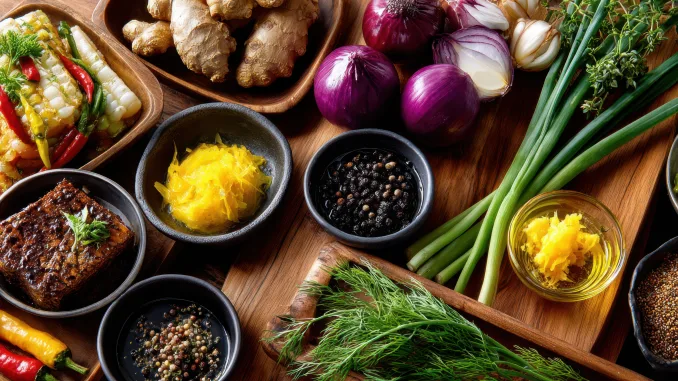
Spices and Seasonings: A broad and growing segment reflecting the diversity of European cuisine and global taste influences. Spices and herb blends remain essential in both industrial and consumer applications, with innovation on ethnic and international flavours expanding category reach.
Segmentation by source classifies products into natural and synthetic categories, with natural offerings—especially fermentation-derived and minimally processed systems—garnering the most interest among European market stakeholders due to their alignment with clean-label, organic and health-oriented product strategies.
Regional Dynamics within Europe
Although pan-European trends drive overarching market growth, individual countries exhibit distinct dynamics. Germany stands out as the dominant market within Europe, with a combination of strong food processing infrastructure, advanced R&D capabilities and consumer demand for natural, sustainable and plant-based ingredients. German ingredient manufacturers and flavour houses prioritise fermentation technologies, precision enzymology and clean-label extraction processes, making the country a central hub for innovation and distribution throughout the region. The strategic location of Germany also facilitates efficient logistics and supply chain connectivity for imported raw materials and finished products moving across European markets.
The United Kingdom represents another significant market, underpinned by a mature ready meals sector and robust regulatory activity around sodium reduction and additive transparency. UK retail and private-label policies frequently mandate restrictions on synthetic enhancers, stimulating higher uptake of yeast extracts and other natural flavour systems. Post-Brexit regulatory autonomy has permitted more agile approval pathways for innovative fermentation-derived ingredients, sustaining the UK’s relevance within the savoury ingredients market despite broader economic headwinds affecting consumer spending.
France and Italy exhibit strong market presence shaped by rich culinary traditions that prioritise taste authenticity while responding to consumer health trends. In these markets, the artisanal food culture and growing plant-based segments drive interest in natural umami sources and complex seasoning systems that complement classic regional dishes. The Netherlands, particularly the Food Valley region, functions as a European hub for fermentation science, plant-based ingredient development and export-oriented manufacturing, supporting the distribution of natural savoury ingredients across the continent.
Competitive Landscape and Key Participants
Competition in the European savoury ingredients market is robust, featuring an interplay of global ingredient suppliers with broad product portfolios and specialised regional players catering to niche segments. Major multinational corporations such as Kerry Group plc (Ireland), Ajinomoto Co., Inc. (Japan), Givaudan SA (Switzerland), Koninklijke DSM N.V. (Netherlands), Symrise AG (Germany), Tate & Lyle PLC (UK), Associated British Foods plc (UK) and Sensient Technologies Corporation (United States) collectively shape competitive dynamics by investing heavily in research and development, expanding production capacities, and developing tailored savoury solutions that align with clean-label and sustainability trends.
Among these, Kerry Group is recognised for its broad portfolio of yeast extracts, enzymatically modified proteins and advanced flavour systems designed for sodium-reduced and plant-based applications. The company’s dedicated savoury innovation labs exemplify an investment in sustainable raw materials and flavour profiling tools that respond to evolving consumer preferences. Givaudan leverages a combination of sensory science and biotechnology to deliver natural umami solutions, enabling premium food brands to eliminate MSG while maintaining depth and complexity in flavour. Ajinomoto, while globally synonymous with MSG, remains a prominent supplier in Europe, particularly in segments where consumers and manufacturers accept synthetic enhancers under specific label conditions. DSM, which recently expanded its capabilities through merger with Firmenich International SA, brings enhanced technological expertise in biotechnology, flavour modification and fermentation-derived systems to the European marketplace.
Other notable players include Cargill Incorporated and Archer-Daniels-Midland Company (ADM), which leverage extensive global agricultural supply chains and ingredient processing capabilities to supply hydrolysed proteins, starch derivatives and seasoning systems. Angel Yeast Co., Ltd. supplies natural yeast extracts from facilities in Germany and the Netherlands, collaborating with local partners to customise umami-rich blends. Regional producers such as Döhler (Germany) contribute technology-based natural ingredients, including herbs, extracts and flavour systems, to the European food and beverage industry. Additionally, natural ingredient aggregators and traders like ACOMO N.V. (Netherlands) play a supportive role by supplying spices, seasoning bases and plant-based inputs to manufacturers that incorporate them into savoury ingredients portfolios.
Market Trends and Strategic Developments
Several strategic trends define the current trajectory of the European savoury ingredients market. Clean-label innovation remains paramount, with manufacturers reformulating products to reduce artificial additives and sodium content while keeping the high level of sensory quality. Precision fermentation and enzymatic technologies facilitate customised flavour profiles that meet strict regulatory and consumer transparency standards, enabling food producers to differentiate products in a crowded marketplace. The growth of plant-based diets and meat alternatives strongly influences flavour system design, because these products often require sophisticated savoury components to replicate traditional taste experiences that consumers expect from animal-derived foods. Sustainability considerations also drive supplier strategies, with increased emphasis on ethically sourced raw materials, reduced environmental footprints in production and packaging, and participation in circular economy initiatives.
Collaborations between industry and academic institutions support validation of clean-label systems and innovative flavour blends, while adherence to ISO, BRC/IFS and EFSA standards reinforces food safety, traceability and consumer confidence in product offerings across retail and foodservice channels. Export opportunities to developing markets remain attractive, with European savoury ingredients perceived as high-quality standards in global cuisine and processed foods.
Seasonings And Health
Consumers and thus product developers too have their eyes on functional blends with a strong health message. The sort of healthy ingredients are turmeric, various spices of all sorts like thyme and sage with anti-bacterial properties. This also includes adaptogens and some immunity-boosting ingredients.
Generally, the European savoury ingredients market is a diversified and evolving sector anchored by a blend of established multinational suppliers and agile regional players. It serves a wide range of food and beverage applications and is shaped by regulatory, consumer and technological forces that prioritise clean-label solutions, natural flavour systems and sustainable practices. As European consumers continue to demand products that marry taste, health and transparency, the savoury ingredients market is likely to sustain growth through innovation, strategic alliances, and reformulation trends that respond to shifting dietary preferences across the continent.
Sources
Various market research information used by FoodWrite Ltd. We take a number of these under confidentiallity.

Leave a Reply