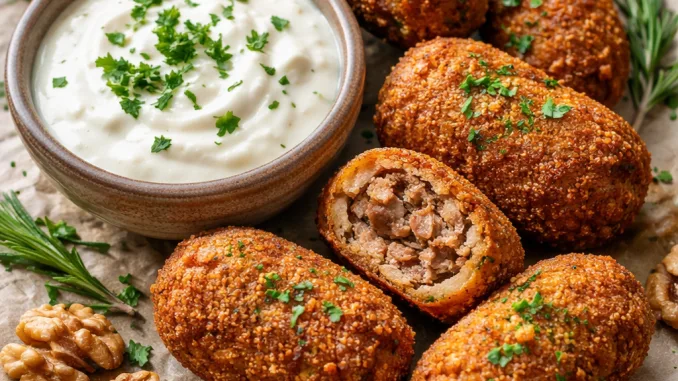
This is a great recipe for venison croquettes. Before we dive into the recipe proper, it’s worth just saying a few words about the venison to be used because it shouldn’t just be any old cut.
When preparing venison croquettes, the choice of venison is a defining factor in both flavor and texture, and it should be made with the specific requirements of the dish in mind rather than general availability. Croquettes rely on a finely textured, cohesive filling that can be bound with a béchamel or thickened base, shaped, breaded, and fried without breaking. As such, the most suitable venison is meat that is lean, finely grained, and capable of being minced or shredded cleanly after cooking.
In culinary practice, venison most often refers to deer species, though the term can encompass other game animals depending on region. For croquettes, red deer, fallow deer, roe deer, and white-tailed deer are all appropriate, provided the cut selection is correct. Another favourite is sika deer which is a Japanese deer now found in Europe and Sitka deer which you find in North America.
Larger species such as red or elk-type deer tend to produce slightly milder, more beef-like meat, while smaller species such as roe deer offer a more pronounced game flavour. Either can be used successfully, but the stronger the flavour, the more important balance becomes with aromatics and dairy in the croquette base.
The preferred cuts for venison croquettes are secondary or working muscles rather than prime roasting cuts. Shoulder, neck, shank, and trim from leg muscles are ideal choices. These cuts contain more connective tissue, which breaks down during slow cooking and contributes body and richness once the meat is minced. Using premium cuts such as loin or backstrap is generally discouraged, as they are better suited to quick cooking and can become dry, crumbly, and wasteful when processed into a croquette filling.
Venison intended for croquettes should be cooked gently before use. Braising or slow poaching is preferred, as it softens the fibers and allows the meat to absorb seasoning. After cooking, the meat should be finely chopped, shredded, or passed through a coarse grinder. The goal is a uniform texture that integrates seamlessly with the binding mixture rather than distinct chunks of meat. Overly coarse or undercooked venison will compromise the structural integrity of the croquette.
Fat content is another important consideration. Venison is naturally very lean, which can result in a dry filling if not compensated for. For this reason, venison from animals harvested in late autumn or early winter—when fat reserves are at their peak—is generally preferable. In professional kitchens, a small amount of added fat, such as butter, cream, or even finely minced pork fat, is sometimes incorporated to improve mouthfeel and richness without masking the venison’s character.
Age and handling of the animal also influence suitability. Young to mature animals that have been properly field-dressed, aged, and butchered produce cleaner-tasting meat with less bitterness. Poorly handled or excessively old venison can introduce harsh flavors that are amplified when minced and concentrated in a croquette filling.
In summary, the best venison for croquettes comes from well-handled deer, using slow-cooking cuts that can be finely processed and enriched as needed. When these factors are respected, venison croquettes showcase the meat’s distinctive flavor while achieving the smooth, cohesive texture the dish demands.
Serving: 6–8 croquettes (main course for two or appetizer-sized portions). Should serve two or three.
Equipment Needed
-
Medium saucepan
-
Mixing bowl
-
Chef’s knife
-
Cutting board
-
Wooden spoon or silicone spatula
-
Shallow bowls or plates (3) for breading
-
Frying pan or heavy skillet
-
Slotted spoon or tongs
-
Paper towels
-
Instant-read thermometer (recommended)
Ingredients
Croquette Base
-
200 g (7 oz) cooked venison, finely minced or shredded. Try venison from Sika deer, Sitka deer or even Red deer.
-
25 g (2 tbsp) unsalted butter
-
30 g (¼ cup) finely diced shallot or onion
-
1 small garlic clove, minced
-
20 g (2 tbsp) all-purpose flour
-
120 ml (½ cup) whole milk, warmed
-
1 tbsp fresh parsley, finely chopped
-
½ tsp fresh thyme (or ¼ tsp dried)
-
¼ tsp ground nutmeg
-
Salt and black pepper, to taste
Breading
-
1 egg, beaten
-
40 g (⅓ cup) breadcrumbs (panko preferred)
-
20 g (¼ cup) all-purpose flour
For Frying
-
Neutral oil (sunflower, canola, or vegetable), sufficient for shallow frying
Preparation & Cooking Times
-
Preparation time: 25 minutes
-
Chilling time: 30 minutes
-
Cooking time: 8–10 minutes
-
Total time: ~65 minutes
Preparation
1. Prepare the Croquette Mixture
-
Melt the butter in a saucepan over medium heat.
-
Add the shallot and cook for 3–4 minutes until soft and translucent.
-
Stir in the garlic and cook for 30 seconds until aromatic.
-
Add the flour and cook, stirring constantly, for 1–2 minutes to form a roux.
-
Gradually whisk in the warm milk, stirring until thick and smooth.
-
Remove from heat and fold in the venison, parsley, thyme, nutmeg, salt, and pepper.
-
Transfer the mixture to a bowl, cover, and refrigerate for 30 minutes, until firm enough to shape.
2. Shape and Bread
-
Divide the chilled mixture into 6–8 equal portions.
-
Roll each portion into a short cylinder or oval.
-
Coat each croquette first in flour, then egg, then breadcrumbs, pressing lightly to adhere.
3. Fry
-
Heat oil in a skillet to 170–175°C (340–350°F).
-
Fry croquettes in batches, turning carefully, for 2–3 minutes per side until golden brown.
-
Drain on paper towels and rest for 2 minutes before serving.
Serving Suggestions
-
Serve with lingonberry jam, mustard aioli, or a light horseradish cream.
-
Pair with a crisp green salad or roasted root vegetables.
-
One serving suggestion I saw from the Stag pub at Offchurch in Warwickshire for Christmas 2025 was rocket (arugula) leaves, with a quince jam and a juniper berry vinaigrette. That sounded rather yum in my view!
-
If this is a bar snack, I would add some walnuts for a bit of extra class.
Nutritional Information (Approximate, Per Serving)
Assumes 2 servings, shallow-fried.
-
Calories: ~420 kcal
-
Protein: ~32 g
-
Fat: ~22 g
-
Saturated Fat: ~7 g
-
Carbohydrates: ~28 g
-
Fiber: ~2 g
-
Sugars: ~4 g
-
Sodium: ~480 mg



Leave a Reply