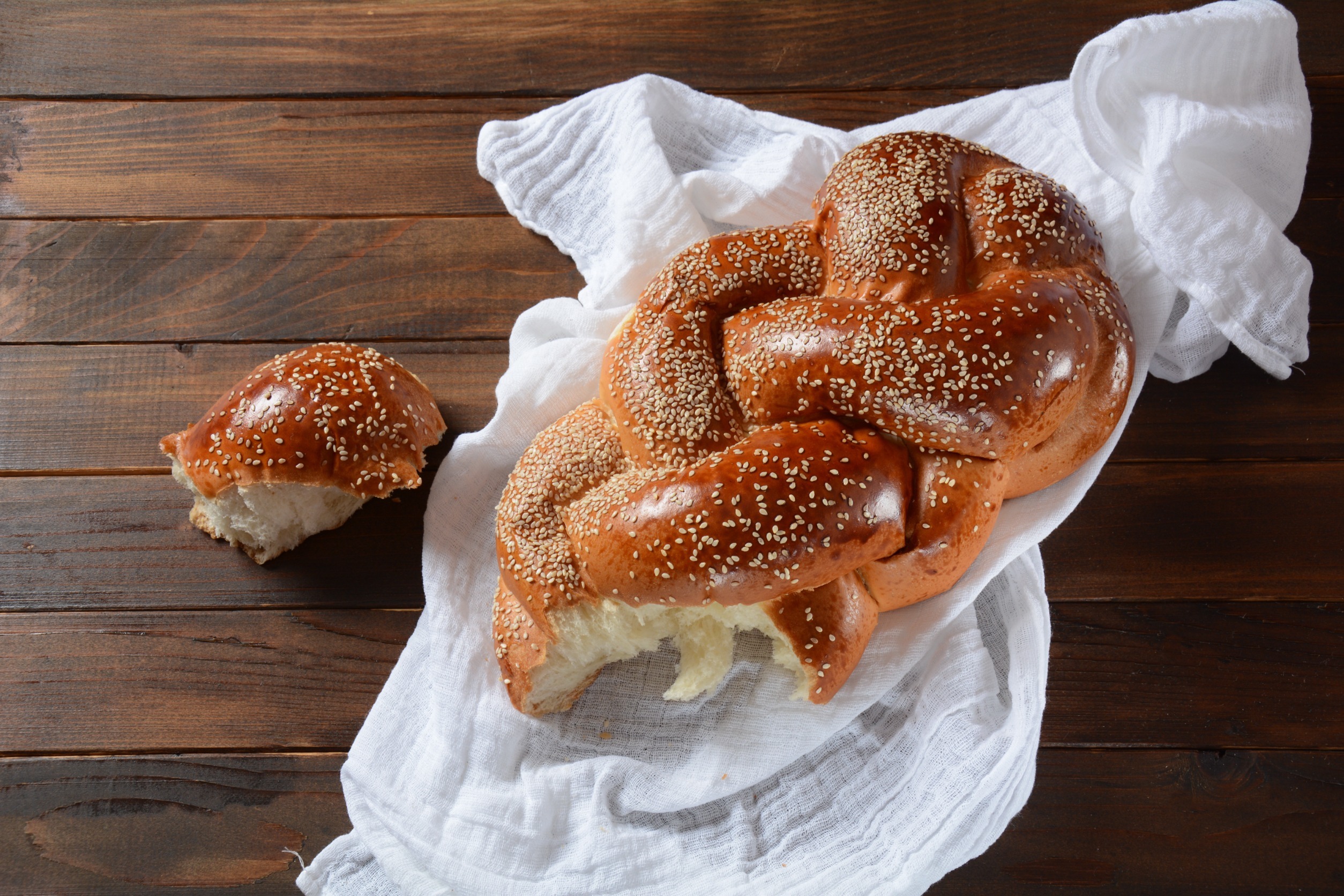
Challah is a traditional Jewish bread that holds deep cultural, religious, and culinary significance. It is most commonly associated with Shabbat (the weekly Sabbath) and Jewish holidays, though it is sometimes adapted for other festive occasions, including Hanukkah, depending on regional and familial customs. The bread is distinguished by its soft, slightly sweet interior, golden crust, and braided shape, which makes it visually iconic on Jewish tables worldwide.
Origins and Cultural Significance
The word “challah” originally refers to a portion of dough set aside as an offering to the priests (kohanim) in the Temple of Jerusalem, as prescribed in the Torah. Over time, the term came to designate the enriched bread itself. Challah is traditionally eaten on Shabbat to fulfill the commandment of “lechem mishneh,” the two loaves representing the double portion of manna that fell in the desert when the Israelites wandered after the Exodus.
Challah carries rich symbolic meaning. Its braided form is often interpreted as representing unity, love, or continuity. On Shabbat, two loaves are placed on the table and covered with a cloth during the Kiddush blessing, recalling the double portion and emphasizing the sanctity of the day. For holidays, challah may be shaped differently—round for Rosh Hashanah to symbolize the cyclical nature of the year, for instance.
Ingredients and Preparation
Traditional challah is made with basic pantry ingredients: flour, water, yeast, eggs, sugar or honey, and oil. The oil, typically vegetable or olive, signifies the importance of joy and richness in the Sabbath meal. Eggs enrich the dough and contribute to its tender, airy texture, while sugar or honey adds subtle sweetness. After kneading and rising, the dough is divided into strands, braided, and allowed to rise again before being brushed with egg wash and baked to a golden finish. Sesame or poppy seeds are often sprinkled on top, adding flavor and a decorative touch.
Challah and Hanukkah
While challah is not traditionally a Hanukkah-specific food, some families incorporate it into Hanukkah meals, sometimes enhancing it with sweet elements or shaping it into festive forms, such as braids with added cinnamon, raisins, or chocolate. In this context, challah complements the fried and sweet foods associated with the festival, like latkes and sufganiyot, providing a rich, nourishing bread that can be part of family meals.
Regional Variations
-
Ashkenazi Challah: Typically braided in three, four, or six strands; slightly sweet; often topped with sesame or poppy seeds.
-
Sephardic Challah (Jachnun-style variations in some regions): Sometimes enriched with sugar and shaped differently; occasionally baked as small rolls for individual servings.
-
Modern Variations: Incorporate whole wheat flour, honey glaze, or fillings like chocolate or dried fruit for contemporary tastes while retaining traditional symbolism.
Symbolism and Cultural Role
Challah is much more than bread; it represents community, ritual, and continuity. Its preparation and blessing are acts of devotion, marking sacred time and creating a tangible connection to Jewish history and tradition. On festive occasions, its presence at the table conveys hospitality, family cohesion, and the joy of celebration.
In essence, challah embodies the intersection of ritual, nourishment, and artistry, serving as both a staple of Jewish life and a canvas for cultural adaptation across communities and holidays.
Ingredients:
For the dough:
- 4 cups all-purpose flour
- 2 teaspoons salt
- 1/4 cup sugar
- 1 packet (2 1/4 teaspoons) active dry yeast
- 1/2 cup warm water
- 1/2 cup vegetable oil
- 3 eggs
For the egg wash and topping:
- 1 egg yolk
- 1 tablespoon water
- 2 tablespoons sesame seeds
Preparation:
- In a large bowl, combine the flour, salt, and sugar. Mix well.
- In a separate bowl, combine the yeast and warm water. Let sit for 5-10 minutes, until the yeast is foamy.
- Add the yeast mixture, oil, and eggs to the flour mixture. Mix until a smooth dough forms.
- Knead the dough for 10-15 minutes, until it is smooth and elastic.
- Place the dough in a lightly oiled bowl, cover with a clean kitchen towel, and let rise in a warm place for 1-2 hours, until doubled in size.
- Once the dough has risen, divide it into three equal pieces.
- Roll each piece into a long rope, about 16 inches in length.
- Braid the ropes together, pinching the ends together to seal.
- Transfer the braided dough to a parchment-lined baking sheet.
- In a small bowl, whisk together the egg yolk and water to make the egg wash.
- Brush the egg wash over the top of the braided dough.
- Sprinkle the sesame seeds over the top of the dough, pressing lightly to adhere.
- Cover the dough with a clean kitchen towel and let rise for another 30-45 minutes, until puffy.
- Preheat the oven to 375°F.
- Bake the challah bread for 30-35 minutes, until golden brown and cooked through.
- Allow the bread to cool slightly before slicing and serving.

Leave a Reply