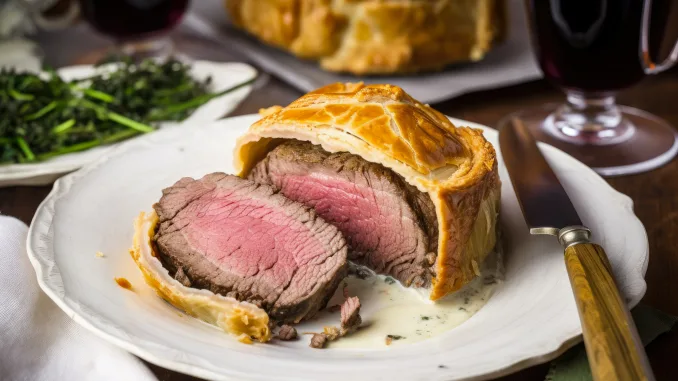
Beef Wellington has a fascinating — and somewhat mysterious — history. Despite how iconic the dish is today, its true origins aren’t as clear as many people assume.
1. Common Myth: Named After the Duke of Wellington
The most widely repeated story is that Beef Wellington was created to honor Arthur Wellesley, the 1st Duke of Wellington, the British military hero who defeated Napoleon at Waterloo in 1815.
However, there is no solid historical evidence that the Duke ever ate, commissioned, or was associated with the dish.
Many historians believe this story emerged later as a way to give the dish a patriotic or prestigious air.
2. Likely Origin: A British Spin on French Cuisine
It’s widely believed that the dish evolved from classic French cooking techniques:
-
Filet de bœuf en croûte — beef fillet wrapped in pastry
-
Duxelles — the finely chopped mushroom mix used inside Wellington
-
Pâté and pastry-wrapped meats were common in French cuisine
Because France dominated high culinary standards in the 18th–19th centuries, it’s likely that the British adopted an existing French dish and renamed it.
Some culinary historians think the renaming was simply patriotic branding during a time when British–French rivalries were high.
3. First Written References
Actual written recipes for “Beef Wellington” don’t appear until the 20th century, especially around:
-
1960s UK and US cookbooks
-
Post-WWII period, when elegant dinner-party dishes became popular
-
Wellington became iconic thanks to chefs like Julia Child, who helped popularize it in America.
This timing is one reason historians question any connection to the early 1800s.
4. The New Zealand Connection
Interestingly, the earliest newspaper references to something called “Wellington” often appear in New Zealand in the early 1900s — though these were mostly pastry dishes, not necessarily beef.
This suggests the name “Wellington” may have been used more generally for fancy wrapped or baked dishes.
5. Modern Fame
Beef Wellington rose to modern popularity in the mid-20th century as a symbol of:
-
Luxury
-
Celebration
-
Classic European fine dining
It exploded in popularity again thanks to chefs such as Gordon Ramsay, who made it a signature dish.
In Short
Beef Wellington is:
-
Probably based on French beef en croûte, not British invention
-
Not definitively linked to the Duke of Wellington
-
First clearly named in the 20th century, not the 19th
-
A dish whose name became a symbol of sophistication and British identity.
Beef Wellington for Two
Time
-
Prep time: 30–40 minutes
-
Chilling time: 20–30 minutes (recommended)
-
Cook time: 35–40 minutes
-
Total: ~1.5 hours
Equipment Needed
-
Frying pan (preferably heavy-bottomed or cast iron)
-
Baking tray
-
Parchment paper
-
Cling film / plastic wrap
-
Pastry brush
-
Food processor (optional, for duxelles)
-
Rolling pin
-
Sharp knife
-
Instant-read thermometer (helpful but optional)
Ingredients (Serves 2)
Beef
-
1 beef tenderloin fillet (~400–450 g / 14–16 oz), trimmed
(Alternatively: two small center-cut fillets) -
Salt and black pepper
-
1 tbsp vegetable oil or clarified butter
Duxelles
-
250 g (9 oz) mushrooms, very finely chopped
-
1 small shallot, finely diced
-
1 garlic clove, minced
-
1 tbsp butter
-
1 tsp thyme leaves
-
Salt and pepper
-
Splash of dry white wine or Madeira (optional)
Assembly
-
4–5 slices prosciutto
-
1 sheet puff pastry (store-bought is fine)
-
1 egg yolk + 1 tsp water (egg wash)
Preparation
1. Sear the Beef
-
Pat the beef dry and season well with salt and pepper.
-
Heat oil in a hot pan.
-
Sear on all sides, including ends, until well browned (1–2 min/side).
-
Remove, cool slightly, then wrap tightly in cling film to help it hold its shape.
-
Chill 10–15 minutes while making the duxelles.
-
2. Make the Duxelles
-
Finely chop mushrooms by hand or pulse in a food processor.
-
In a pan, melt butter and sauté shallots and garlic.
-
Add mushrooms, thyme, salt, and pepper.
-
Cook until all moisture evaporates and mixture is dry and paste-like (10–12 minutes).
-
Add a splash of wine if using and cook off.
-
Cool completely.
3. Wrap with Prosciutto
-
Lay out a sheet of cling film.
-
Arrange prosciutto slices in a slightly overlapping rectangle.
-
Spread the cooled duxelles evenly over the prosciutto.
-
Place the chilled beef at one end, then tightly roll the prosciutto around it using the cling film.
-
Twist ends to secure and chill for 10–15 minutes.
4. Wrap in Puff Pastry
-
Roll out puff pastry if needed into a rectangle large enough to envelop the beef.
-
Remove beef from cling film, place in the center of pastry.
-
Brush pastry edges with egg wash.
-
Fold pastry around beef, trim excess, and seal seam.
-
Wrap lightly in cling film again to set shape; chill 10 minutes.
-
Place seam-side down on a parchment-lined baking tray.
-
Brush with egg wash and score lightly for decoration.
5. Bake
-
Preheat oven to 200°C / 390°F (fan 180°C / 350°F).
-
Bake for 35–40 minutes or until:
-
Internal temp: 50–52°C (122–125°F) for medium rare
-
55–57°C (131–135°F) for medium
-
-
Let rest for 10 minutes before slicing.
Serving Suggestions
Serve with:
-
Red wine jus or pan sauce
-
Classic mashed potatoes
-
Green beans, asparagus, or glazed carrots

Leave a Reply